


Mountaineering Boots vs Hiking Boots
04/26
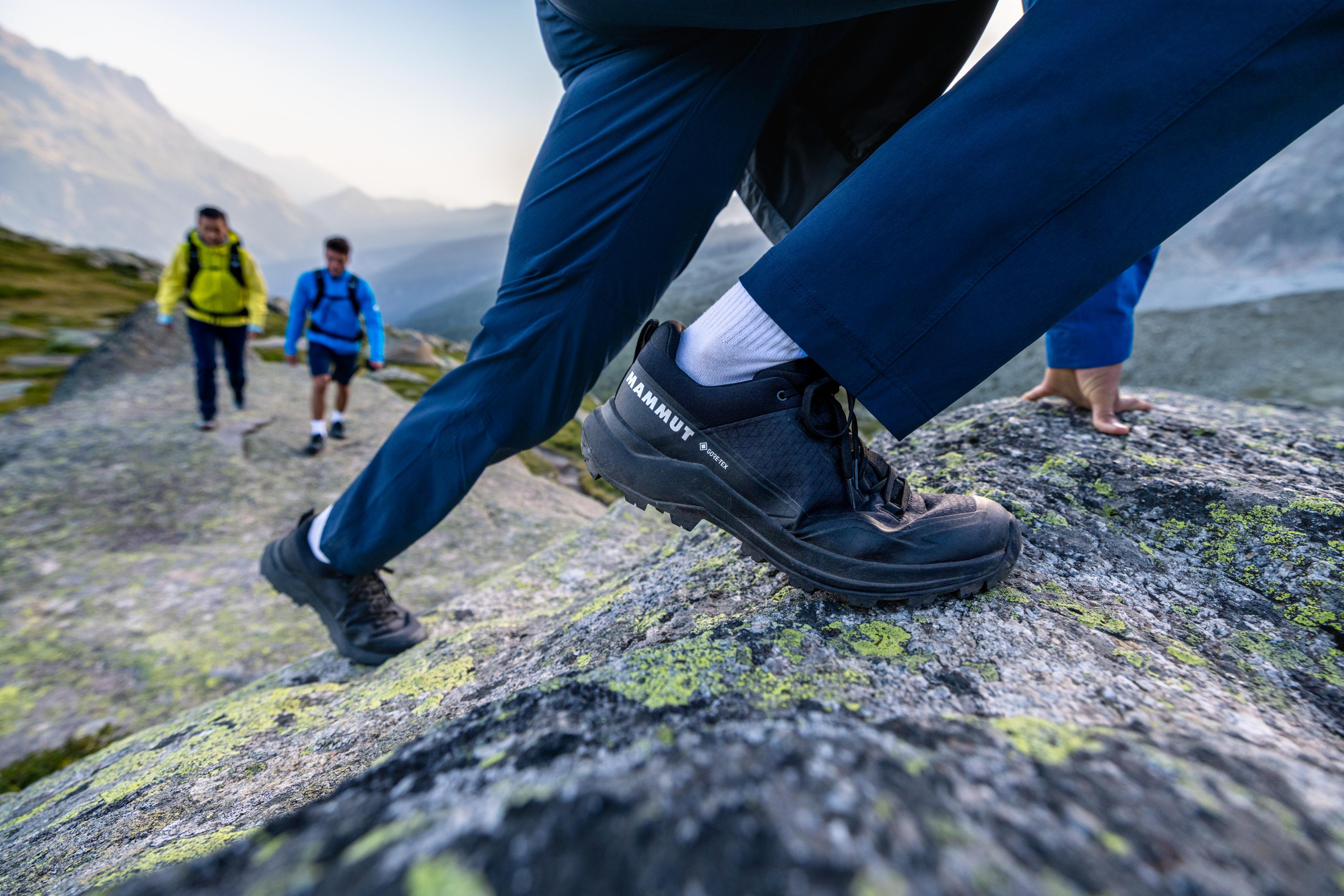
Anyone who spends time in the mountains knows that the right footwear can make or break your experience. Whether you're on a relaxed day hike through rolling hills or tackling a demanding alpine route across scree and glaciers, your shoes play a decisive role in how safe and comfortable you feel out there. But what actually sets hiking boots apart from mountaineering boots? And which one is the better fit for your next adventure? In this guide, we'll walk you through the key differences and take a closer look at what Mammut has to offer.
What are hiking boots?
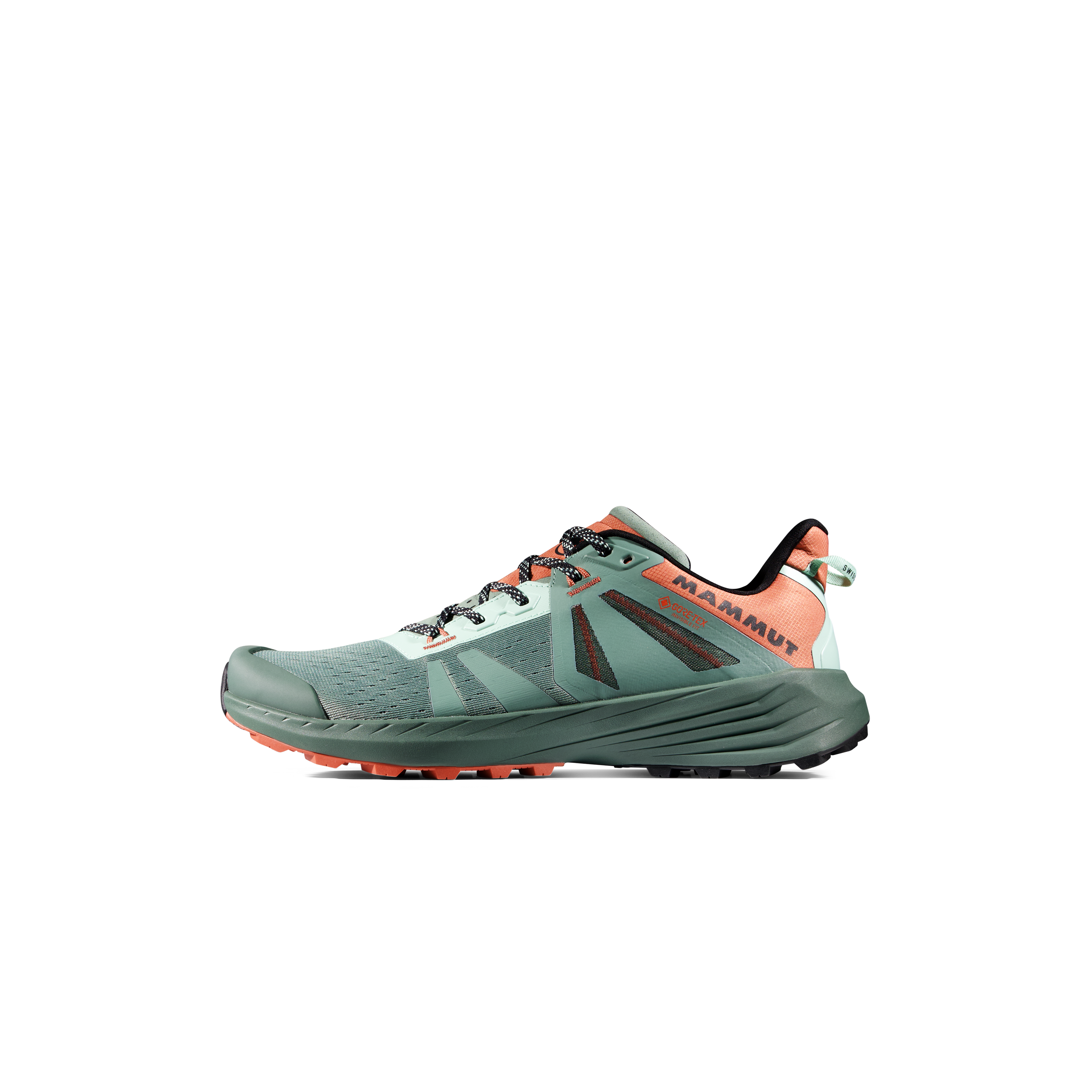
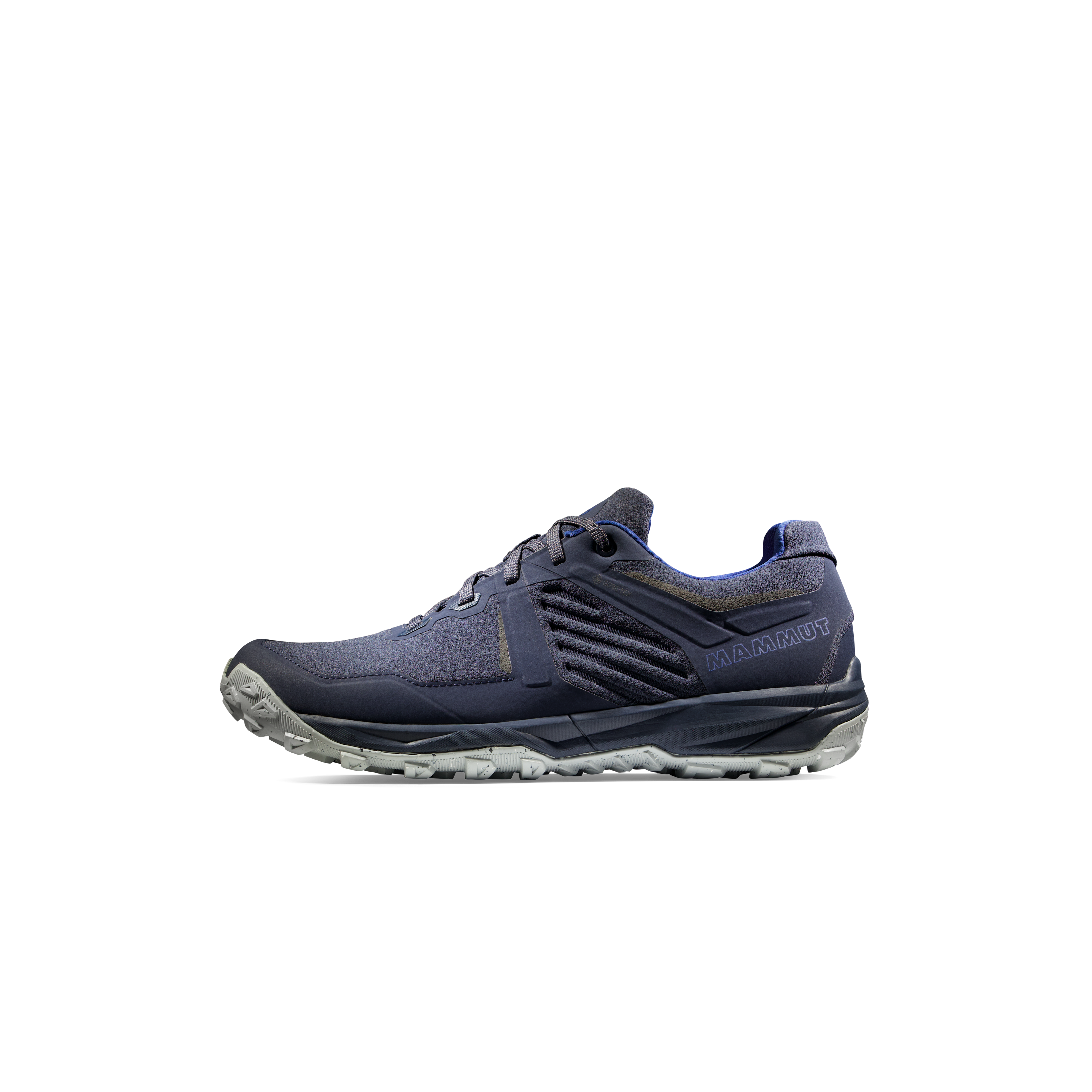
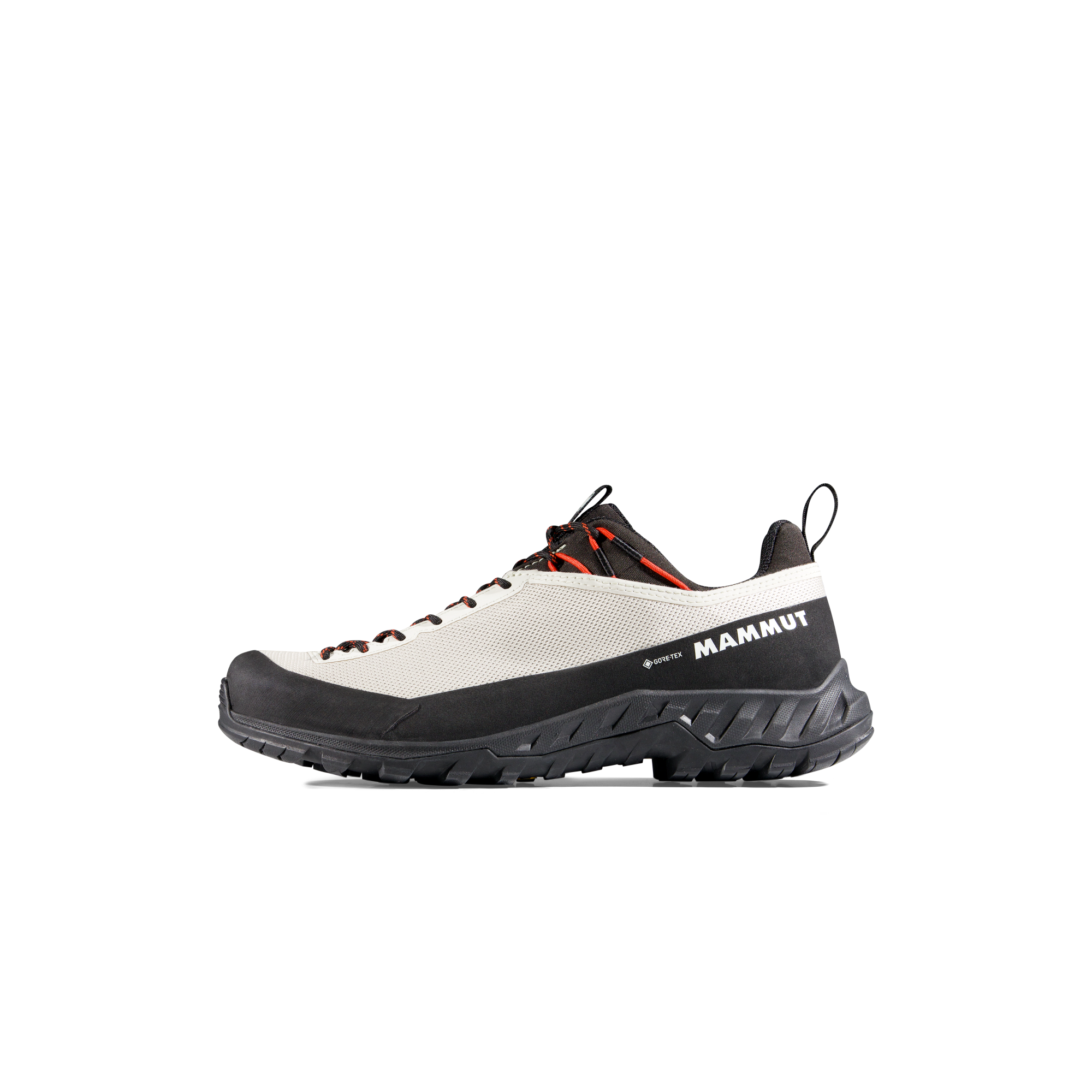
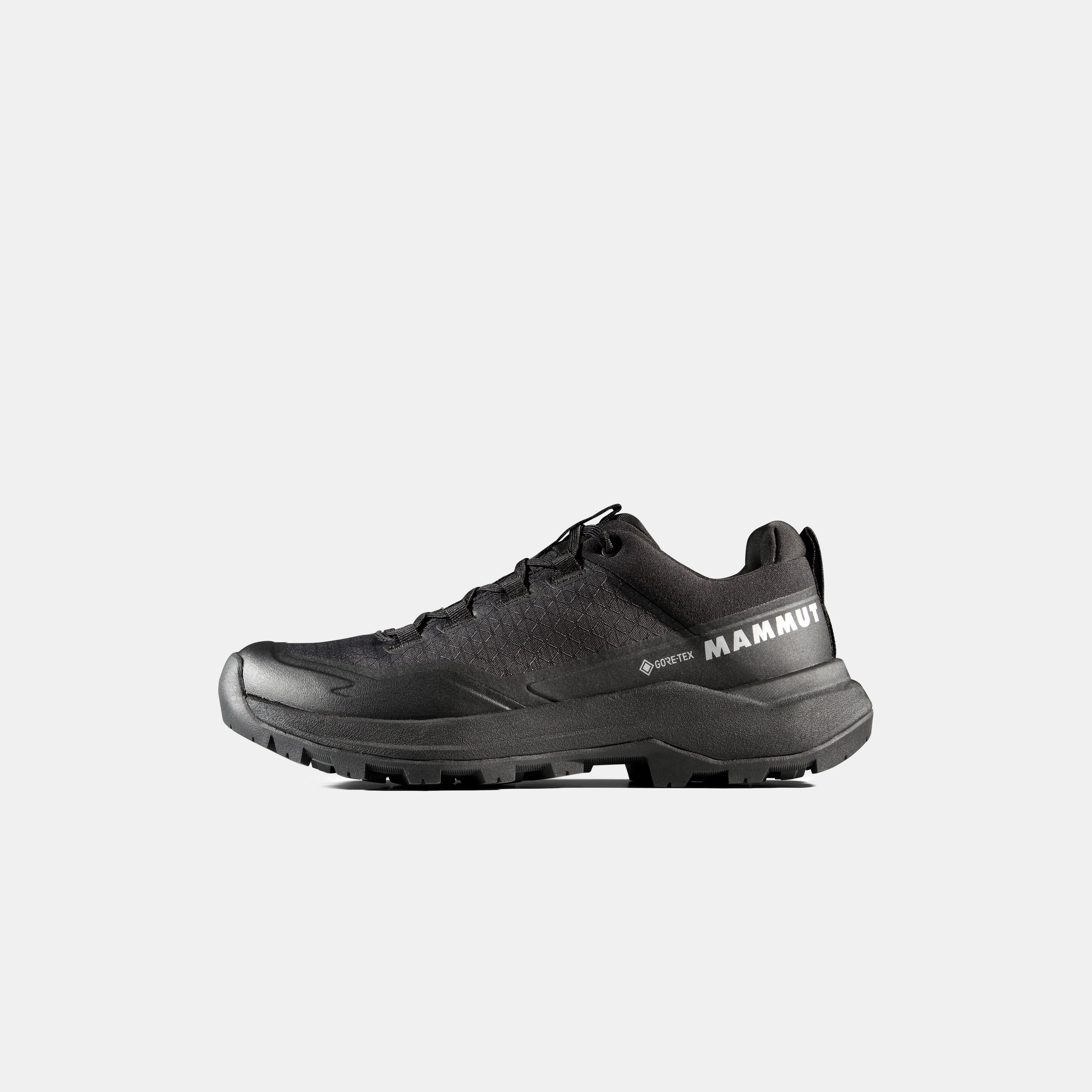
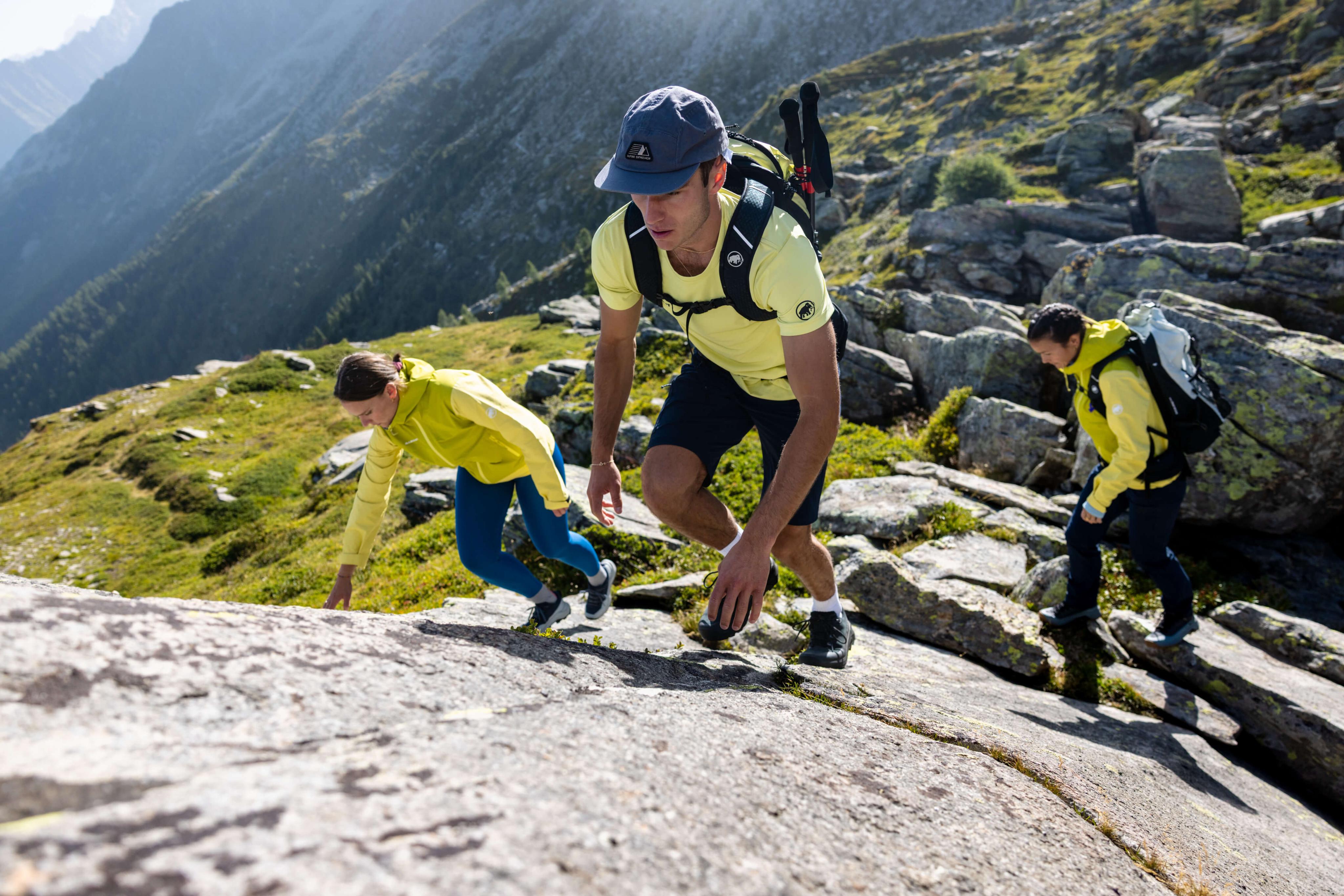
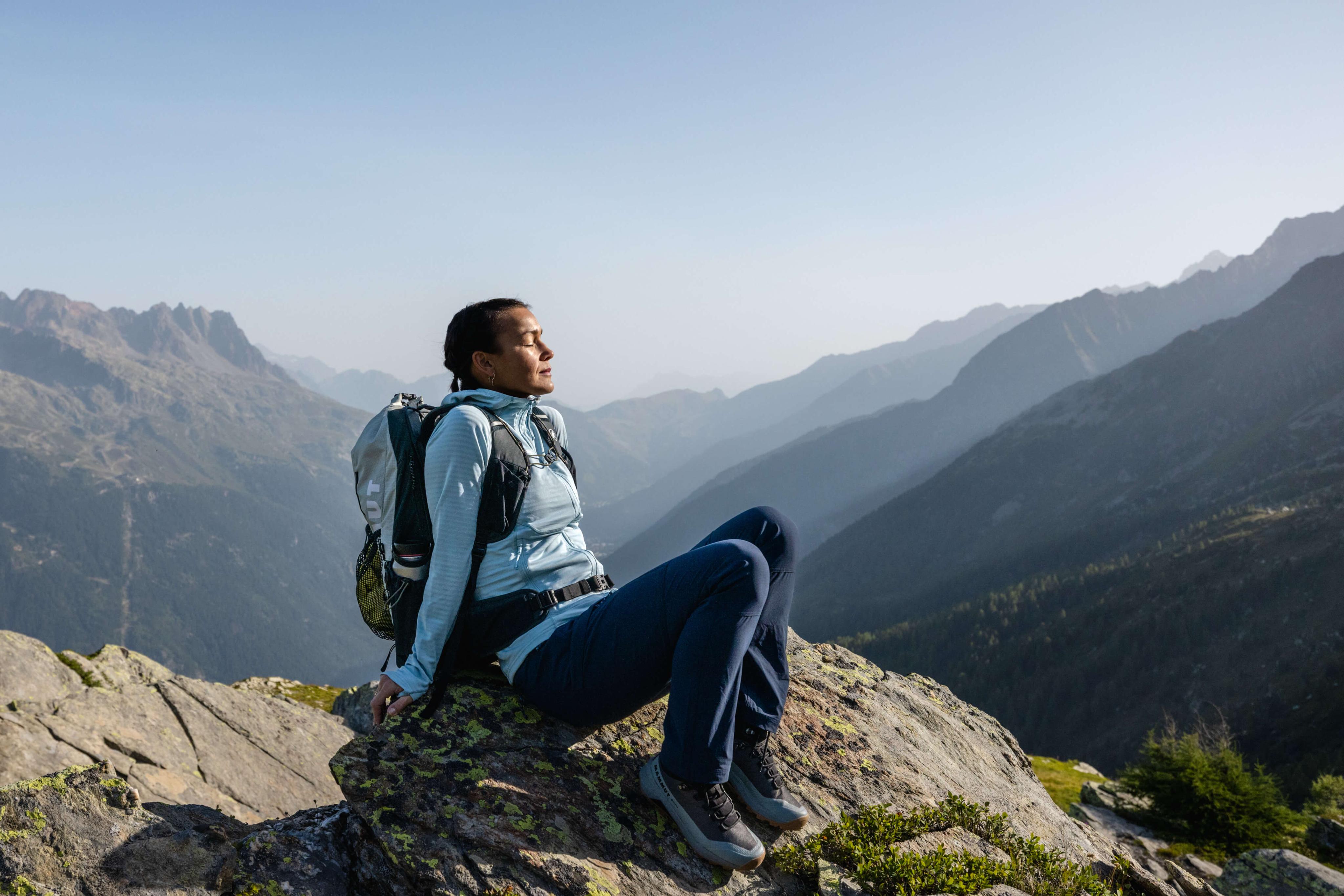
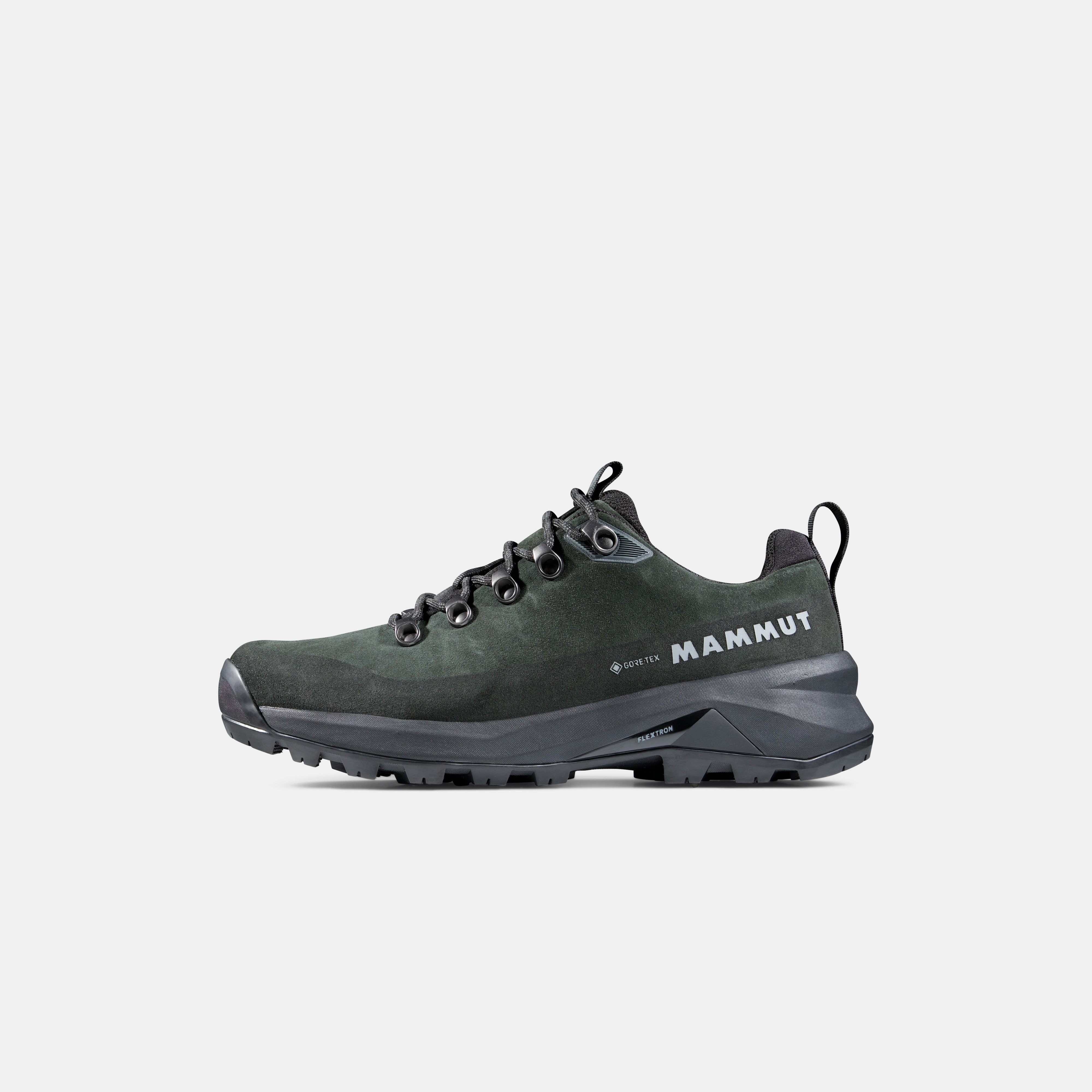
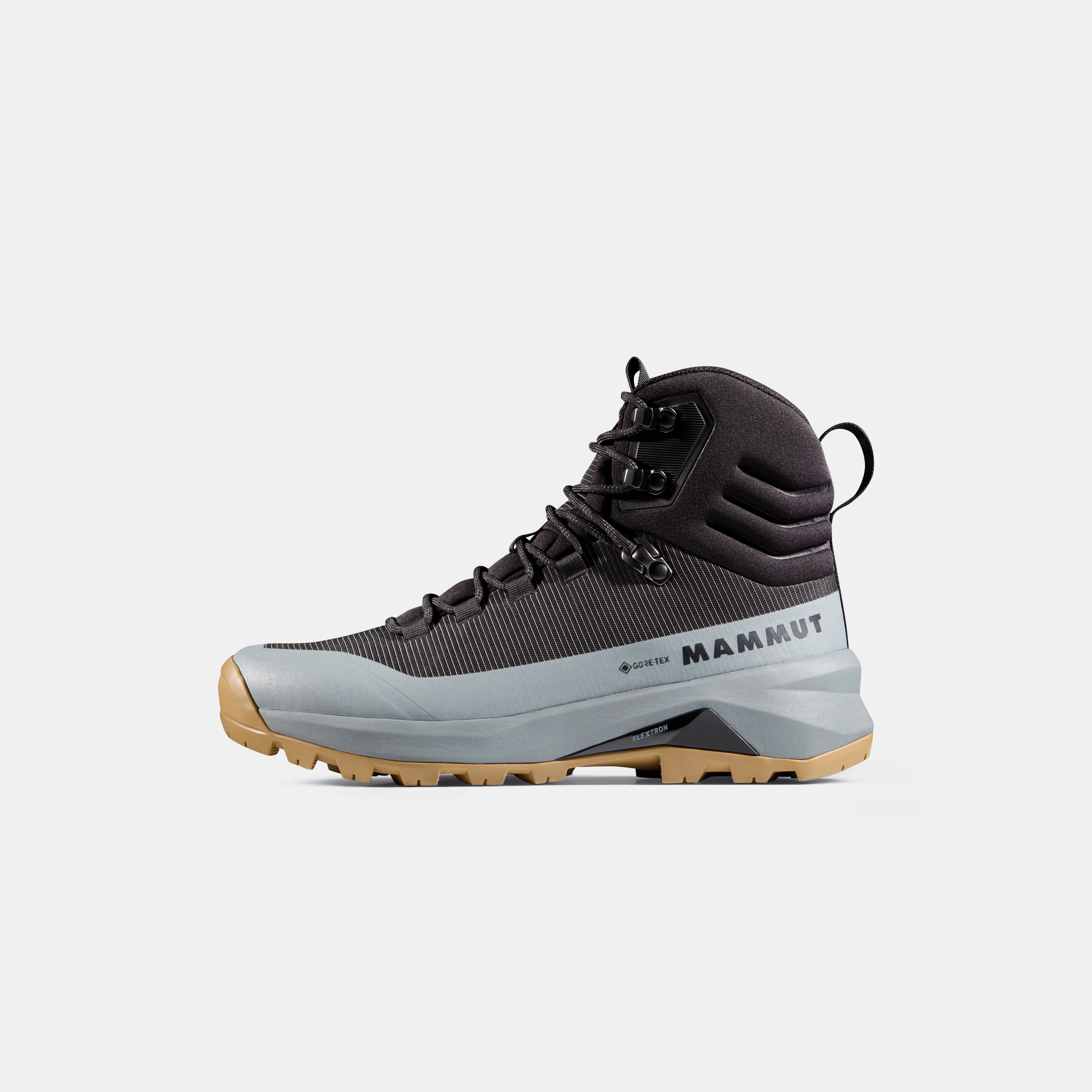
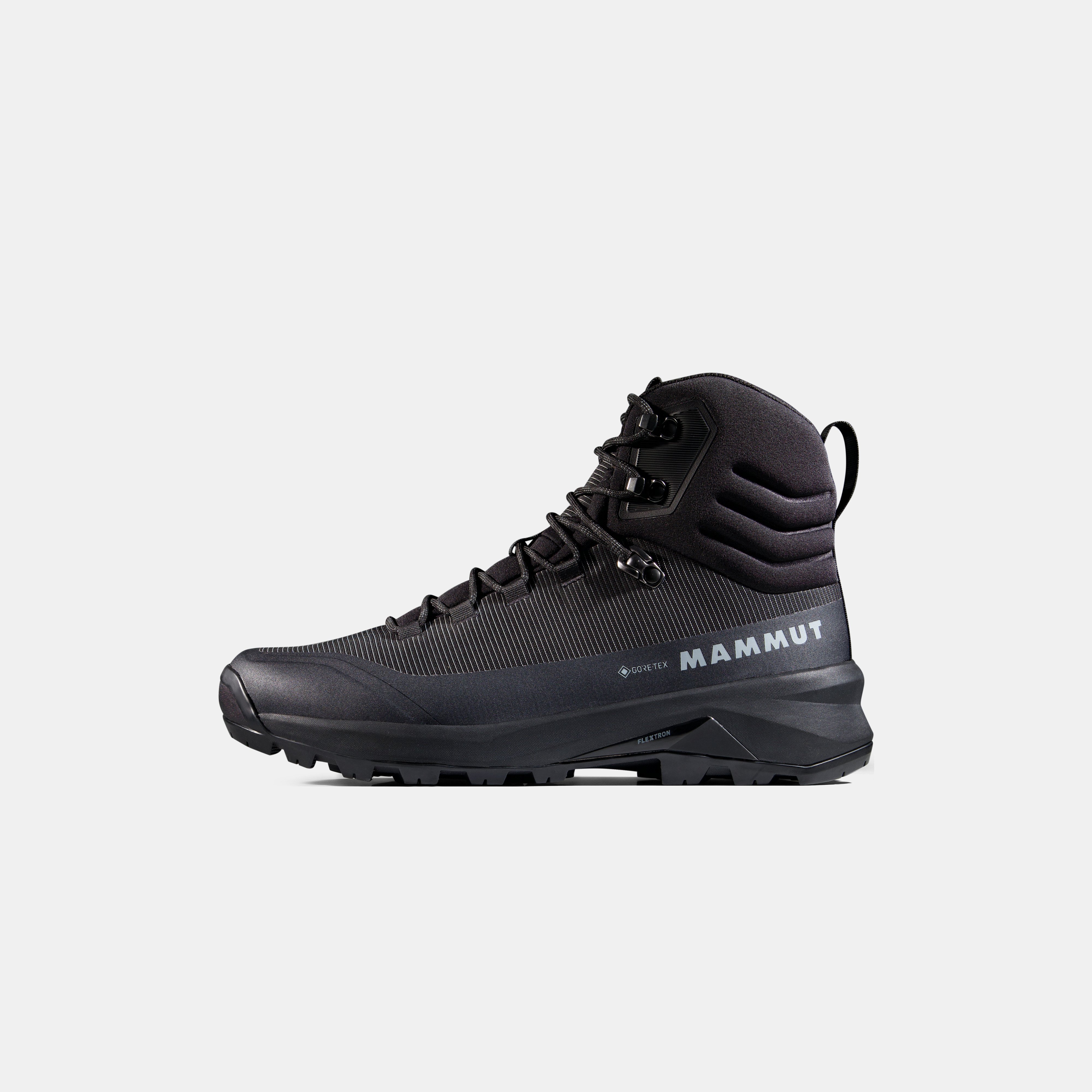
Hiking boots are designed for walking on maintained trails, forest roads, and light to moderate terrain. They strike the right balance between comfort, stability, and flexibility – making sure your feet stay comfortable even after hours on the trail, whether you're carrying a light backpack or a moderately loaded one.
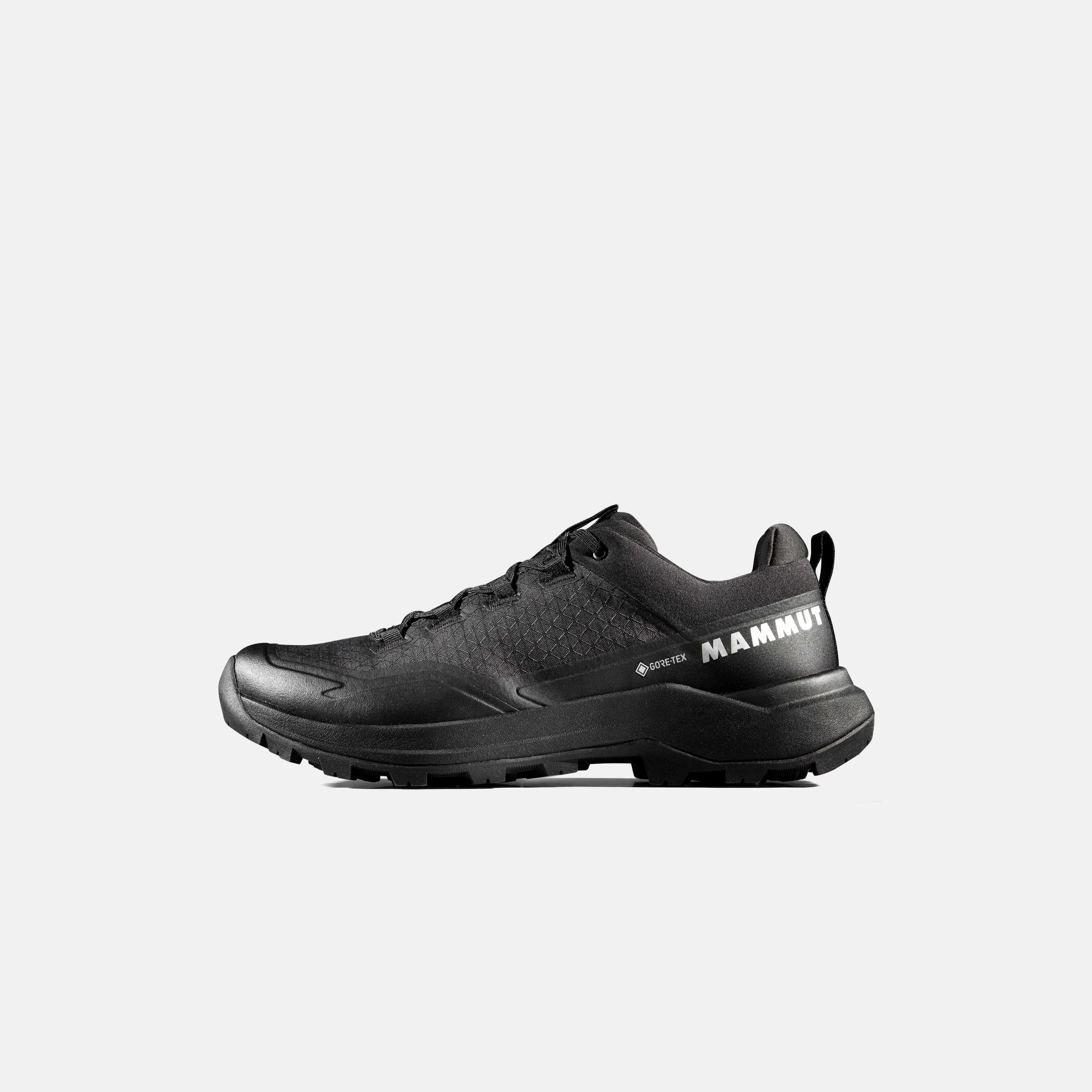
Here's what typically sets hiking boots apart:
weight of around 350 to 750 g per pair – ideal for tours with light to moderate loads
flexible sole for a natural stride and all-day comfort
just the right amount of stability
soft, cushioned midsole
breathable materials, sometimes including leather
usually water-resistant or waterproof
scree protection for moderately technical terrain
available in low-cut, mid-cut, or high-cut depending on the model
What are mountaineering boots?
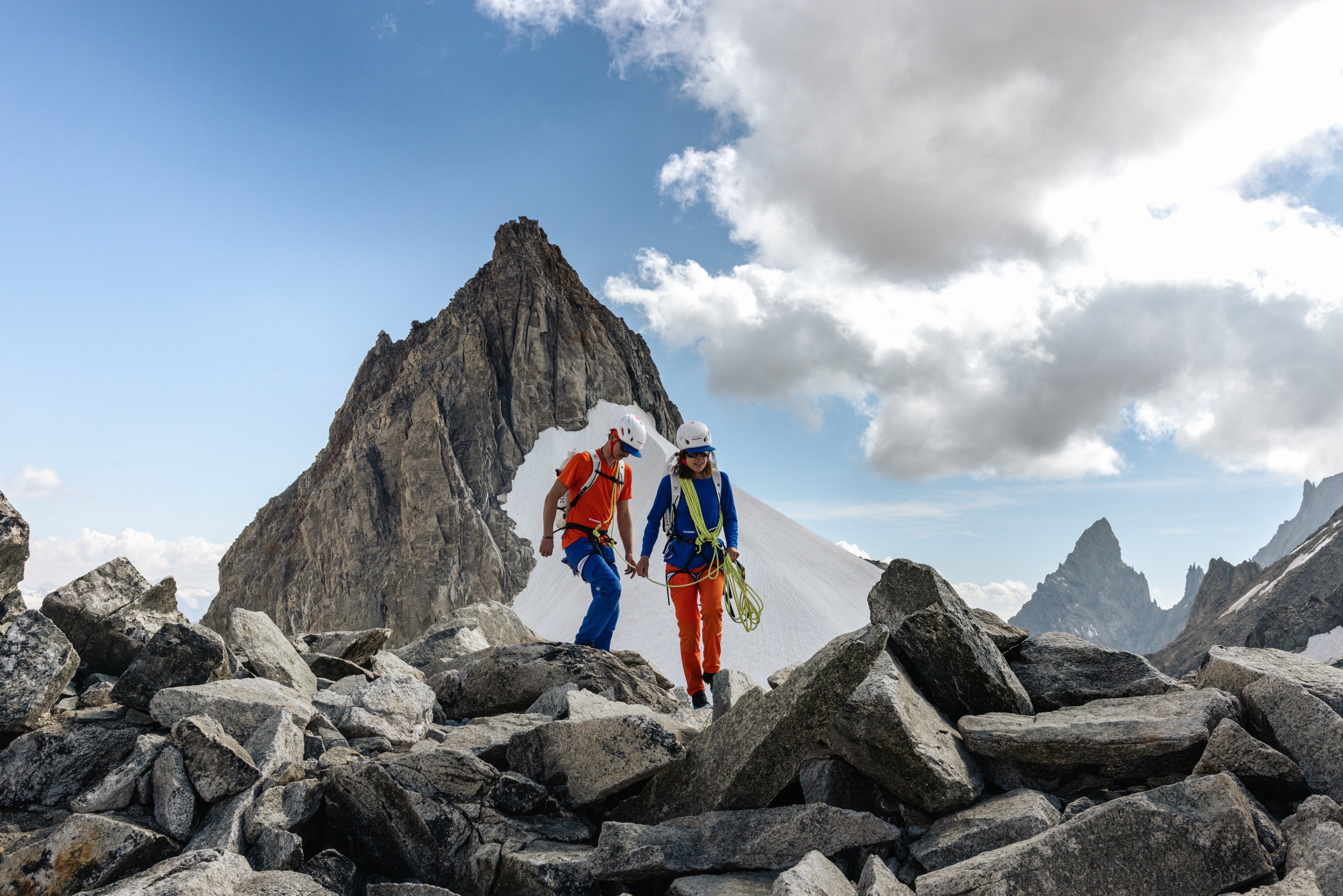
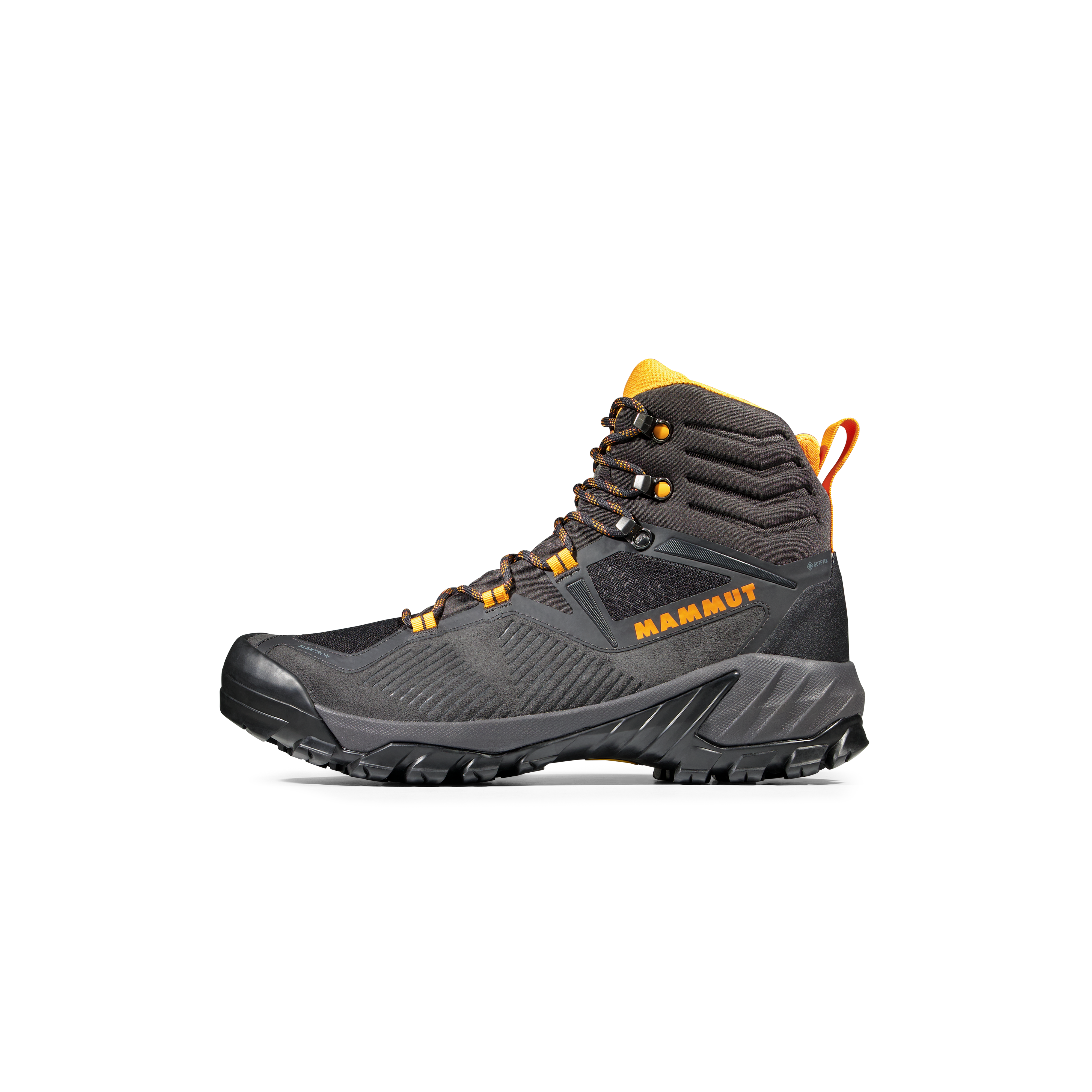
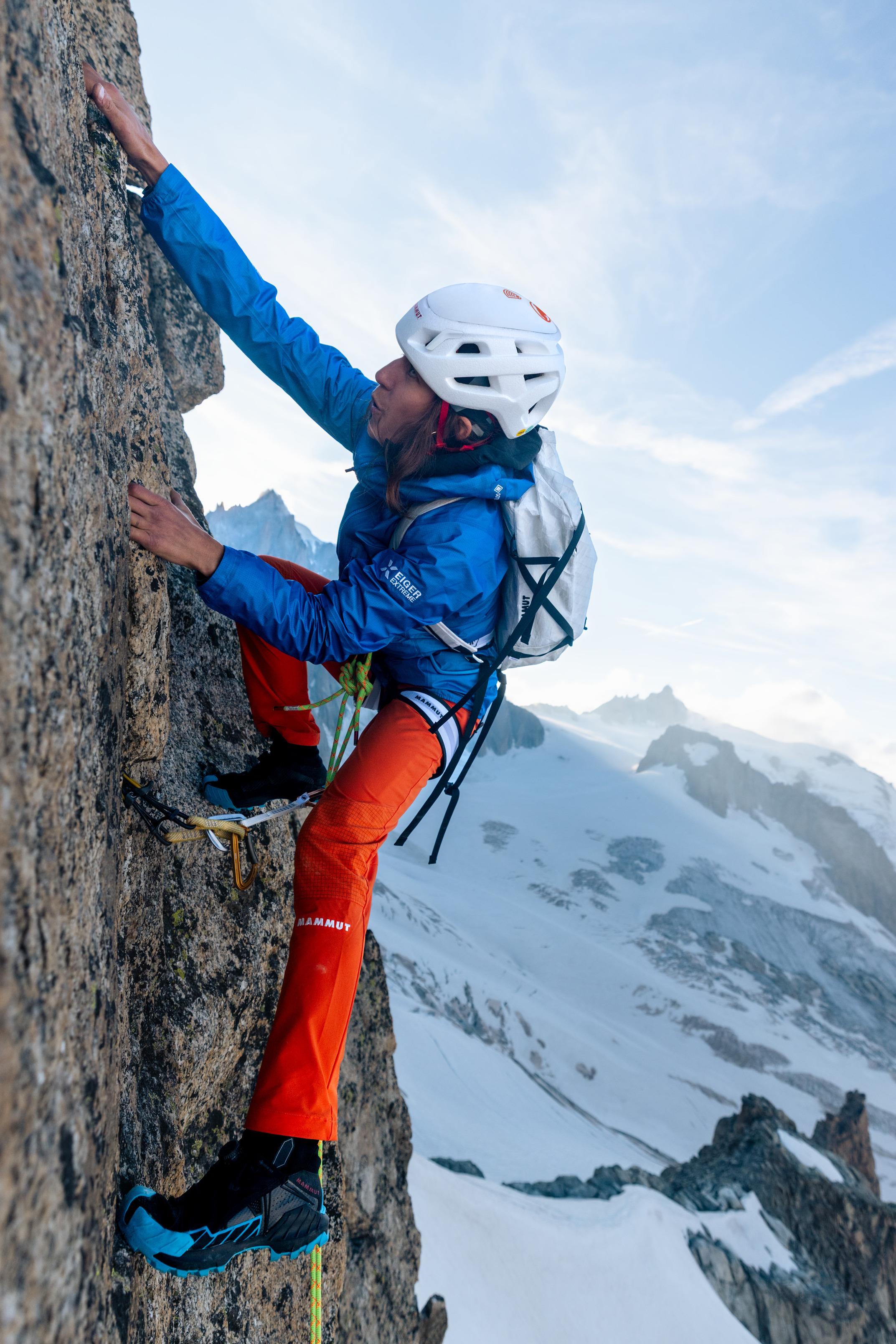
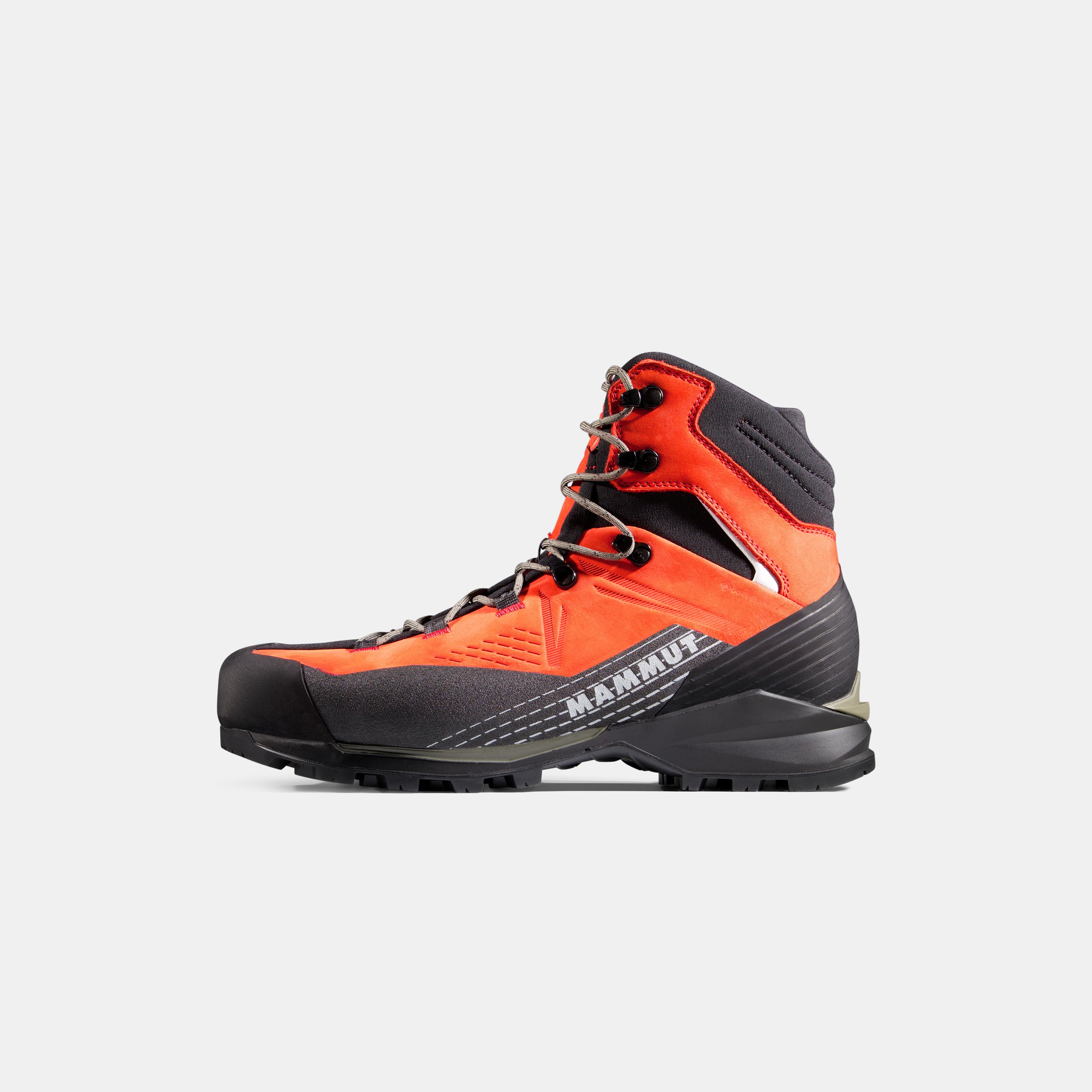
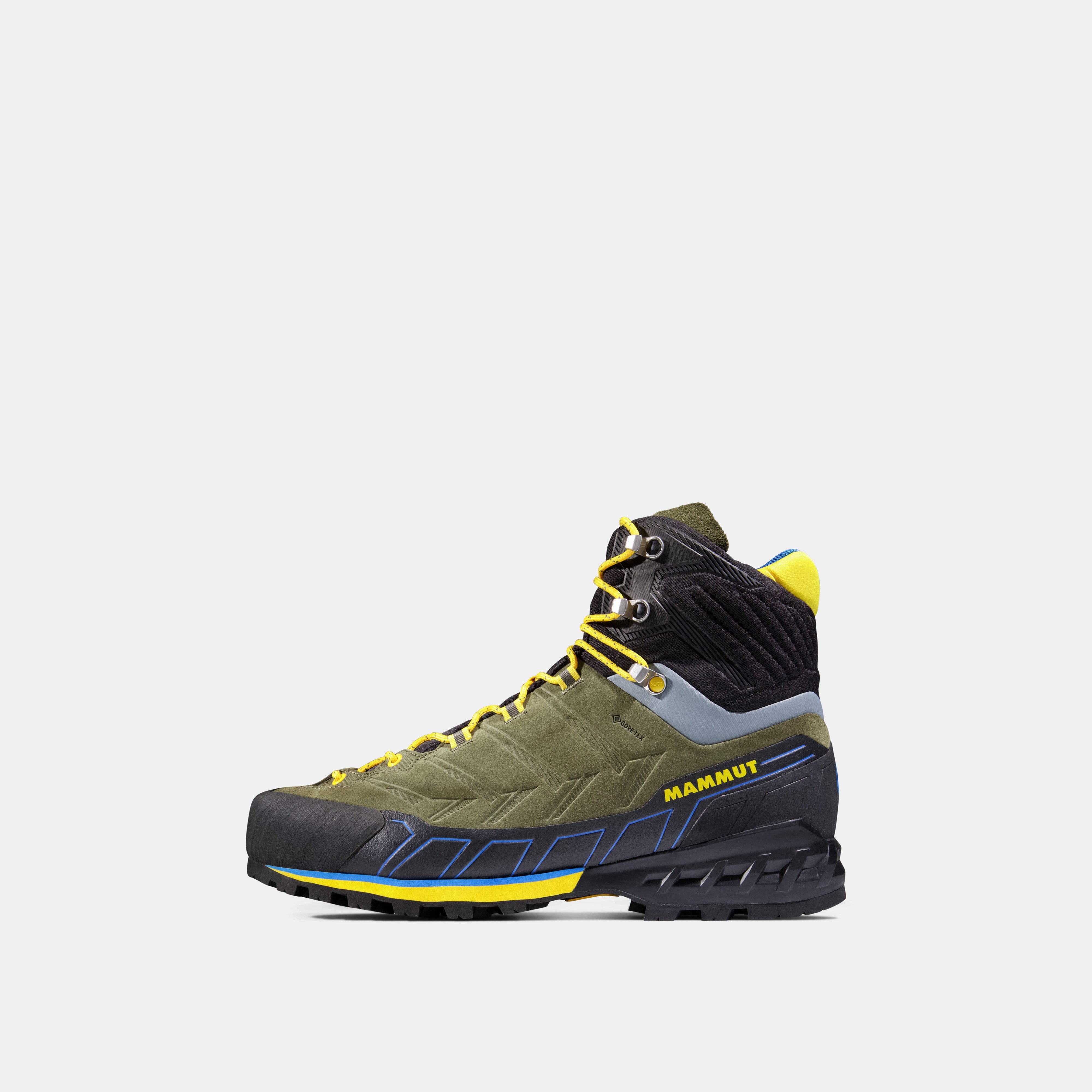
Mountaineering boots are built to handle the tough conditions. When the terrain gets serious – think alpine routes, scree fields, steep ascents, glacier crossings, or even ice climbing – these are the boots you’ll want on your feet. They're engineered for precision, protection, and long-term durability.
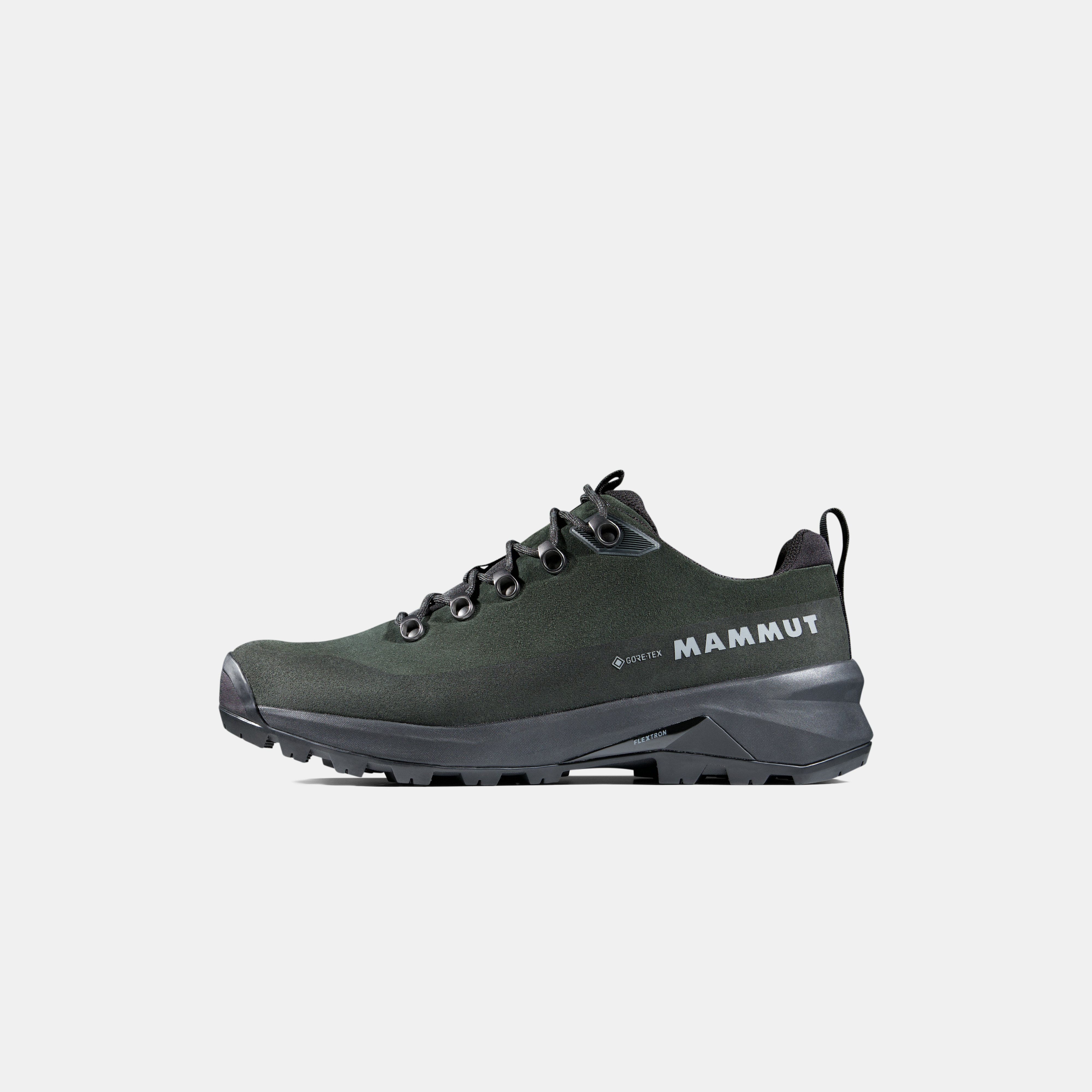
Here's what typically sets mountaineering boots apart:
heavier build due to the stiff sole, reinforced construction, and added protection features like toe caps, heel reinforcement, and robust outer materials
high precision thanks to a stiffer sole
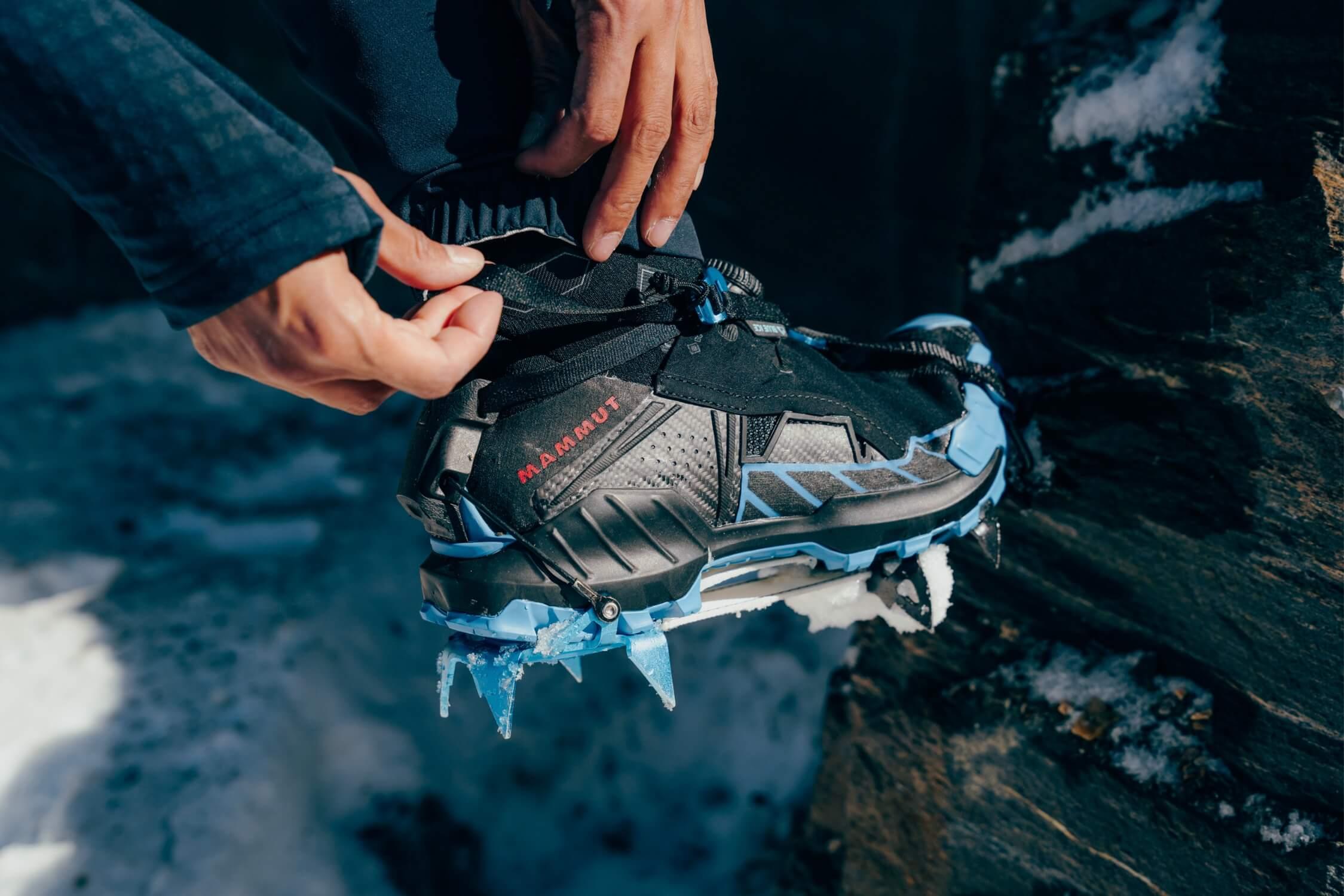
very stiff sole and depending on the model, compatible with crampons front and back
high shaft for maximum ankle support and stability
reinforced toe caps and heel protection
often equipped with insulation and a waterproof membrane
partially insulated depending on the model
at Mammut frequently made from leather
aggressive outsole tread for maximum grip and traction
climbing zone in the forefoot area – ideal for scrambling or via ferratas
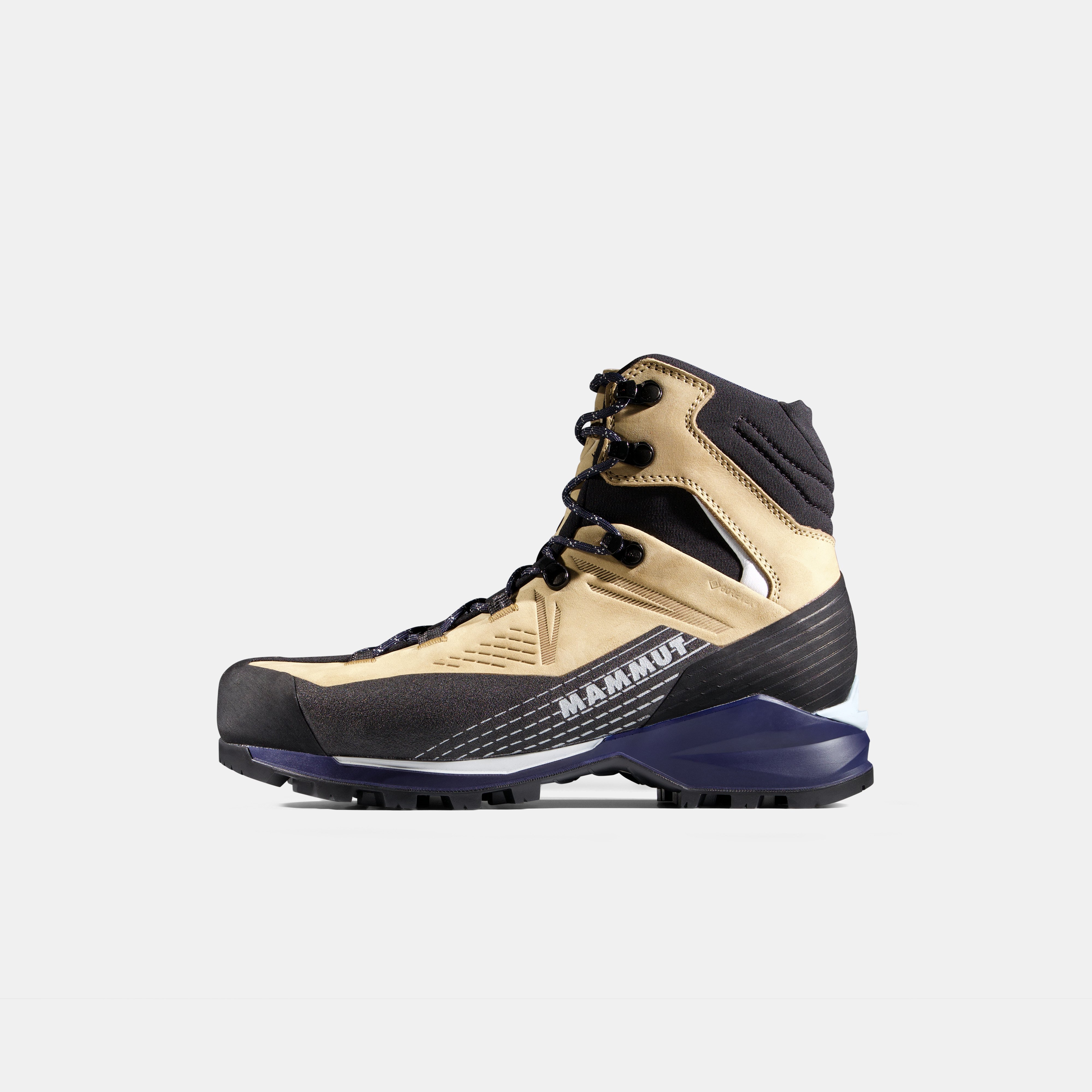
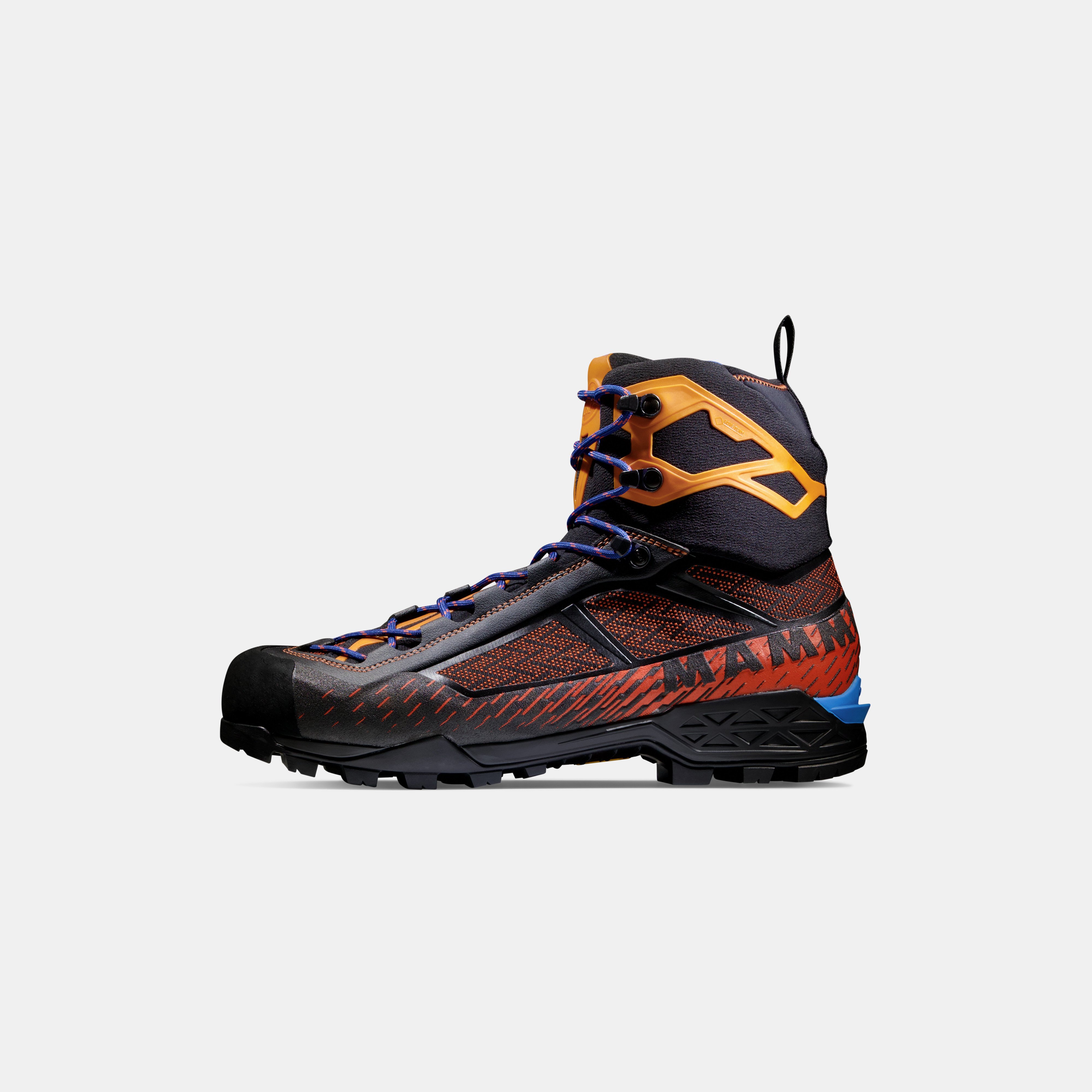
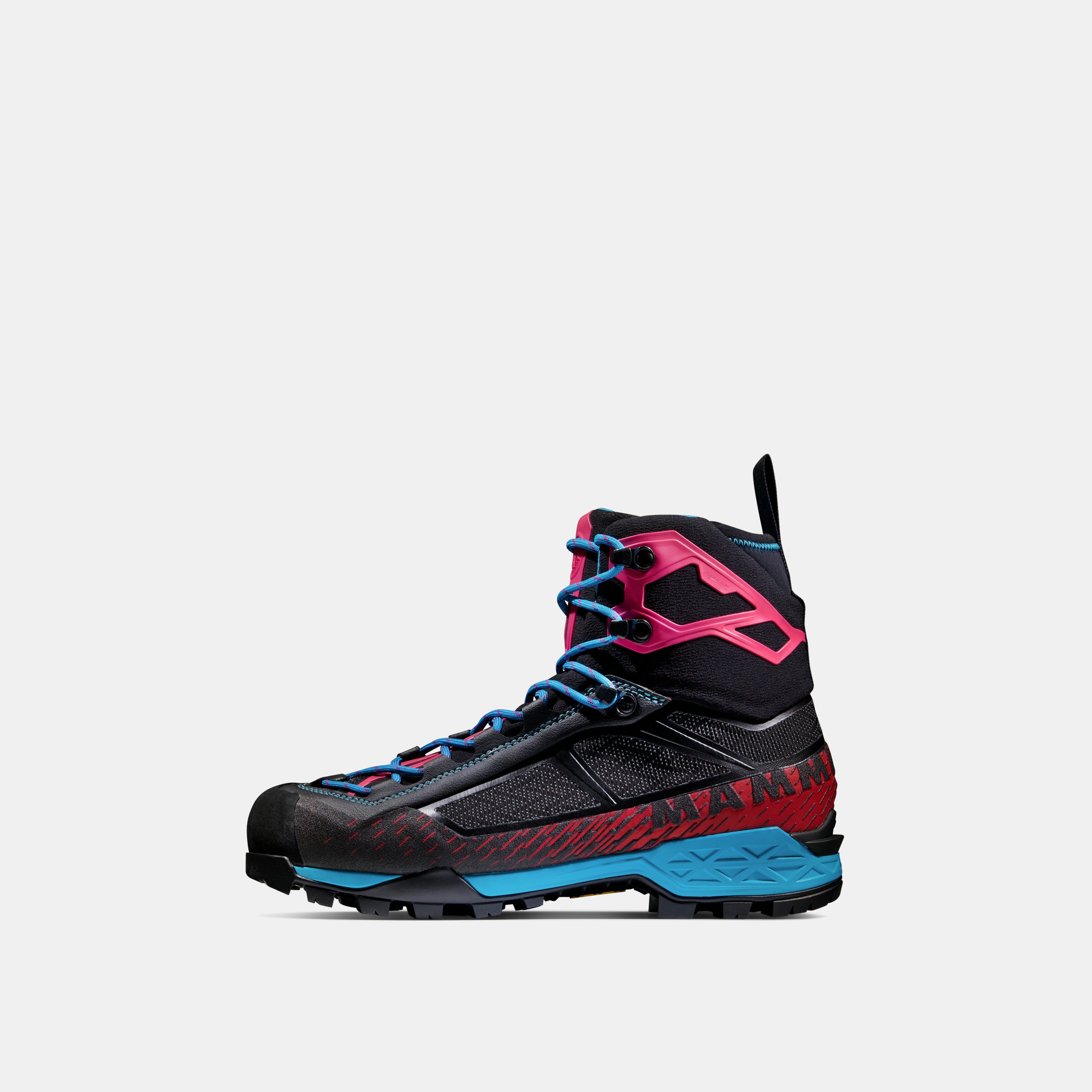
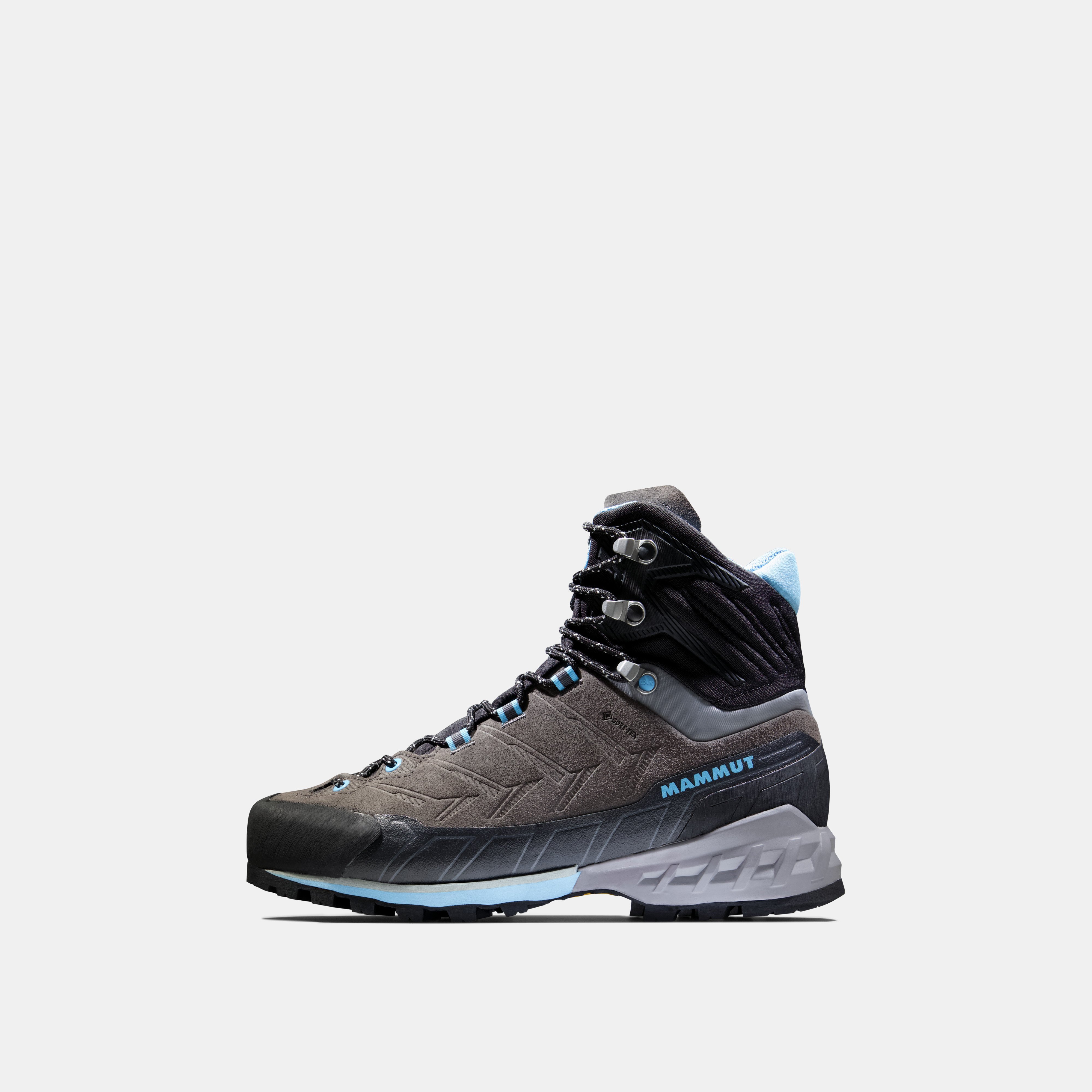
Flex-Index: The difference in sole technology
One of the key distinguishing features at Mammut is the so-called Flex Index. It indicates how stiff or flexible a shoe's sole is – and by extension, what kind of terrain and physical demands it's built for. Here's a breakdown of which Flex Index values correspond to which types of footwear in the Mammut range:
Flex Index A4–A9 – Hiking Boots
Terrain & Use: Light to moderate hikes
Flex Index B1 – Light Mountaineering Boots
Terrain & Use: Alpine day hikes, via ferratas
Flex Index B2 – Classic Mountaineering Boots
Terrain & Use: Glacier tours, high-alpine routes, partially crampon-compatible
Flex Index B3 – High-Alpine Mountaineering Boots
Terrain & Use: Fully crampon-compatible, ice climbing, high-alpinism
Shaft height: freedom of movement vs. stability
Hiking boots come in a range of shaft heights – from low-cut to high-cut, there's an option for every preference. As a general rule, the higher the shaft, the more ankle support you get – which makes a real difference on uneven terrain or when carrying a heavier pack.
Mountaineering boots, on the other hand, consistently feature a high shaft. Out on the mountain, this gives you the hold you need while also protecting you against rolled ankles, scree, snow, and wet conditions.
Materials for hiking boots and mountaineering boots
The outer material, lining, and membrane of a boot directly affect its performance – from breathability and climate comfort to all-weather durability. Here's an overview of the most common materials:
Leather (suede or nubuck)
robust, long-lasting, and adaptable
requires regular care and dries slowly
commonly used in mountaineering boots
gradually molds to the shape of your foot over time
Synthetic/textile
lightweight and quick-drying
often combined with protective overlays
frequently used in hiking boots for moderate conditions
high-performance textiles like Dyneema or Lenzi also hold up in more demanding terrain
Mesh
extremely breathable
ideal for warm temperatures and lighter tours
lower abrasion resistance
Membranes (e.g. GORE-TEX®, DRY Technology)
waterproof and breathable
GORE-TEX® is widely used across both boot categories
Mammut DRY Technology is the in-house alternative, delivering excellent performance
Hiking boots vs. mountaineering boots: a direct comparison
Whether you're heading out for a day hike or a serious alpine expedition, choosing the right footwear comes down to what you're actually planning to do. The table below gives you a clear side-by-side overview of the key differences between hiking boots and mountaineering boots:
Hiking Boots
Terrain & Use: Light to moderate hikes
Weight: Light to moderate
Sole: Flexible and well-cushioned
Flex Index: A4–A9
Shaft Height: Low, mid or high-cut
Material: Breathable, often synthetic
Weather Protection: Often waterproof with GORE-TEX®
Mountaineering Boots
Terrain & Use: High-alpine terrain, glaciers, via ferratas
Weight: Heavier
Sole: Stiff, stable, partially crampon-compatible
Flex Index: B1–B3
Shaft Height: High-cut
Material: Robust, often leather or abrasion-resistant materials
Weather Protection: Weatherproof with Mammut DRY (or most commonly GTX)
Before making your decision, take a close look at the tours you're actually planning. The more technical and high-alpine the terrain, the more you'll benefit from a stiff mountaineering boot with a high shaft. For moderate hikes on varied terrain, a mid-cut hiking boot is usually the perfect fit.
Sizing and fit
Whether you're going for hiking boots or mountaineering boots, the fit is everything. Your toes need enough room to move without sliding around, and your heel should sit firmly in place. Always try your boots on with hiking socks, and simulate the descent by walking on an inclined surface to get a realistic feel.
A few things to keep in mind: many retailers offer measuring systems on sight, or you can use the relevant size charts online. Mammut also has a digital Fit Finder to help you decide on the right choice. When in doubt, go half a size up – especially on longer mountain tours where thicker socks are needed.
The verdict: Hiking boots or mountaineering boots?
Whether you're heading out for a forest hike or gearing up for a high-alpine expedition, the right gear keeps you safe and confident every step of the way. Browse our range of mountaineering and hiking equipment and discover our selection of high-quality hiking boots , technical mountaineering boots , and much more.
Want to dig deeper into choosing the right footwear? Check out our hiking boot guide or mountaineering boot guide. For more tips and inspiration – from finding the right hiking backpack to breaking in your hiking boots – take a look at the Mammut Stories & Guides .
Frequently asked questions about mountaineering and hiking boots
How long do mountaineering boots last? With proper use and care, a good pair of mountaineering boots can last anywhere from 5 to 10 years. Regular cleaning and waterproofing make a real difference.
Can I use mountaineering boots for regular hikes? Technically yes – they offer more protection and stability, but they're also heavier and stiffer. For lighter hikes, hiking boots will generally feel a lot more comfortable.
Can I use crampons with hiking boots? Hiking boots are not crampon-compatible as a rule, since their soles are too flexible. For crampons, you'll need a mountaineering boot with a Flex Index of B2 (partially crampon-compatible) or B3 (fully crampon-compatible). B1 can also work depending on the model – the Mammut Kento Tour being one example. Find out more in our crampon guide .
What should I do if my boots are rubbing or pinching? Always test them with the right socks and make sure they're laced up correctly. Still uncomfortable? Try breaking them in, switching to different insoles, or trying a different model.
What socks work best with hiking or mountaineering boots? Performance socks made from merino wool or synthetic fibers are the way to go – they wick away moisture, provide cushioning, and help prevent blisters.
What's the difference between lightweight and classic hiking boots? Lightweight hiking boots are more flexible and breathable, making them ideal for well-maintained trails and shorter tours. Classic hiking boots are more ruggedly built, often higher-cut, and offer better protection and support on more demanding terrain or uneven ground.