


New Colors Added
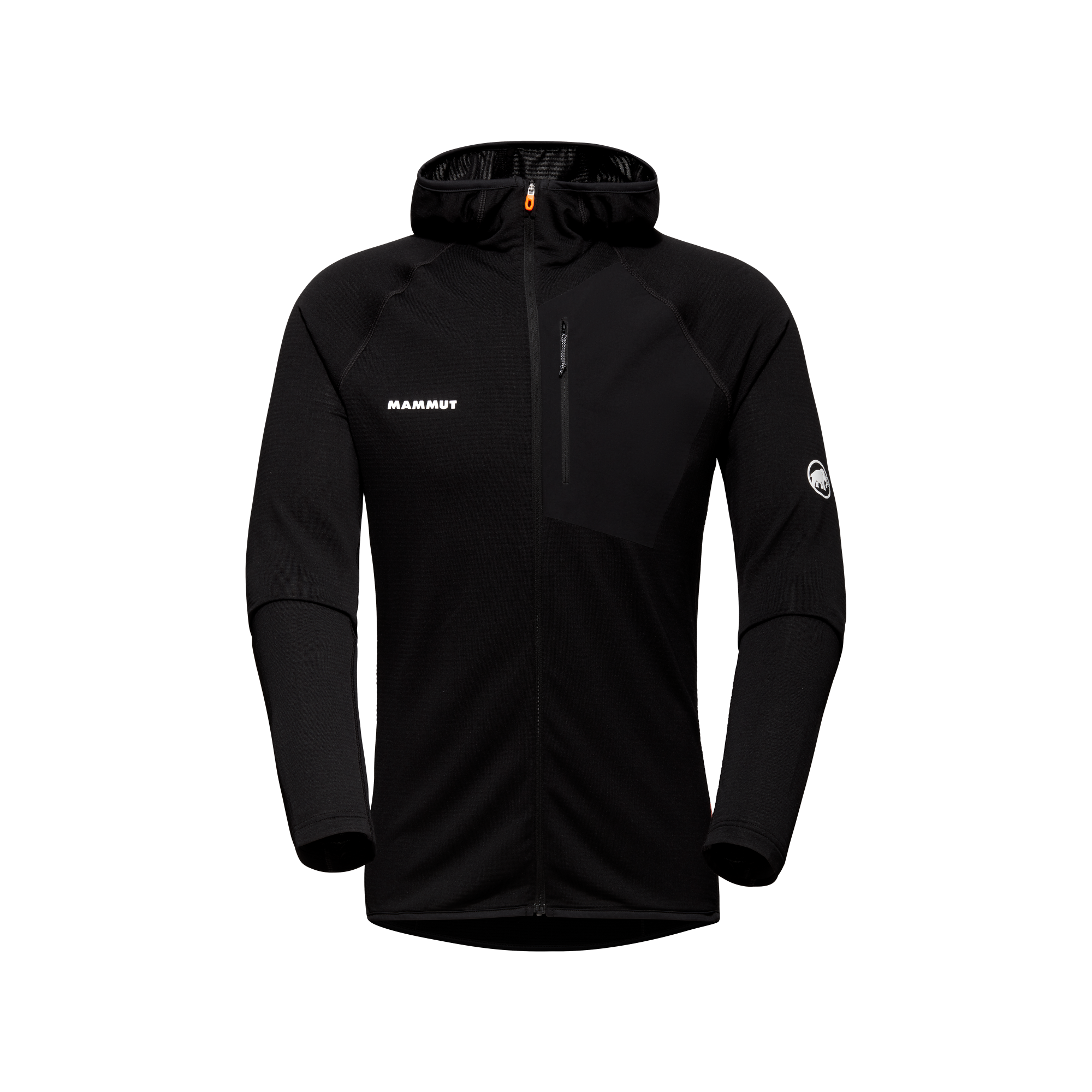
Sender IN Hooded Jacket Men
01/26
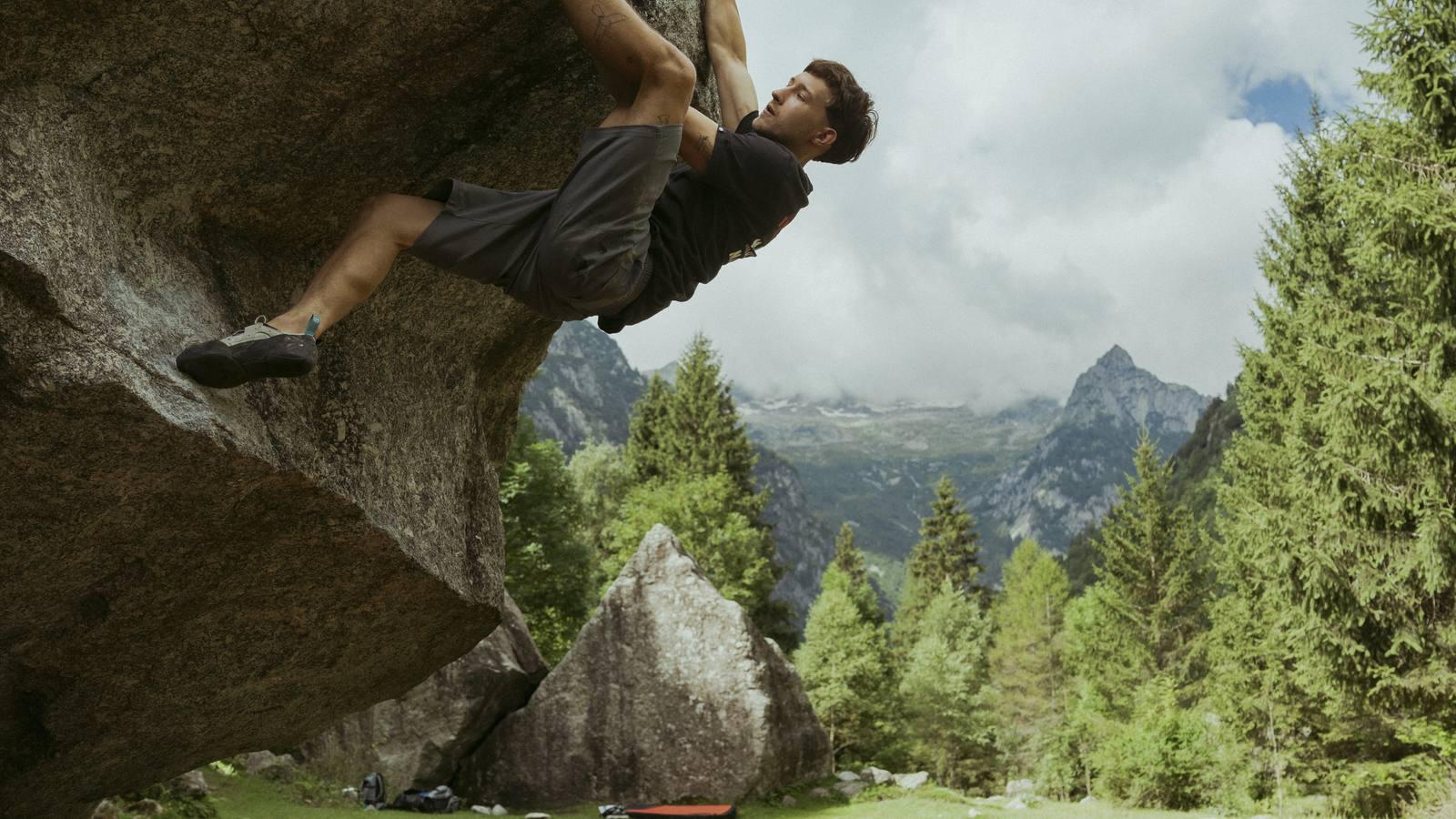
Bouldering is without doubt one of the most approachable climbing activities: All you need is to focus on your movement, technique and body control – no harnesses or ropes required. While climbing gyms offer a safe environment and a variety of routes to put your skills to the test, hitting the wall outdoors will give you the chance to conquer different types of rock, unexpected twists and turns, and to enjoy climbing in its most original form. Whether indoor or outdoor, with the right technique you’ll get the most out of your experience – not just in terms of taking your performance to the next level, but also in terms of increasing your safety. In this guide, we’ll tell you how to improve your technique, what kind of equipment you need, and how to safely conquer any environment.
Climbing gyms are the perfect place to practice and get some experience under your belt. You can try all kinds of things without having to worry about factors like weather conditions, quality of the rock or landing zone. On natural rock, you’ll put those first fundamental skills to the test while navigating additional challenges and experiencing the unrivaled feeling that comes with climbing out in the open. Whether indoor or outdoor: You should never just start climbing, but actually take the time to consciously prepare for the task ahead. With these important pointers, we’ll help you get the most out of your bouldering sessions.
Start your warm-up with mobility exercises like circular motions with your shoulders and wrists, light stretches or jumping jacks. Additionally, performing a couple of simple moves using various grips and holds in the designated warm-up area is a great way to get the blood flowing. Once you’re in the actual bouldering hall, start with 3-5 easy boulders within the 4a to 5c range, increasing the difficulty level step-by-step. That way, you can properly activate your muscles and joints to reduce the risk of injuries. Take a good look at your chosen route before you start, memorize the key holds and figure out which way you need to go to reach the top. Make sure to allow for breaks in between your attempts to effectively pace yourself and prevent your energy levels from dropping too quickly.
Bouldering is a great choice because unlike in rope climbing, you only need very little equipment. Especially when you’re just starting out, a couple of essentials will do:
Climbing shoes allow you to step with precision. Many gyms will lend you a specific type of shoe that is specifically suitable for beginners. Beginners usually go with their normal shoe size or pick a model that’s 1-2 sizes bigger, while experienced athletes generally tend to choose theirs in a size 1-3 sizes smaller than their normal size. If you’re bouldering on a regular basis, investing in your own pair of climbing shoes not only makes sense from a financial point of view, but a pair that perfectly fits your foot shape will go a long way in preventing pinching in all the wrong places. The more experience you have, the more options you have when choosing your shoes – and the easier it becomes to find a model to suit your skill level and personal preference, for example whether you need more – or less – asymmetry and downturn.
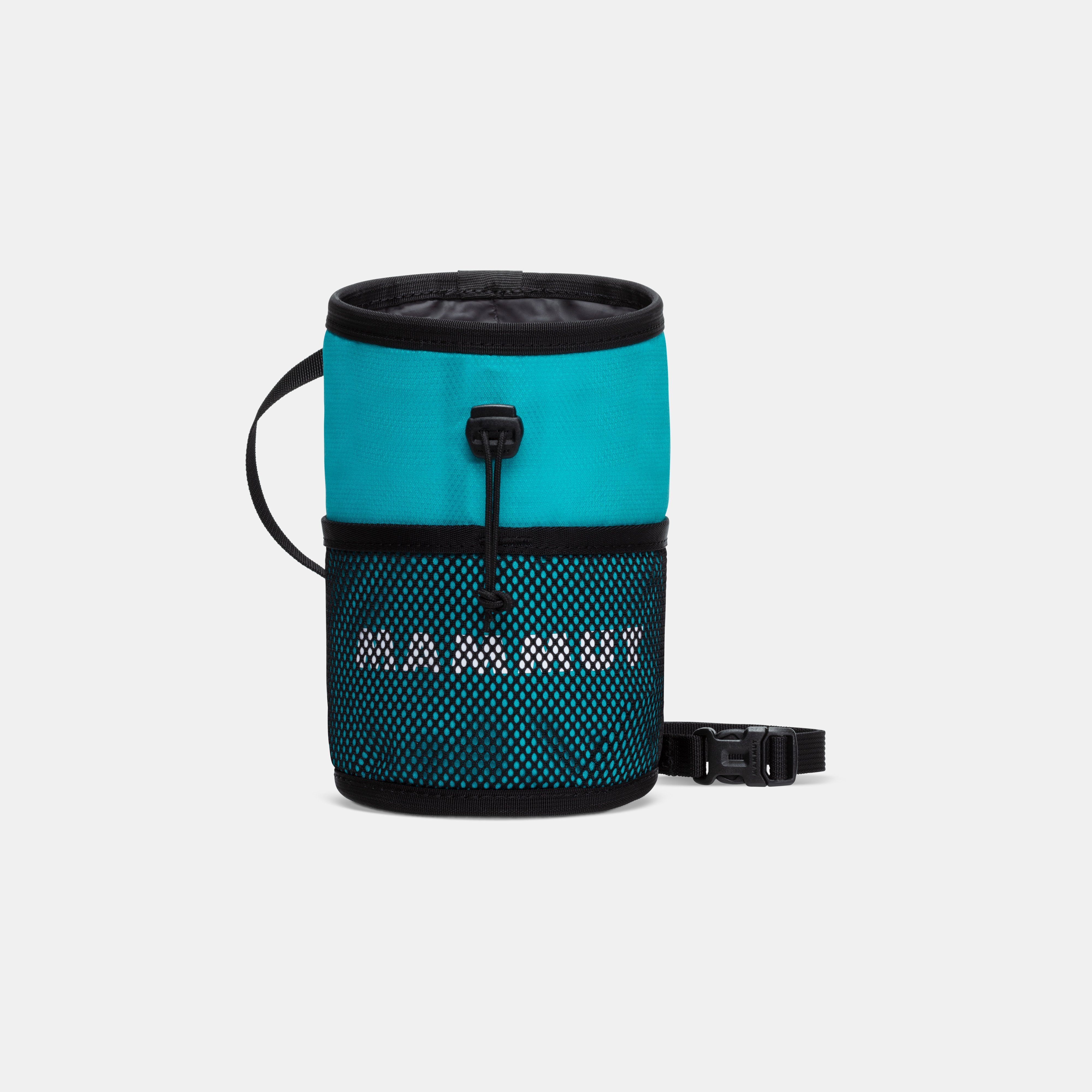
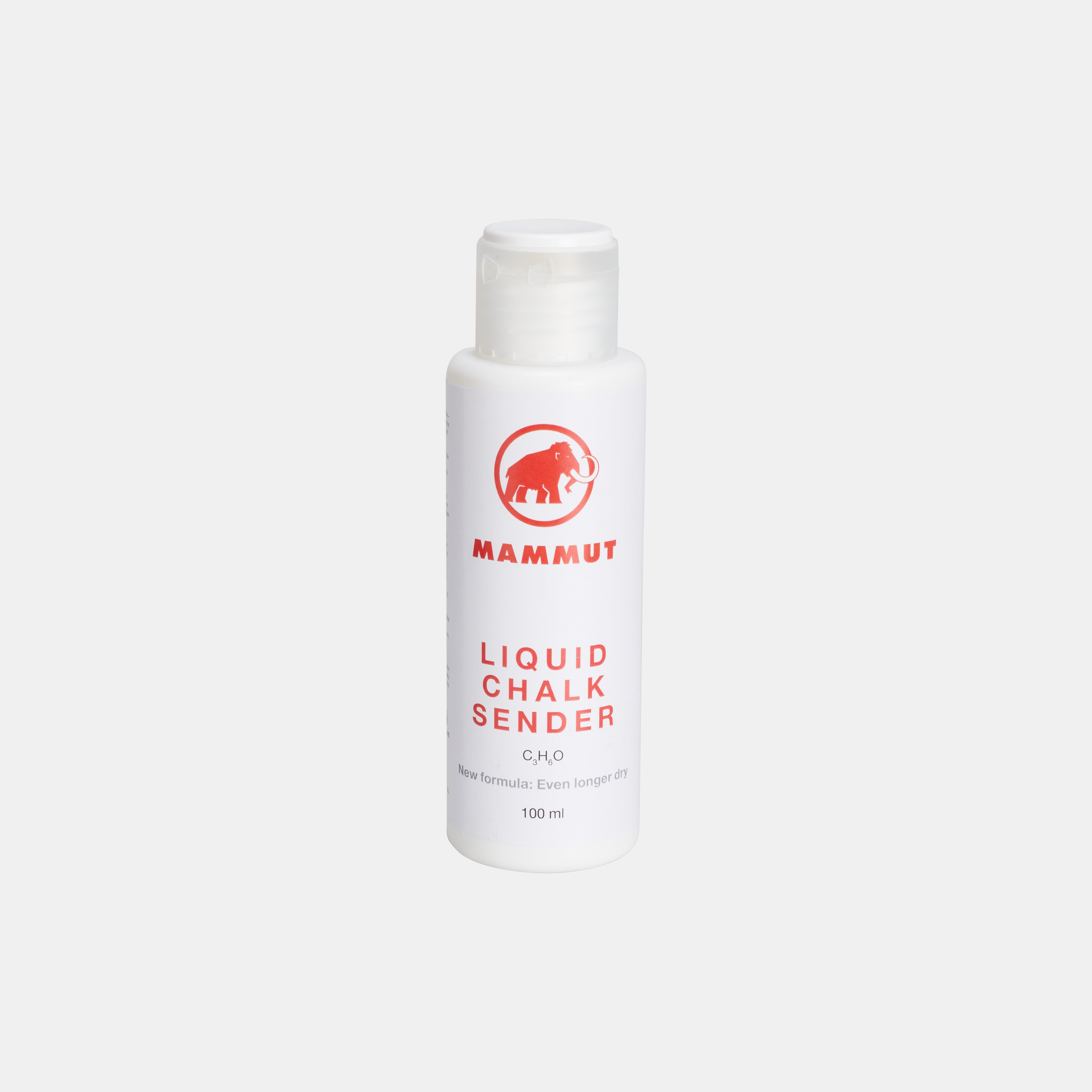
A chalkbag with magnesium carbonate will improve your grip when your hands are getting sweaty. But watch out: Many indoor climbing venues have banned the use of regular powder chalk – instead, you’ll have to use chalkballs or liquid chalk.
Your sports clothes ideally should be super comfortable, stretchy and breathable. In our guide on what to wear for indoor bouldering and climbing , we'll tell you everything you need to know when picking out your outfit.
A brush for removing chalk from the holds if they’ve become too slippery to grab or step on.
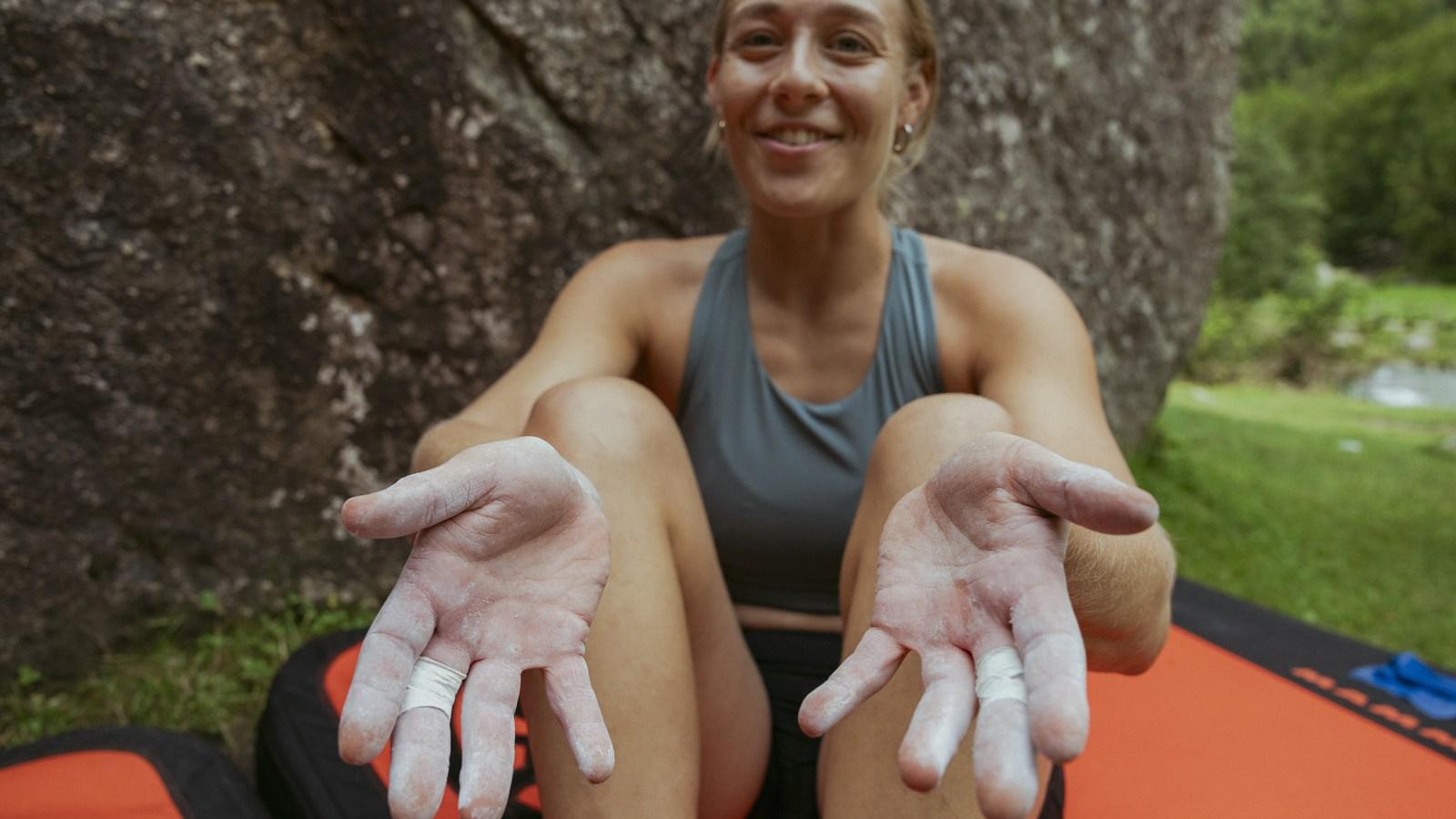
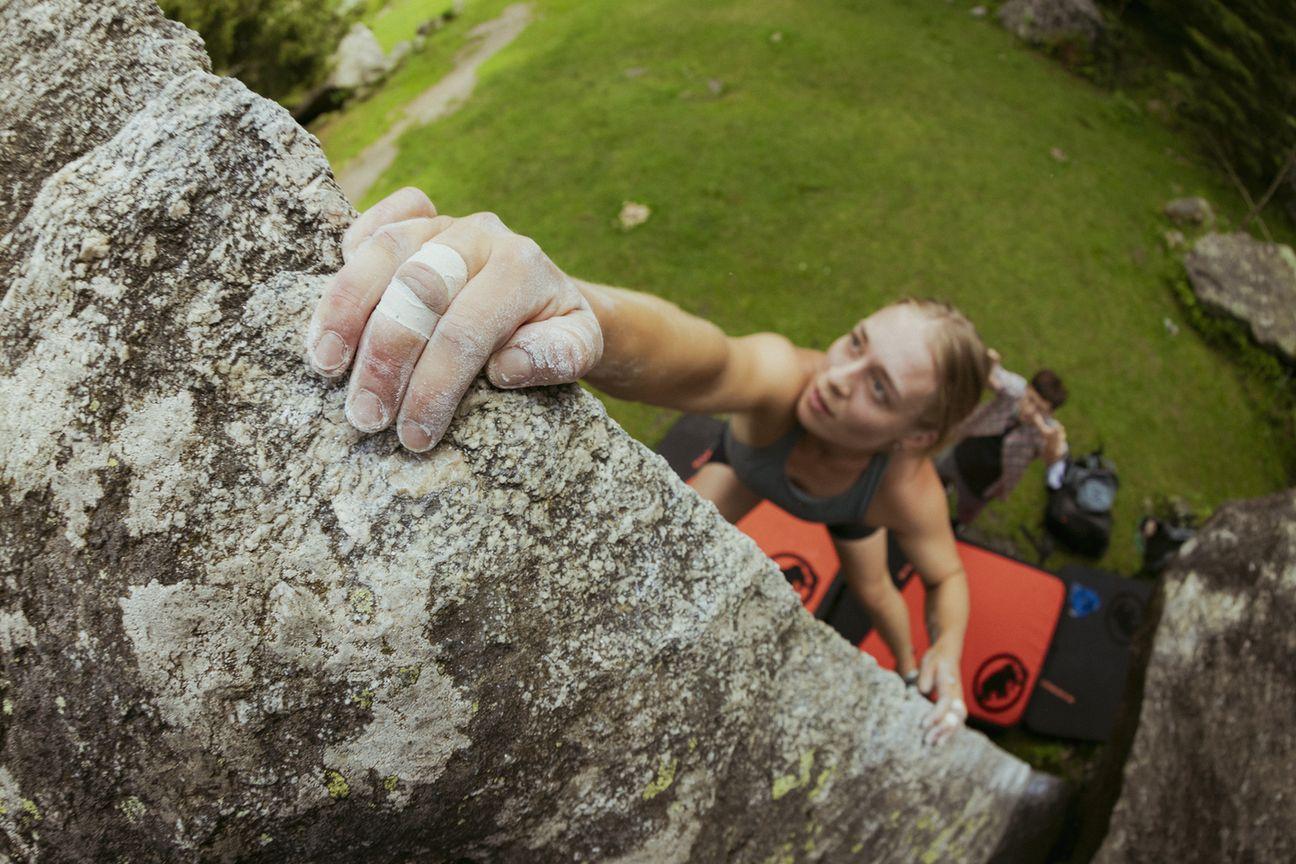
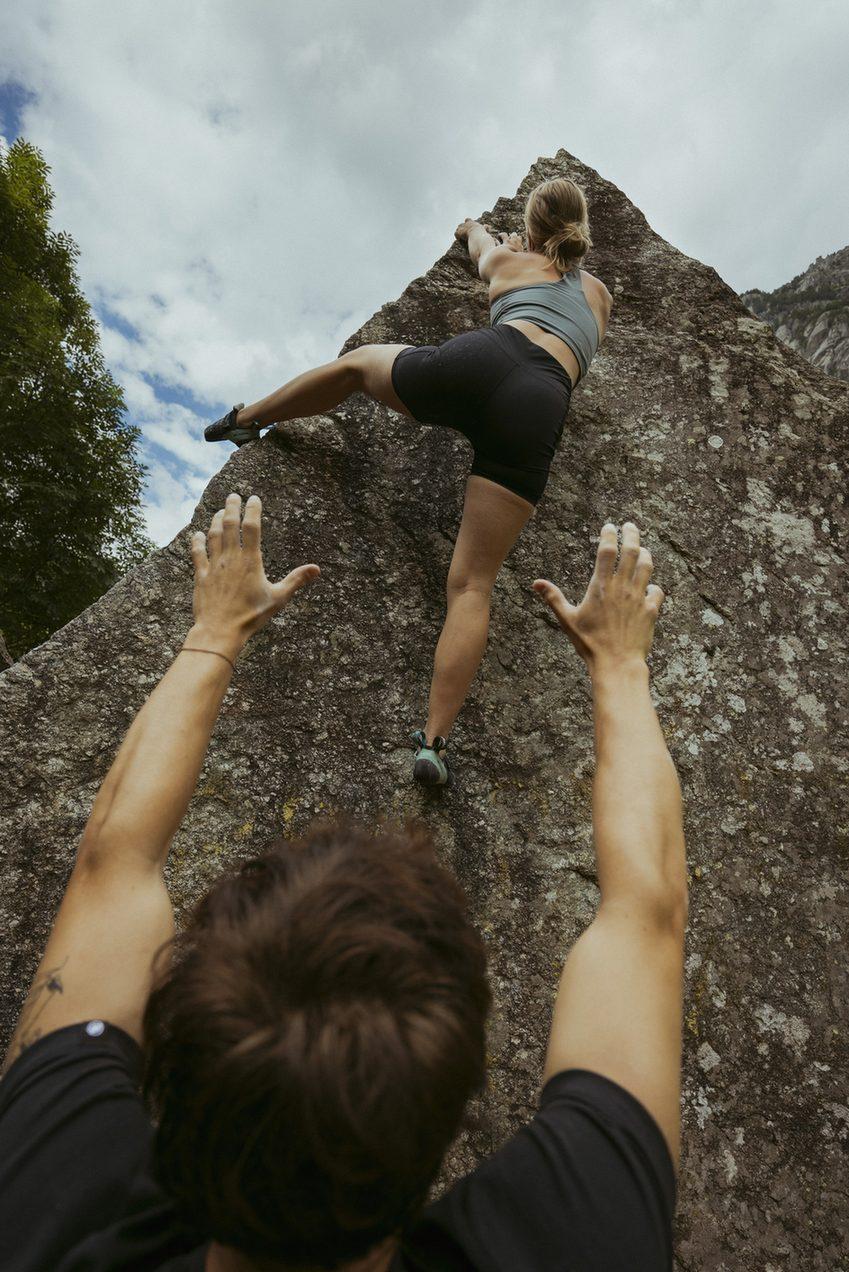
The right bouldering technique depends on the angle of the wall, the shape of holds, the type of route you’ve chosen (traversing or straight up), the holds and the general condition of the rock (ledge, sloper, crack, edge). Standard movements, precise stepping and full body control make it easier to conquer boulder problems while boosting the efficiency of your performance.
Here’s an overview of the basic techniques you need:
Precise footwork: Try to step onto narrow footholds with the tip of your shoes only instead of sloppily and rashly placing your feet – this will help you avoid concentrating your weight on the centre of your foot.
Tension: If your core is actively tensed, your movements will become much more controlled, preventing unnecessary dangling.
Leg work: Make sure to not only pull yourself up with your arms, but to actively use your feet and keep the weight of your body as close to the wall as possible.
Breathing: A lot of us subconsciously hold their breath when fully focused. By breathing slowly and evenly, you’ll be much more relaxed and efficient when climbing.
You can learn and improve your bouldering techniques under the guidance of an instructor or by exchanging your experiences with other climbing enthusiasts. Especially when you’re starting out, it’s worth signing up for a beginners’ bouldering course to get acquainted with all the basic techniques.
Your actual physical training should challenge you, but never push you past your limits. It’s important to both hone your strengths and focus on improving your weaknesses. This will help you to achieve a good balance of skills, which in turn will make it much easier for you to successfully conquer all kinds of problems. Also make sure to reward yourself with a little treat after every sweat-inducing session, like post-workout drinks in the gym.
If you’ve got your sights on climbing glory, there are plenty of aspects you can add to your training routine. Simple exercises like pullups and planking are great for strengthening your upper body and torso, while yoga and mobility exercises improve your agility and body control. If you’re a more advanced climber, you can also use a hanging board for finger training to improve your grip strength. The most important thing: Only gradually increase the intensity of your training to prevent overexertion.
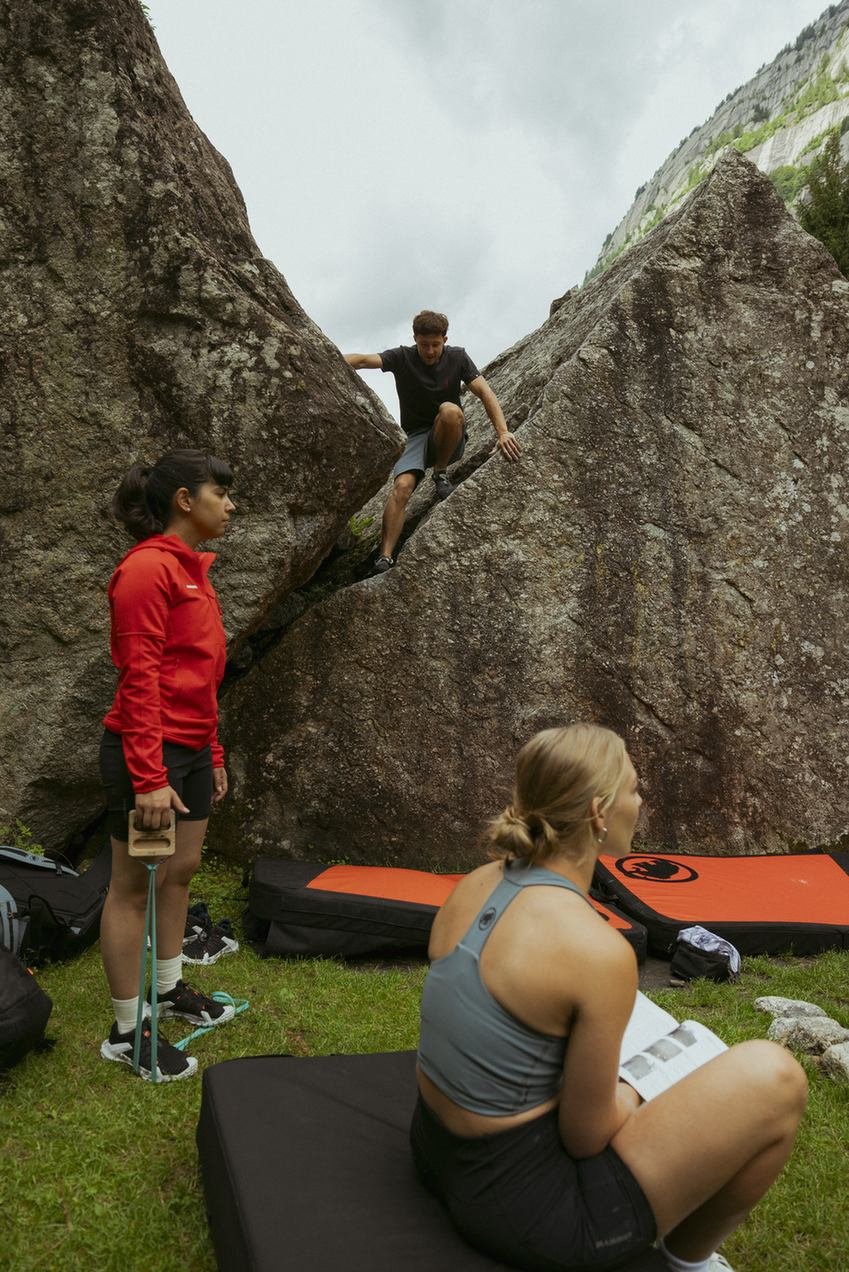
When you’re up on the wall, the usual rules don’t apply. While mats will ensure a soft landing when you’re practicing in the gym, outdoors you’ll encounter uneven landing zones, rocks and roots. That’s why taking the right precautions is key to keeping you safe on your way to the top.
Bouldering guides, whether as a classic guide book, online or in an app, will tell you more about the characteristics of your route, the difficulty level, ways to enter and practical tips on parking or keeping your impact on nature to a minimum.
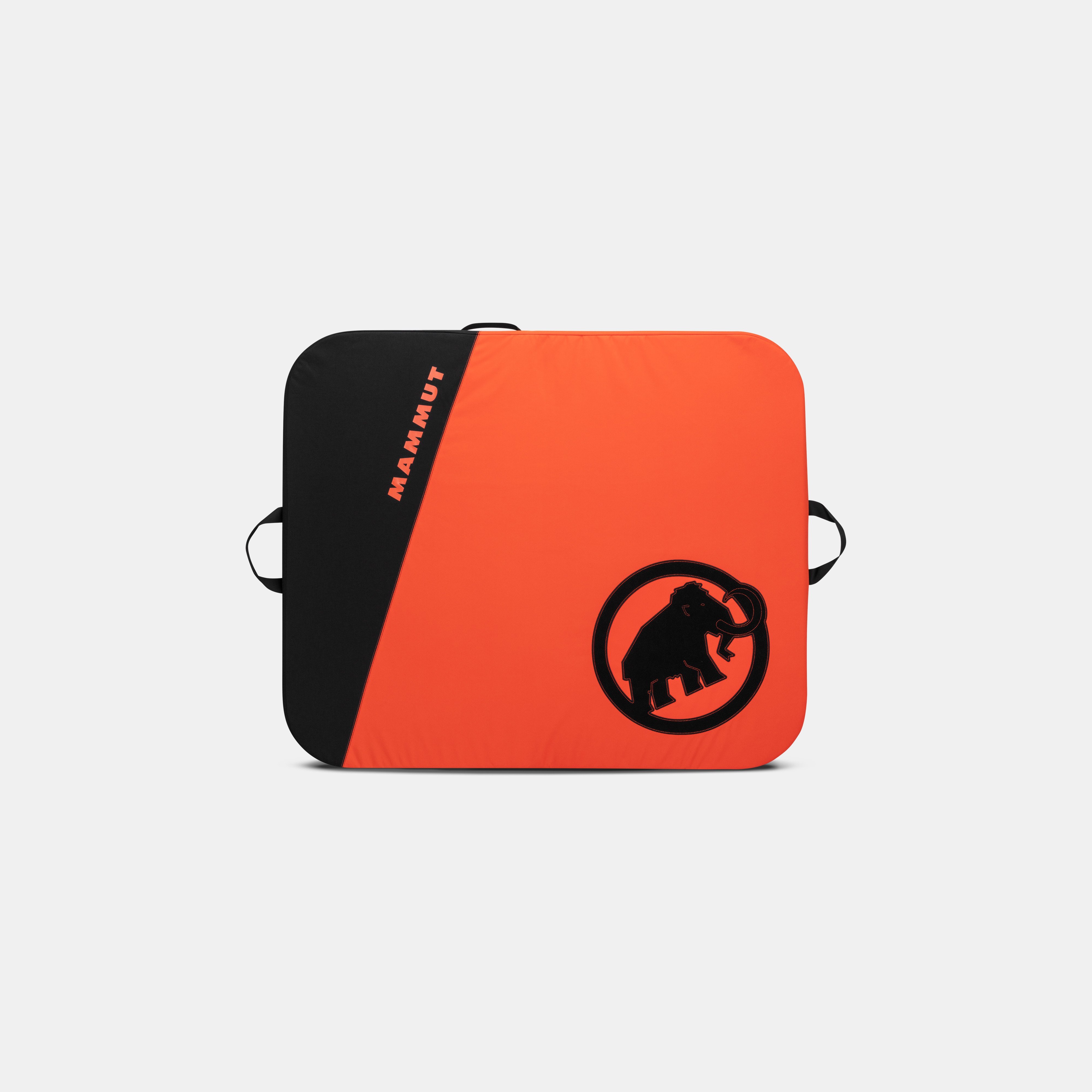
Crashpads will soften the landing, while climbing buddies who keep an eye on you and effectively support you in case of a fall will add that extra layer of security. Nonetheless: Not every move is a must. If you feel like your nearest exit point is too high up or you’re unsure whether a hold is safe to grab onto, it’s usually best to not risk anything.
Spotting is one of the most important things when it comes to bouldering. The whole purpose of spotting is to make sure the falling individual lands safely on the crashpad, thus reducing the risk of injuries. This is something you should be trained in, and preferably something you have practiced numerous times in a safe environment or with an instructor.
A key component of outdoor bouldering is the so-called landing zone. It should be clear of rocks, roots or other obstacles so you can stay in full control when catching a potential fall. Crashpads are the first thing you come in contact with after a fall, and in many cases it’s also worth combining several crashpads to cover a larger area. When placing the pads, make sure they balance out uneven ground and cover sharp edges.
Another important aspect is being mindful of your surroundings and disrupting nature as little as possible. Brush off holds and grips after your session to keep them clean. Make sure to stay on designated paths and take your trash with you. Plus, chalk should only be used sparingly to keep residue on the rock at a minimum.
It’s also worth keeping an eye on the condition of the rock. If it’s wet or damp, it not only gets slippery, but might even crumble. That’s why it’s best to wait until the rock is fully dry before you start your session.
Bouldering is a versatile sport which will challenge you physically and mentally, while also giving you the option of exercising indoor and outdoor. While a gym will provide a structured and safe environment, the great outdoors is all about the adventure and being up close and personal with Mother Nature. Once you find the perfect blend of technique, strength and awareness, bouldering becomes a seriously fun and addictive sport – and you’ll get better and better with every attempt. If you want to find out more about the ins and outs of bouldering and climbing, our Mammut Stories & Guides have got you covered – including our in-depth guides on the perfect clothing for indoor and outdoor climbing , the best methods for at-home training and a complete list of all the bouldering equipment you need. So whether you’re venturing out for the first time or have some serious bouldering experience, we’re here to support you every step of the way.
Question: What are the best bouldering tips for beginners?
Answer: When you’re starting out, it’s best to hit a gym and start with easy boulders. A training session with experienced climbers or a special beginners’ course can also be a great way to get acquainted with the basic techniques. Always warm up beforehand with mobility exercises and easy moves in the warm-up area. Even in those initial stages, make sure to place your steps cleanly and precisely using the tip of your feet. Borrow climbing shoes in a size that fits you and choose comfortable, stretchy sportswear for unrestricted movement.
Question: How many hours of training should I put in for bouldering?
Answer: One to two sessions per week are perfectly fine for beginners. Also allow for one to two breaks during your session when starting out. This will give your body enough time to recover while also helping you build your strength and technique. With more experience you can step up your training routine, but make sure you don’t overexert yourself.
Question: What do I need for bouldering?
Answer: Comfortable climbing shoes, sportswear allowing for unrestricted movement and a chalk bag. When venturing outdoors, you’ll also need crashpads for protection, as well as a bouldering guide and climbing buddies (both optional) to support you when spotting.