


Hiking in hot weather: your guide for hot days on the trail
08/26
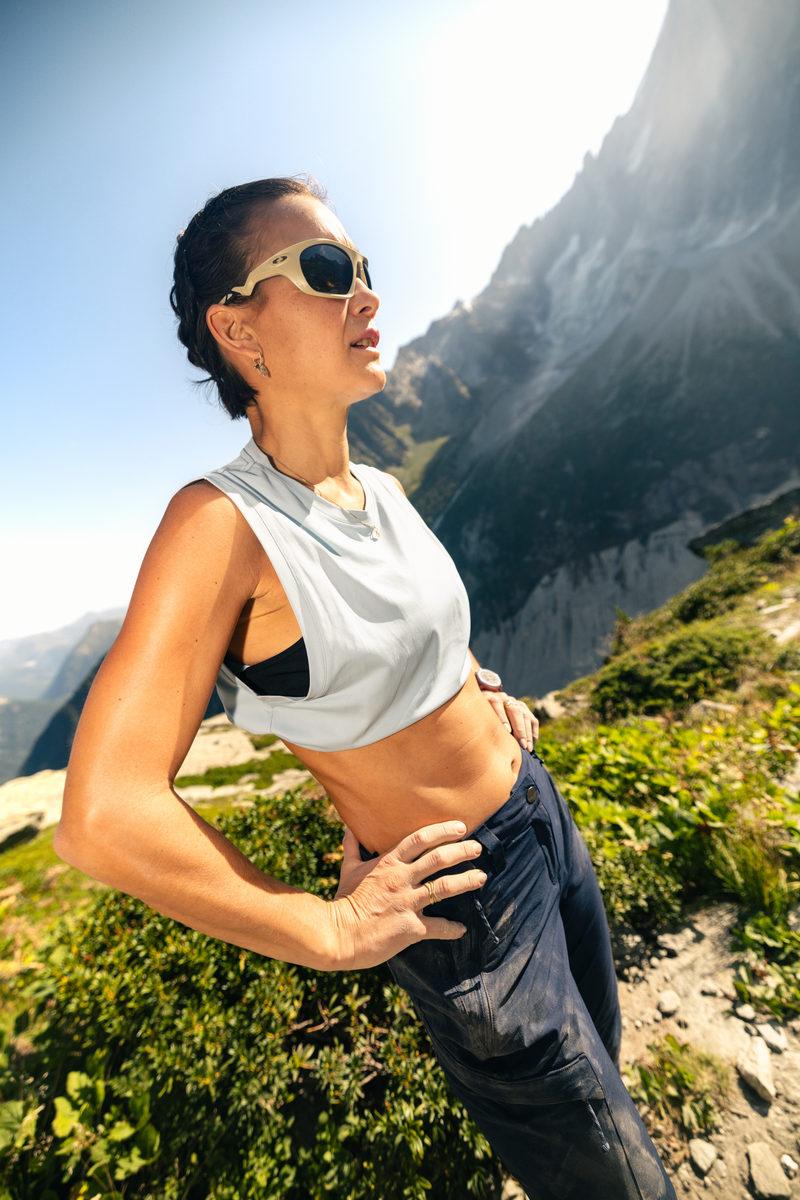
Bright sunshine, blue skies, and mountains on the horizon: that sounds like the perfect day for a hike. But when the thermometer climbs toward 30°C/86°F, you’ll need more than just a good attitude and breathable hiking boots. High temperatures and intense UV radiation can quickly push your body to its limits. In this post, you’ll learn how to best prepare for hiking in the heat and what you absolutely must keep in mind while you’re out on the trail.
What to keep in mind when planning your route in the summer
If you're heading out in hot weather, you should take your planning very seriously: A well-thought-out route not only reduces the amount of energy you’ll need but can also help prevent dangerous situations from the start. You should consider the following points before setting out:
Assess distances realistically: What felt like an easy hike in the spring can require significantly more energy in the height of summer. If in doubt, choose a shorter route when high temperatures are expected.
Plan for water sources: Make sure when planning your route that there are water sources or fountains along the way where you can refill your water bottle.
Seek shade: On hot days, stick to dense forests, north-facing slopes, or valleys. Exposed ridge walks or sun-baked scree paths at 30°C/86°F or above can become a real ordeal.
Take the weather forecast seriously: Keep a close eye on both the weather forecast and the horizon, because thunderstorms can develop quickly, especially in the summer. In an emergency, you should be able to find shelter as quickly as possible.
The ideal time to start
The simplest way to protect yourself from the heat while hiking is to set out early. Ideally, you should be on the trail before 8 a.m. – the earlier, the better. Even in the height of summer, the morning hours offer pleasant temperatures and often a unique play of light that justifies getting an early start all on its own.
When planning a longer day hike, use the midday hours strategically: Either take a long break in the shade or, if possible, head into a dense forest area. Between 11 a.m. and 3 p.m., UV radiation is at its strongest and so is the risk of exhaustion or heatstroke. So be sure to avoid staying in exposed areas during this time.
Gear for high heat: less is more
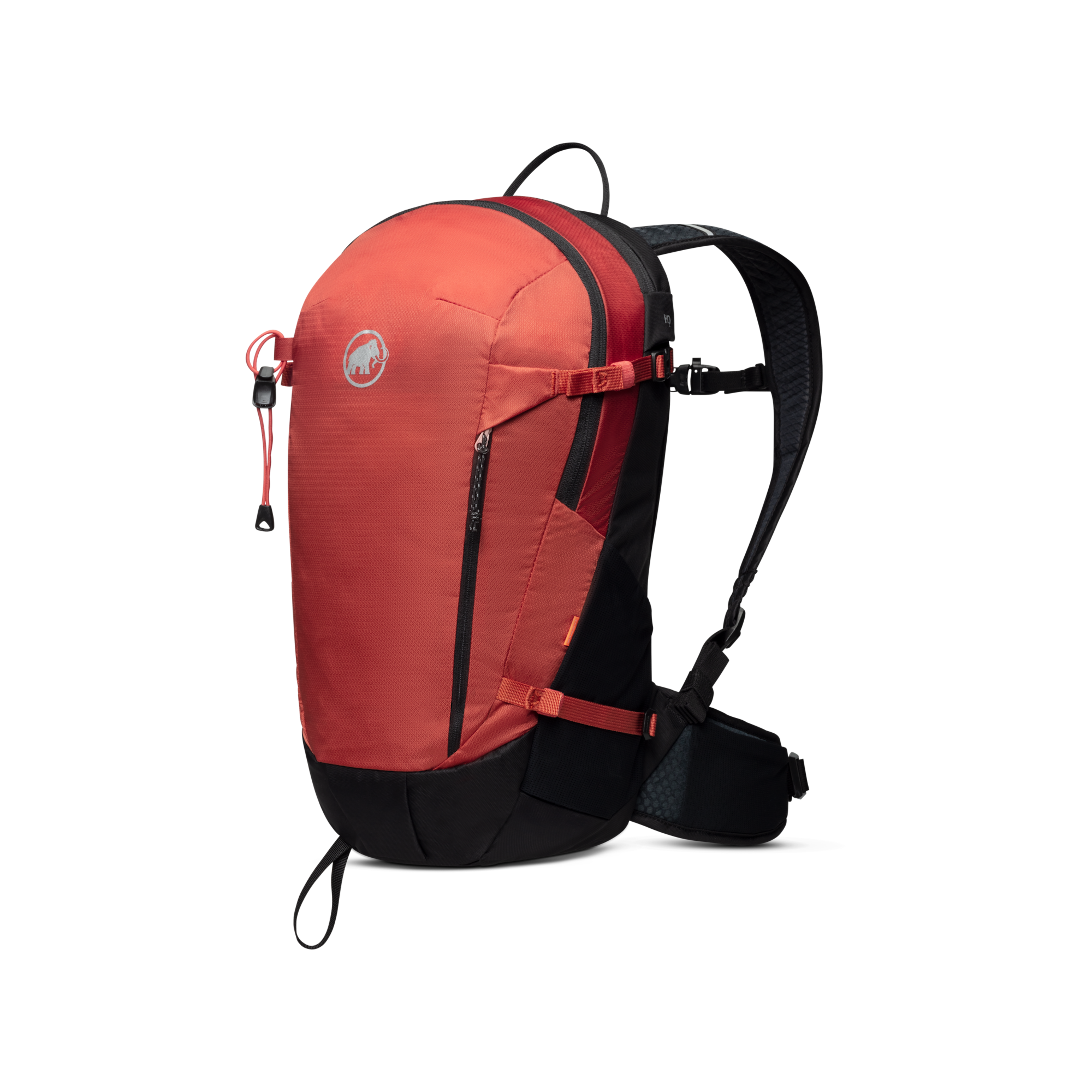
In intense heat, a lightweight is worth its weight in gold. Every unnecessary kilogram drains energy, so strip down to essentials:
sunscreen
plenty of water, ideally with added electrolytes
fully charged smartphone
navigation tools (compass, GPS device, offline maps)
power bank
food (high-energy snacks)
Anything beyond these essentials depends on the length and difficulty of your hike. For a complete breakdown, check out our .
UV protection from head to toe
Mountain UV radiation is significantly more intense than in the valleys below. For every 1,000 meters / 3,281 feet of elevation gain, UV exposure increases by roughly 10 percent – even when temperatures feel cooler. That's why sun protection should be a top priority to prevent painful burns and long-term skin damage:
The right clothing
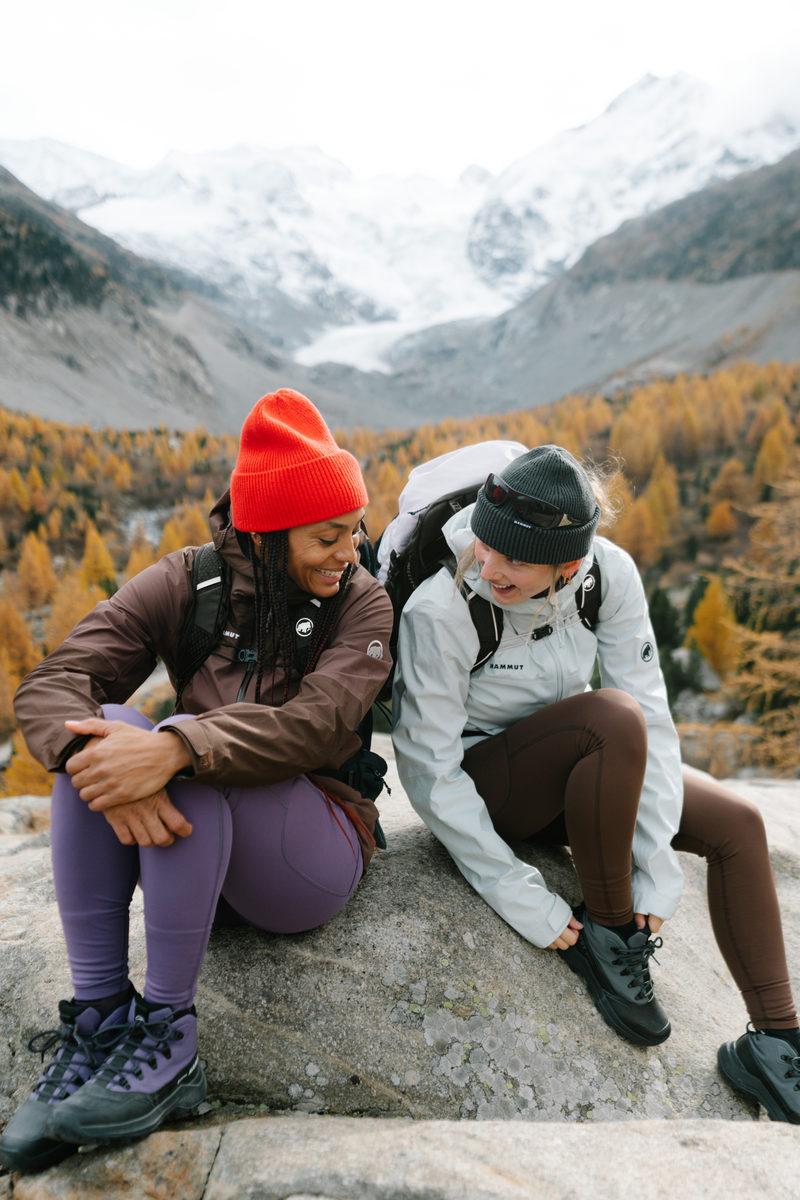
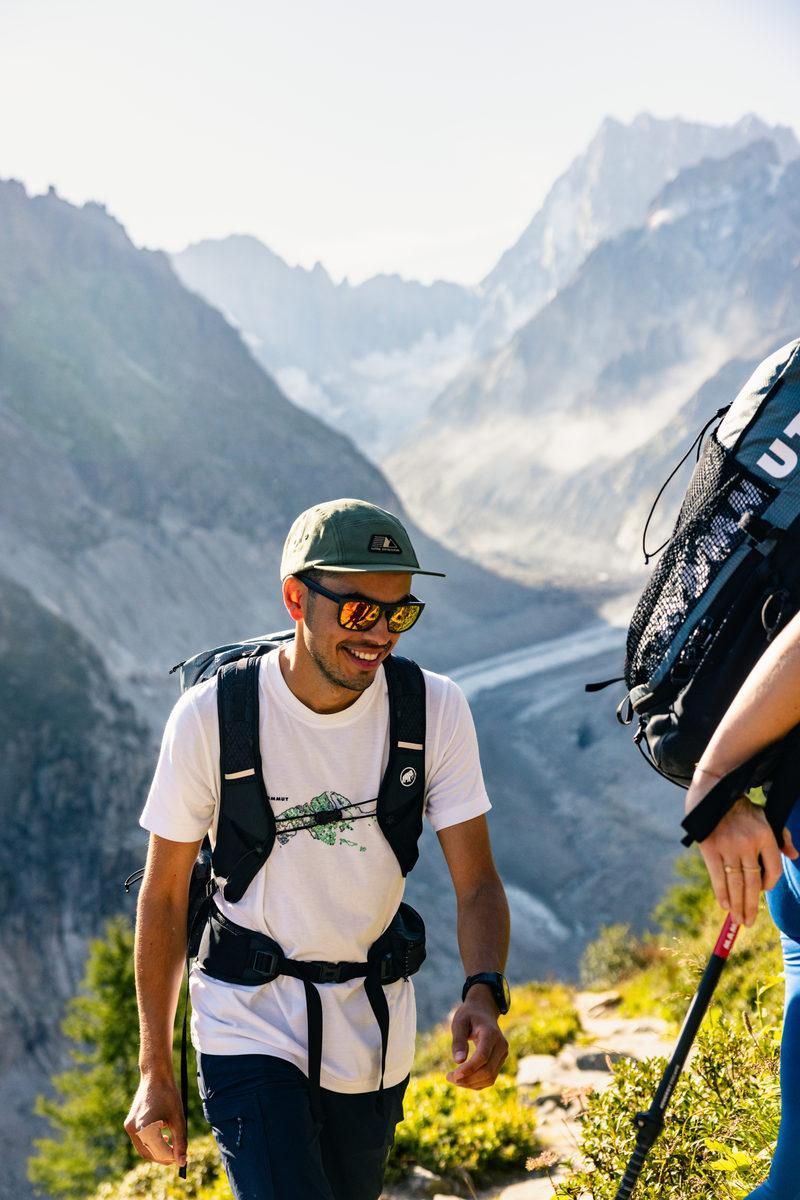
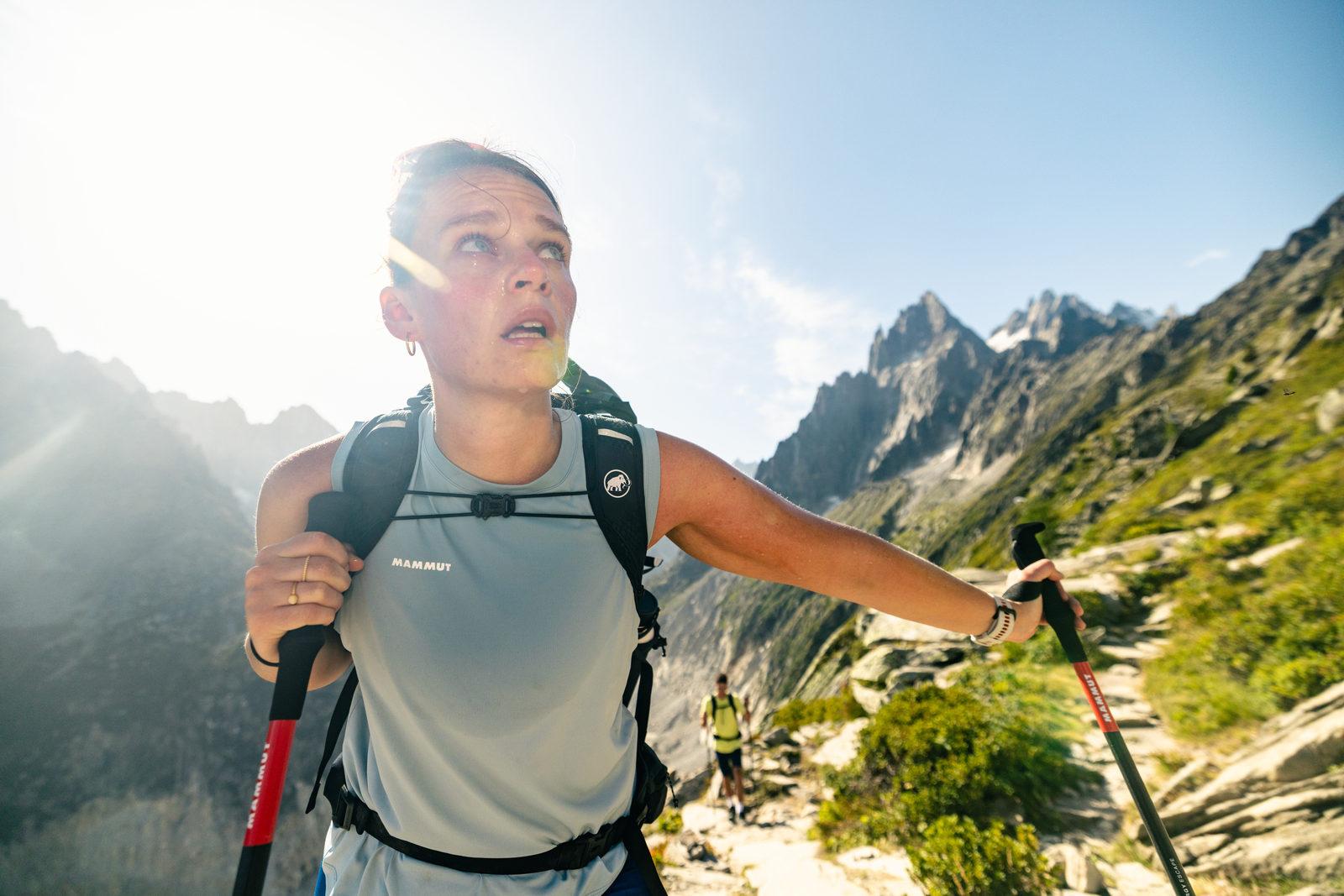
Functional hiking clothes are essential on any trail – even more so in hot weather. Technical fabrics, such as Mammut’s HeiQ Fresh line, are ideal for high temperatures: They actively wick sweat away, dry quickly, and remain comfortable even after hours of wear. On hot days, two additional factors come into play: UV protection and heat reflection. Light colors absorb less heat than dark ones, and a lightweight long-sleeve shirt with UPF certification protects your arms and shoulders from the sun’s rays.
Lightweight merino blends are also a smart choice, as they regulate body temperature and are naturally odor-resistant. Complete your outfit with functional hiking pants , a wide-brimmed hat that also covers your ears and neck, and UV-filtering sunglasses. Cotton clothing, on the other hand, is a no-go, since the material soaks up moisture and stays damp for a long time.
Don't skimp on sunscreen
Use a sunscreen with at least SPF 30, ideally SPF 50 (regardless of skin tone!). Here's the crucial part: reapply every two hours, and more frequently after heavy sweating (even with water-resistant formulas). Also make sure you're using enough so the stated SPF will actually work: for your face, use about a quarter to half teaspoon (roughly 1–1.5g or two finger lengths of cream). For an adult’s entire body, you need around 30–35g (about 4–6 tablespoons).
Areas that are particularly vulnerable and are often overlooked when applying sunscreen:
bridge of nose and ears
neck and hairline
back of hands
lips
Stay hydrated: How much water do you need?
In heat and during physical exertion, plan for at least 0.5 liters / 17 fl oz per hour. For a five-hour hike, that's a minimum of 2.5 liters / 85 fl oz, but in extreme heat or steep terrain, bring more. Drink regularly before thirst kicks in: small sips every 15–20 minutes work far better than guzzling large amounts at once. are game-changers here: you can sip through a tube without stopping to take off your pack every time.

Online Exclusive
Valley Powerdry FL T-Shirt Women


Online Exclusive
Valley Powerdry FL T-Shirt Men

New Colors Added
Runbold IV Pants Women

What to do if heat becomes a problem
In extreme weather with temperatures at 30°C/86°F or higher, recognizing your body's warning signs is critical. Watch out for these symptoms in yourself and your hiking partners:
severe exhaustion or weakness
headaches and dizziness
nausea or vomiting
sudden lack of sweating
confusion or disorientation
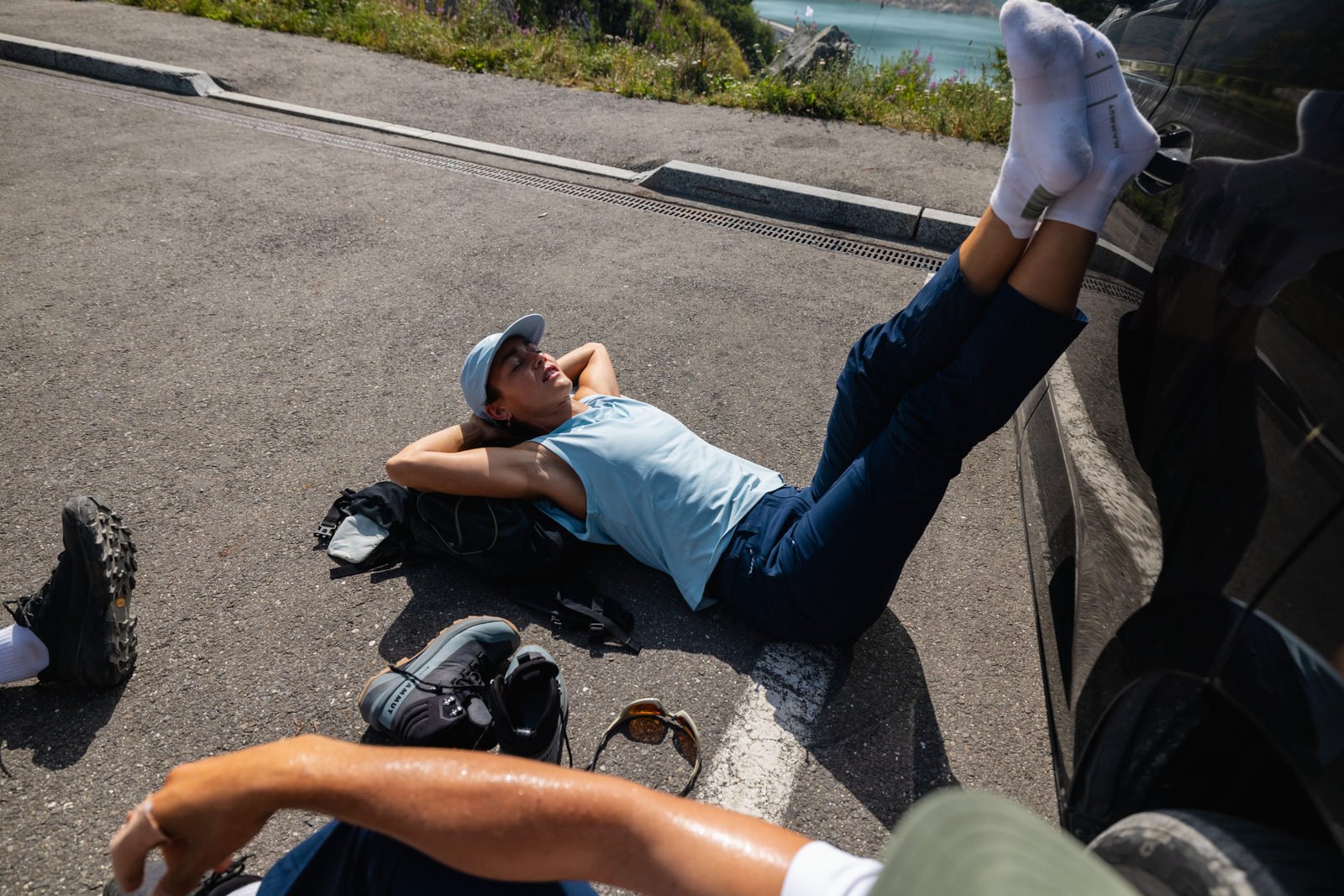
The moment any of these appear, take a break immediately. Find shade and lie down with your legs elevated. Drink plenty of water and cool your neck and wrists with damp cloths. Rest until you feel better.
In the event of heatstroke (identified by confusion, rapid pulse, lack of sweating, and very hot skin) immediate action is necessary. Contact mountain rescue at once. While waiting (in the shade), loosen any tight clothing, drink water in small sips, and cool the skin down.
Summer, sunshine, summits – Here's how to make it unforgettable
Start early, choose your route wisely, stay hydrated, and listen to your body: do that and summer hiking rewards you with moments you'll never forget. For useful tips on the right gear and more, check out our . Whether you're looking for tips on or how to master solo hiking, you'll find all the answers here.
Frequently asked questions about hiking in hot weather (FAQs)
Question: Can you hike in 30°C/86°F heat?
Answer: Yes, but it requires smart planning. At 30°C/86°F or above, focus on these essentials:
start as early as possible in the morning
choose a shady route that's shorter than usual
prioritize hydration, sun protection, and frequent breaks
Question: At what temperature should you stop hiking?
Answer: There's no hard limit. What matters is the route, elevation, available shade, and your fitness level. Above 30°C/86°F, avoid highly exposed or demanding hikes, opt for shorter alternatives and start early instead. Heat-sensitive people should stick to shaded valley hikes in extreme temperatures.
Question: What's best to wear when hiking in heat?
Answer: Light, breathable, light-colored clothing with UPF protection, like a long-sleeve functional shirt. A hat and UV-filtering sunglasses are equally important.
Question: How much water should you drink on a summer hike?
Answer: At least 0.5 liters/17 fl oz per hour. For a five-hour hike, that's 2.5 liters/85 fl oz or more. Drink regularly in small sips without waiting for thirst. Add electrolytes if you're sweating heavily.