How to climb an overhang?
11/26
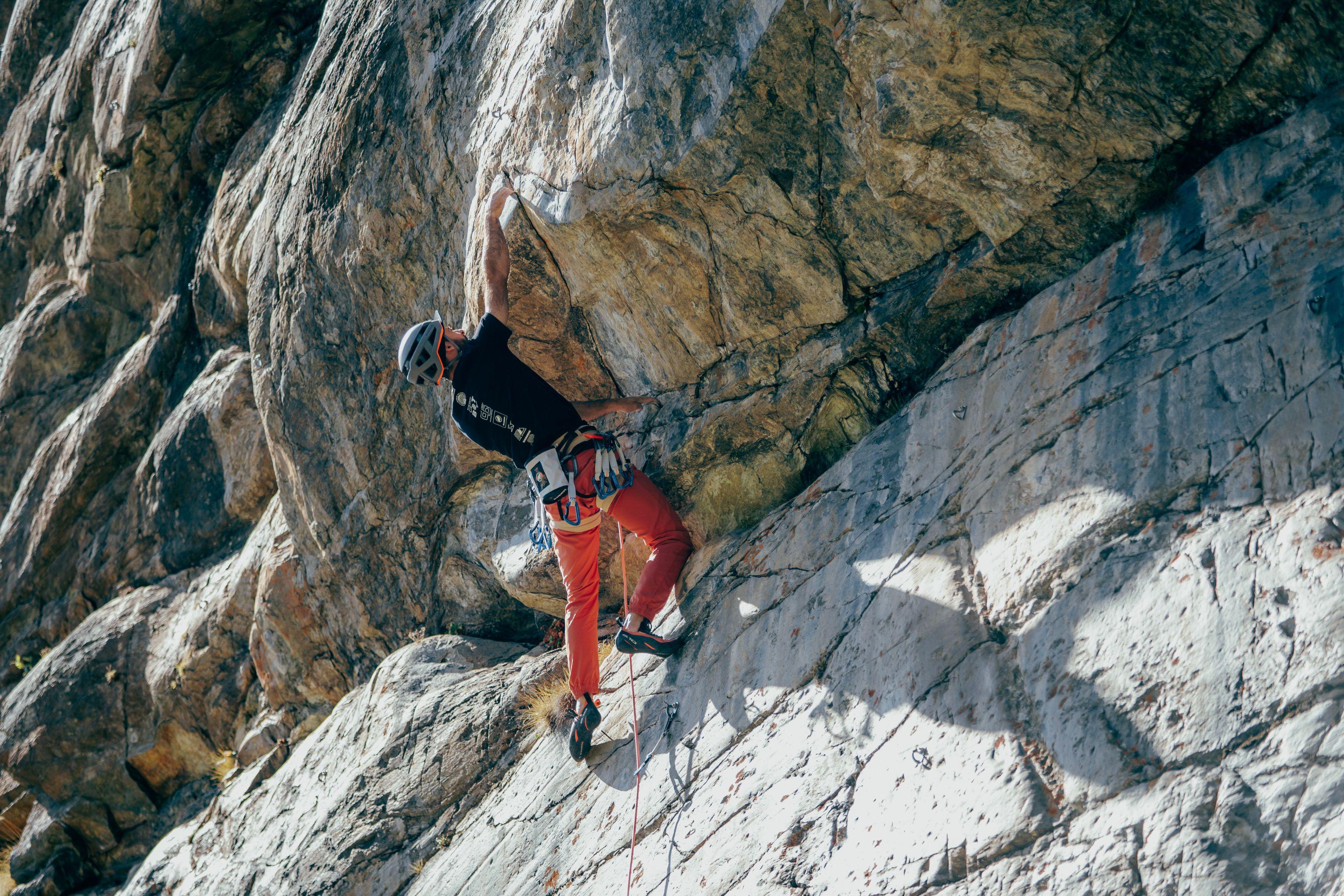
The wall looms over you, your arms grow heavy, each pull takes more strength than the last – it’s the challenge that makes overhang climbing so appealing. An overhang requires more than just brute strength: To climb it well, you need the right technique, body tension, proper footwork, and a good feel for movement sequences. At the same time, mistakes in an overhang can quickly lead to exhaustion or frustration. Here you’ll learn what matters most when climbing overhangs, how to train for them, and what gear will ensure you’re fully prepped for the task ahead.
What is an overhang, and why is it challenging?
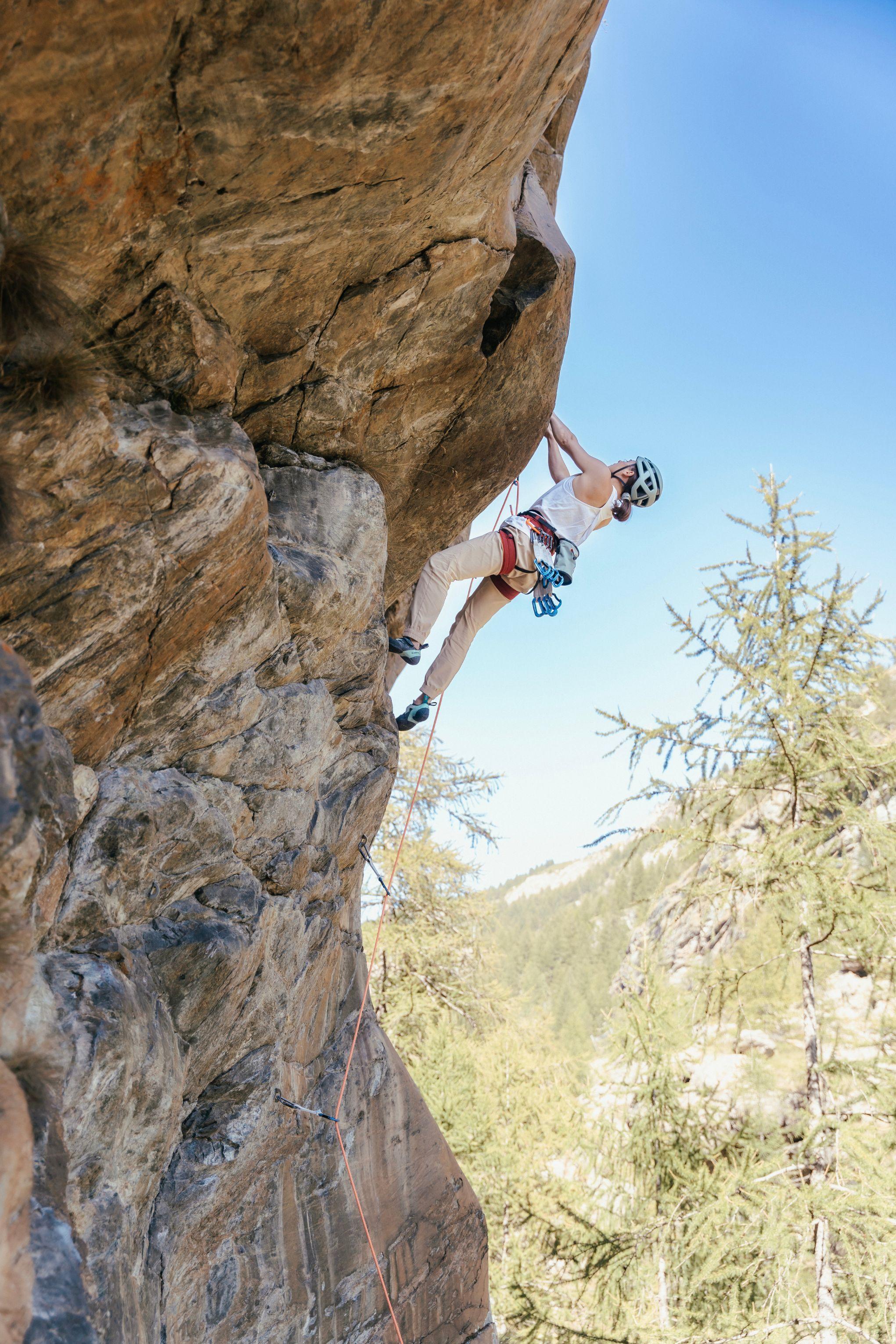
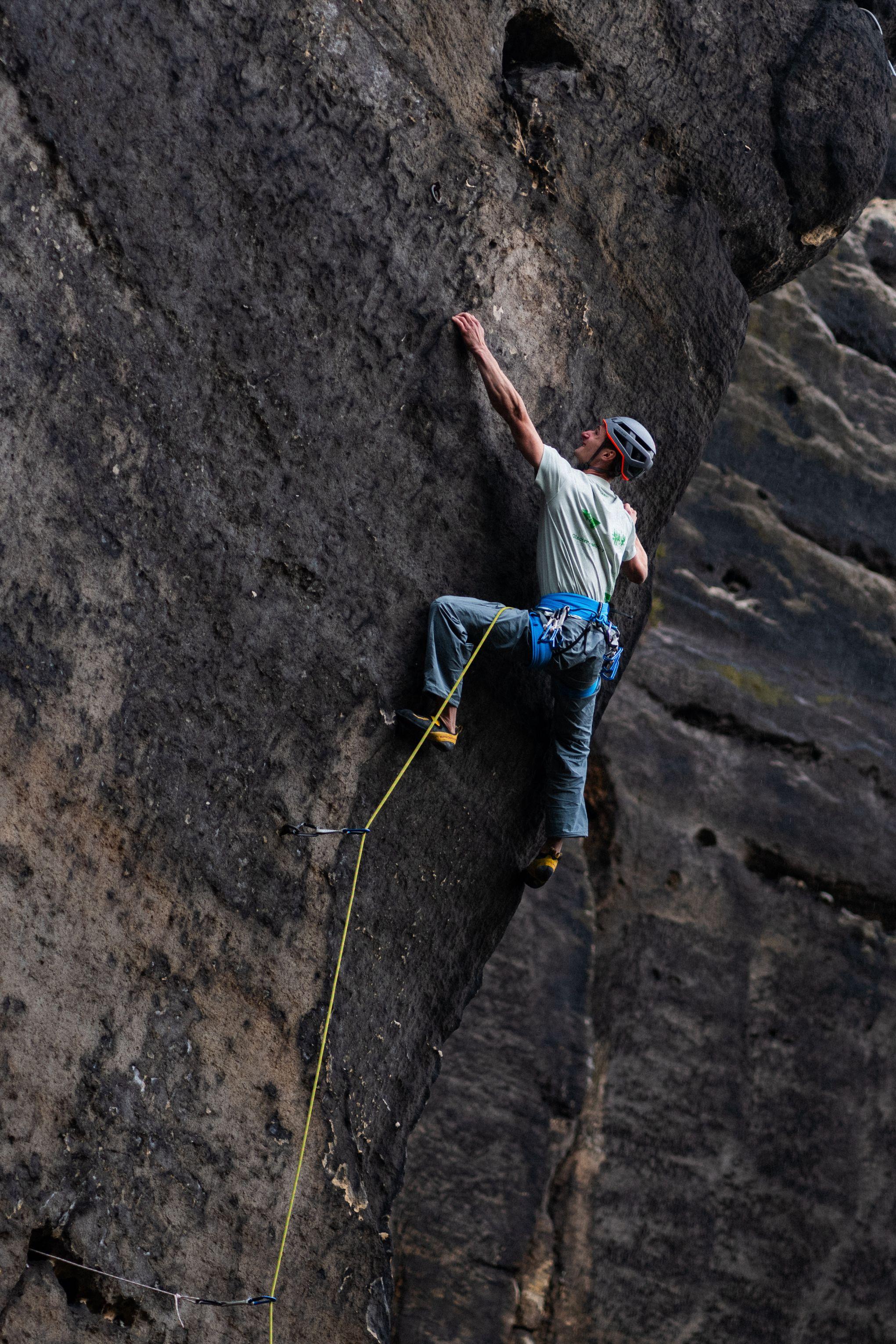
We call it an overhang when the wall is inclined at an angle steeper than 90 degrees – meaning it slopes over the climber. The steeper the incline, the greater the challenge: Your body weight not only pulls you downward, but also away from the wall. This means that with every pull, you have to actively work against losing your grip on the wall. As such, your arms bear a significantly larger portion of your body weight than on a vertical route.
That’s why overhang climbing is so physically demanding, and proper technique plays an even more important role. If you rely solely on your arms to pull yourself up, you’ll quickly reach your limit. If, on the other hand, you use your feet, hips, and core, you can conserve energy and master even steeper sections.


The right technique for overhangs
Technique beats strength: This is especially true for overhangs. The following advice will help you climb more efficiency and boost your endurance:
Hips against the wall
Bring your hips as close to the wall as possible. The farther your center of gravity is away from the wall, the more strength you’ll need in your arms. By twisting your body – that is, rotating your hips sideways toward the wall – your center of gravity will be closer to the holds and take some of the strain off your arms.
Tip: Start by practicing your body rotations on easier, vertical routes. This will help you internalize the movement. Once the twisting becomes “automatic,” you can apply it to overhangs.
Footwork is key
When climbing an overhang your feet are at least as important as your hands. Active footwork – that is, consciously applying pressure to the footholds with the ball of your foot – shifts your weight onto your legs. You hold onto the foothold primarily with your toes, which, in a sense, claw into it. Also use heel hooks (placing your heel on a foothold and actively pulling you toward it) and toe hooks (hooking the tip of your foot over or around a hold) to build body tension and conserve arm strength. These techniques will practically be your lifesaver, especially on steeper overhangs.
Tip: For precise footwork, heel and toe hooks, you’ll need climbing shoes with a downturn, a grippy heel cup, and good rubber on the edges of the toe box. Make sure the heel fits snugly, because that may be the all-decisive factor between staying in position or slippin on an overhang.
Keep your arms straight
When you keep your arms straight instead of bent, you can conserve your energy much better because the strain on your muscles will be a lot lower. Whenever possible, you should straighten your arms between pulls to relieve the strain on your forearms. Every moment you can fully stretch your arms is a short moment of respite.
Shake out your arms and hands
If you don’t actively combat the so-called “pump” during an overhang, you’ll soon be unable to grip any holds. So take every opportunity – especially at good handholds or resting points – to let go with one hand and let your arm dangle. As you do this, shake out your hand and forearm briefly and vigorously to stimulate blood flow and flush lactic acid out of your muscles. A few seconds are often enough to make you feel the difference. Alternate sides and make sure to breathe calmly and evenly throughout.
Tip: Practice shaking out your arms and hands on easy routes so that it becomes a routine movement to you. Many climbers, caught up in the heat of the moment, forget to take breaks even when good holds are available. If you practice spotting resting points, you’ll be able to hold out much longer on an overhang. Also, you can use one of your shaking-it-off breaks to chalk up again.
Climbing dynamically instead of statically
Momentum goes a long way on an overhang. Dynamic moves often require less effort than a slow, static pull. The trick is to initiate the movement from your hips and legs, not your arms. This takes practice, but saves energy in the long run.
Plan your sequence
Before you start climbing an overhang, take a moment to look at the holds and footholds from below. Where are the resting points? Where is the crux move? Where can I pivot? This sort of planning – also known as “reading the route” – is especially important on an overhang because every unnecessary movement costs energy, and aimless searching quickly leads to “pumping.”
Targeted training for overhang climbing
To improve your overhang climbing, you’ll need to invest a bit more time and effort than just frequently climbing steep terrain:
Build core stability: Exercises such as plank variations, hanging leg raises, and L-sits strengthen your core muscles, which provide stability when overhang climbing. Without good core stability, your hips will quickly sag, and your arms will have to take over the work.
Grip strength and forearm endurance: Deadhangs on a pull-up bar or hangboard build finger strength and forearm endurance. Start with big holds and gradually increase the difficulty.
Practice your technique during moderate climbs: Start by practicing body turns, heel hooks, and dynamic moves on routes that are below your current level. This way, you’ll internalize the movements without feeling the pressure to perform.
Overhang bouldering: This is ideal for practicing intense overhang moves because the sequences are short and you can focus entirely on technique and strength. Check out our guide to bouldering gear to find out what you need for the perfect session.
Climbing-specific endurance: Longer routes on slight overhangs help build endurance. When climbing these routes, make a conscious effort to stay below your top level so you can focus on your technique and efficiency.
Tip: Schedule rest days between intense overhang sessions. Fingers, tendons, and joints take longer to recover than muscles. Two to three overhang sessions per week is a good guideline for most climbers who want to improve without overdoing it.
The right gear for overhang climbing
On an overhang, every little thing matters – and that goes for your gear, too. Climbing shoes with a downturn and a precise toe box are key: The downturn helps you actively plant your feet on small holds and hooks. A snug-fitting shoe that curves slightly downward (known as a “downturn” shape) gives you significantly more control on an overhang than a flat all-around shoe.
Your climbing harness should fit comfortably on overhangs as well, since you’re more likely to fall into the harness than on vertical sections. Mammut climbing harnesses – such as the Ophir Fast Adjust or the Comfort Fast Adjust – ensure even weight distribution and a high level of comfort thanks to their split-webbing construction, even during extended periods of hanging.



Chalk for dry hands is especially important when overhang climbing because your forearms tend to sweat more. A chalk bag that’s easily accessible on your climbing harness saves time and energy when reapplying chalk.
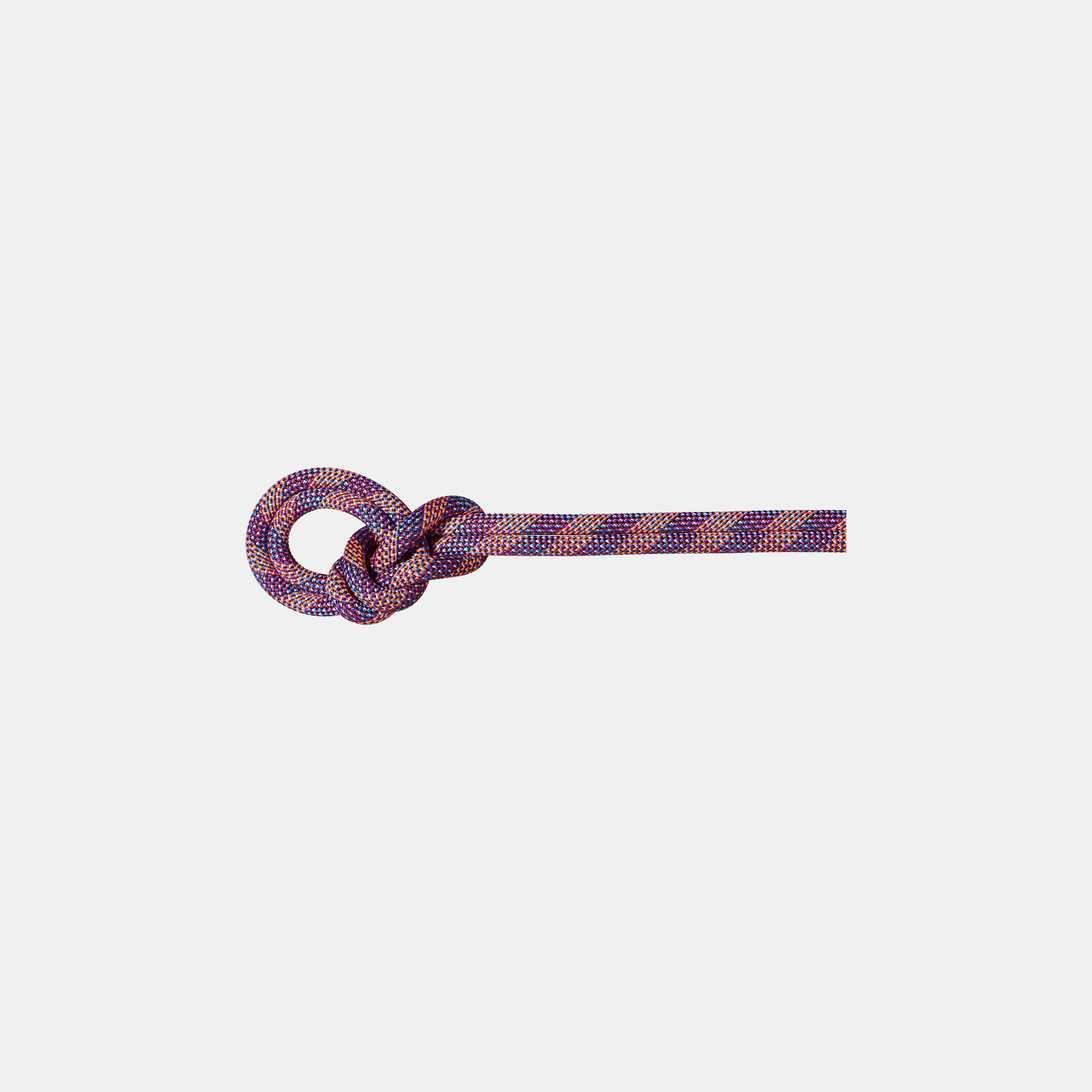
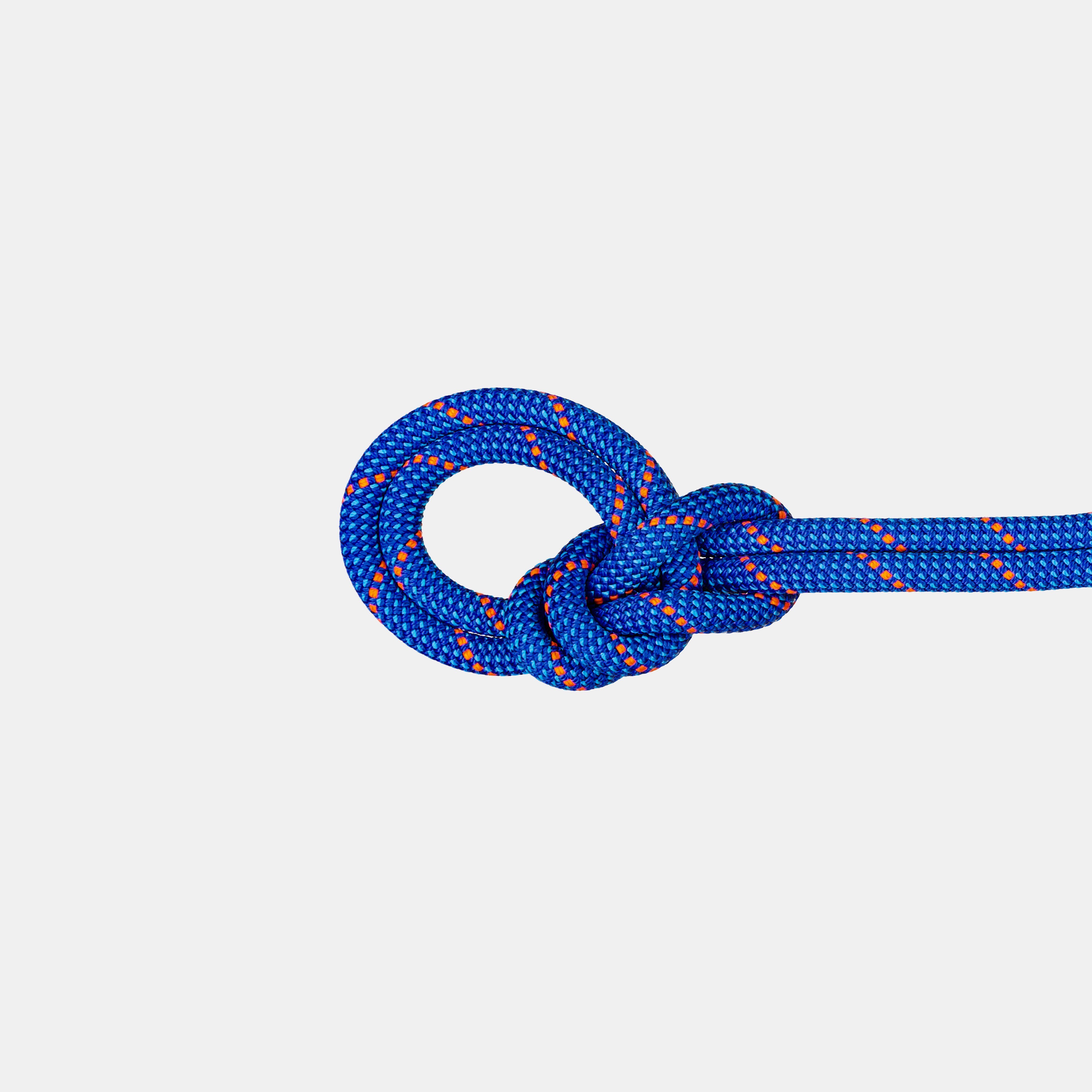
And last but not least: A reliable belay device like the Mammut Smart 2.0, paired with the right climbing rope , ensures that – if used correctly – falls are safely caught and that the climber always gets rope quickly.
How to conquer an overhang
With the right technique, a well-thought-out training plan, and full awareness of one’s limits, anyone can gradually work their way up to overhangs. The key is to be patient: technique doesn’t develop overnight, and the specific strength needed for overhangs only grows through regular, well-planned training.
In our Mammut Stories & Guides , you’ll find more helpful articles about climbing – such as how to find the right size for your climbing harness , how to train for climbing at home , or what climbing gear you need for the outdoors .
Frequently asked questions about overhang climbing
What is an overhang in rock climbing?
An overhang is a section of the wall that is inclined at an angle steeper than 90 degrees and extends over the climber. The steeper the incline, the more strength and technique are required.
How do you climb an overhang?
By rotating your hips toward the wall, using active footwork with heel and toe hooks, keeping your arms straight to conserve energy, and making dynamic moves starting from the hip. Thorough, route planning is crucial to avoid wasting energy.
Do climbers train for overhangs?
Yes, specific training for overhang climbing is very common. It includes core strength exercises (planks, L-sits), grip strength training (hangboard, deadhangs), technique training on moderate routes, and bouldering on steep boulders.