


Eiger Extreme
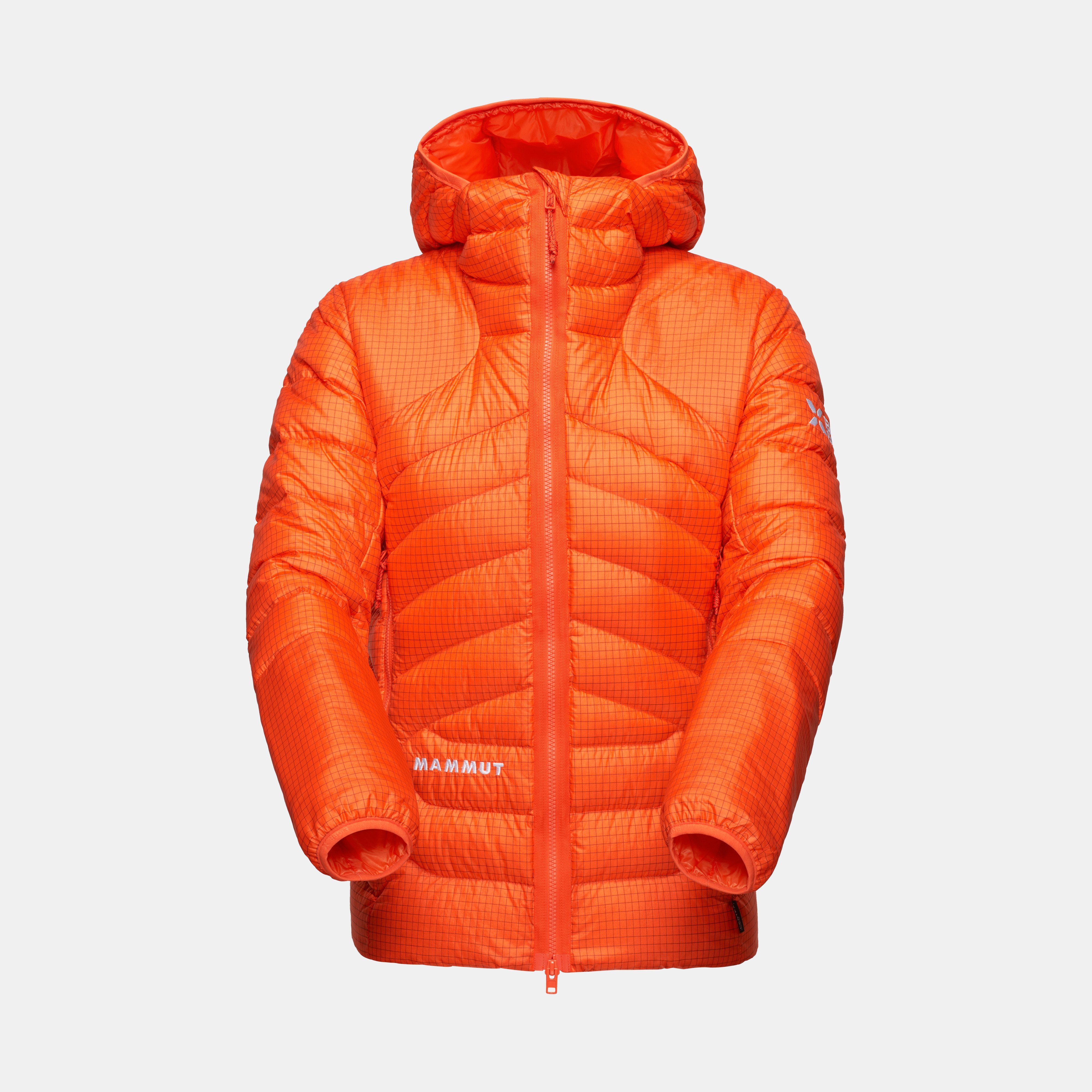
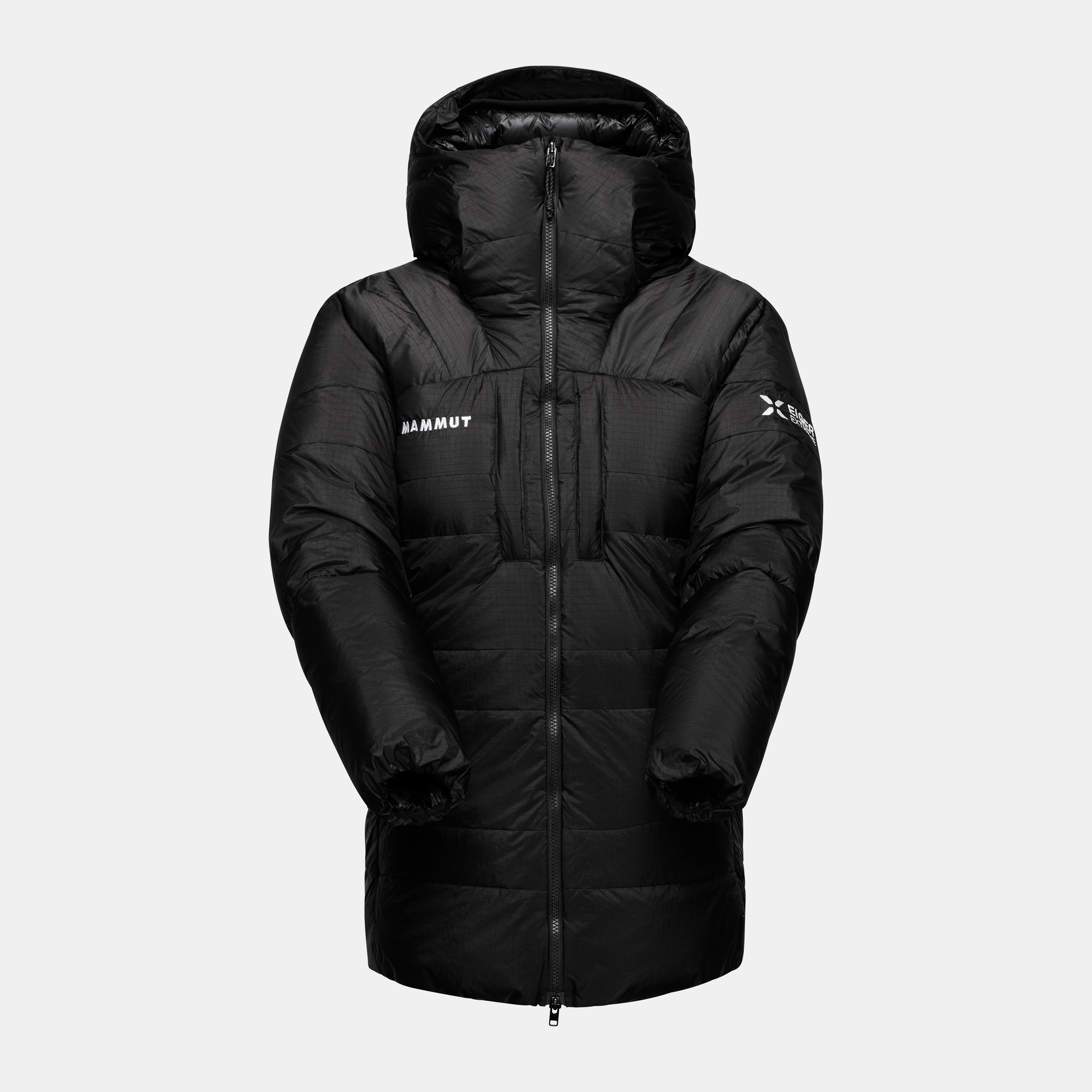
Eiger Nordwand Pro Down IN Hooded Parka Women
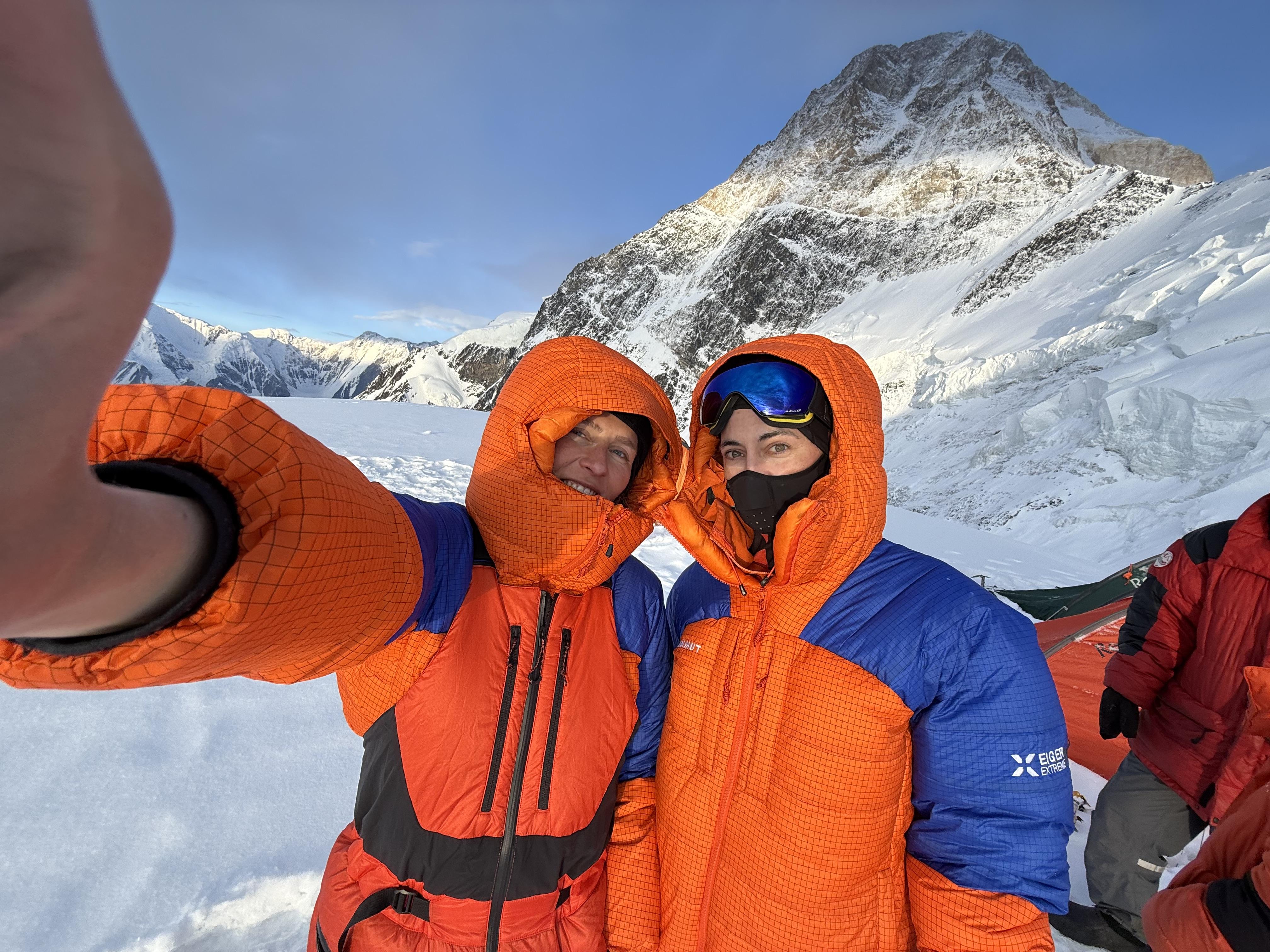
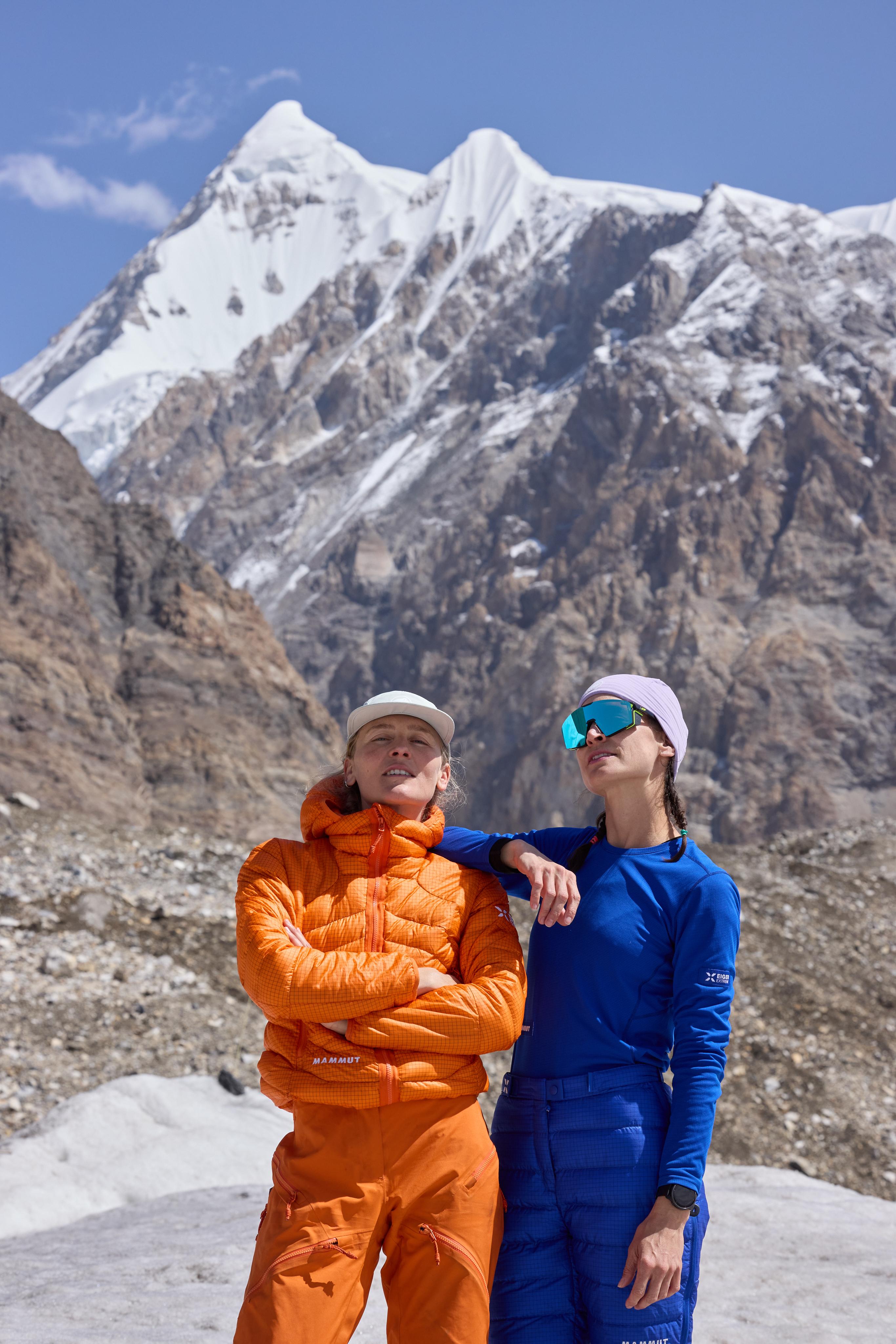
Two Swiss alpinists travel to Kyrgyzstan in the summer of 2025: Gentiana Zyba and Sandra Christen. Khan Tengri has long held their attention—remote, demanding, uncompromising. Together with a local mountain guide, they choose the north side. But high on the mountain, just meters below the summit, the defining question arises: push on, or turn back?
We’ve been climbing together for years. After expeditions to Ama Dablam and Alpamayo, Khan Tengri felt like the natural next step.
The mountain lies at the border of Kyrgyzstan, Kazakhstan, and China, in the Tien Shan range—known for rapid weather shifts and strong high-altitude winds. The approach follows the North Inylchek Glacier, where teams move largely self-sufficiently: tents, fuel, and food carried on our backs. Decisions here are ours alone.
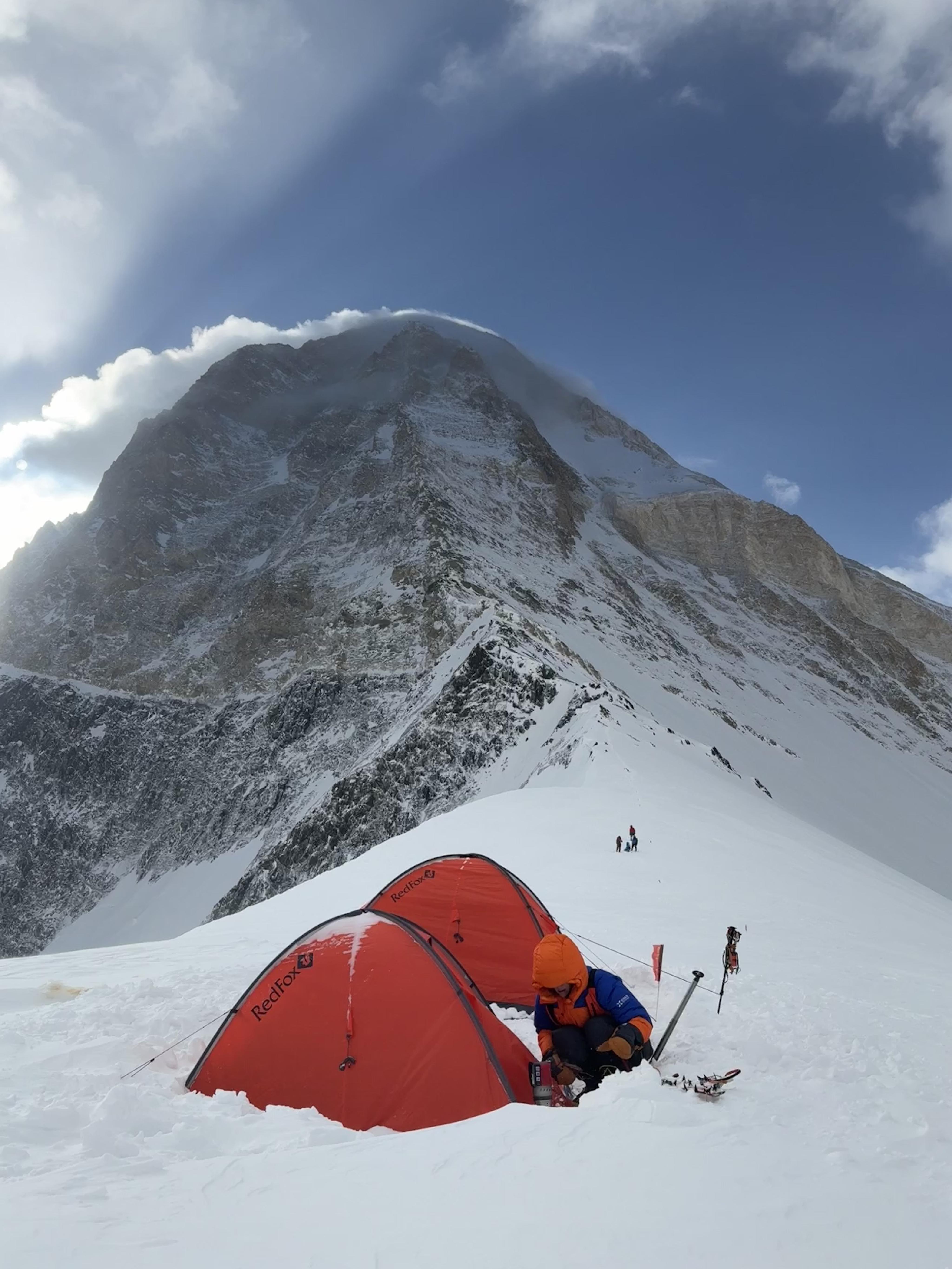
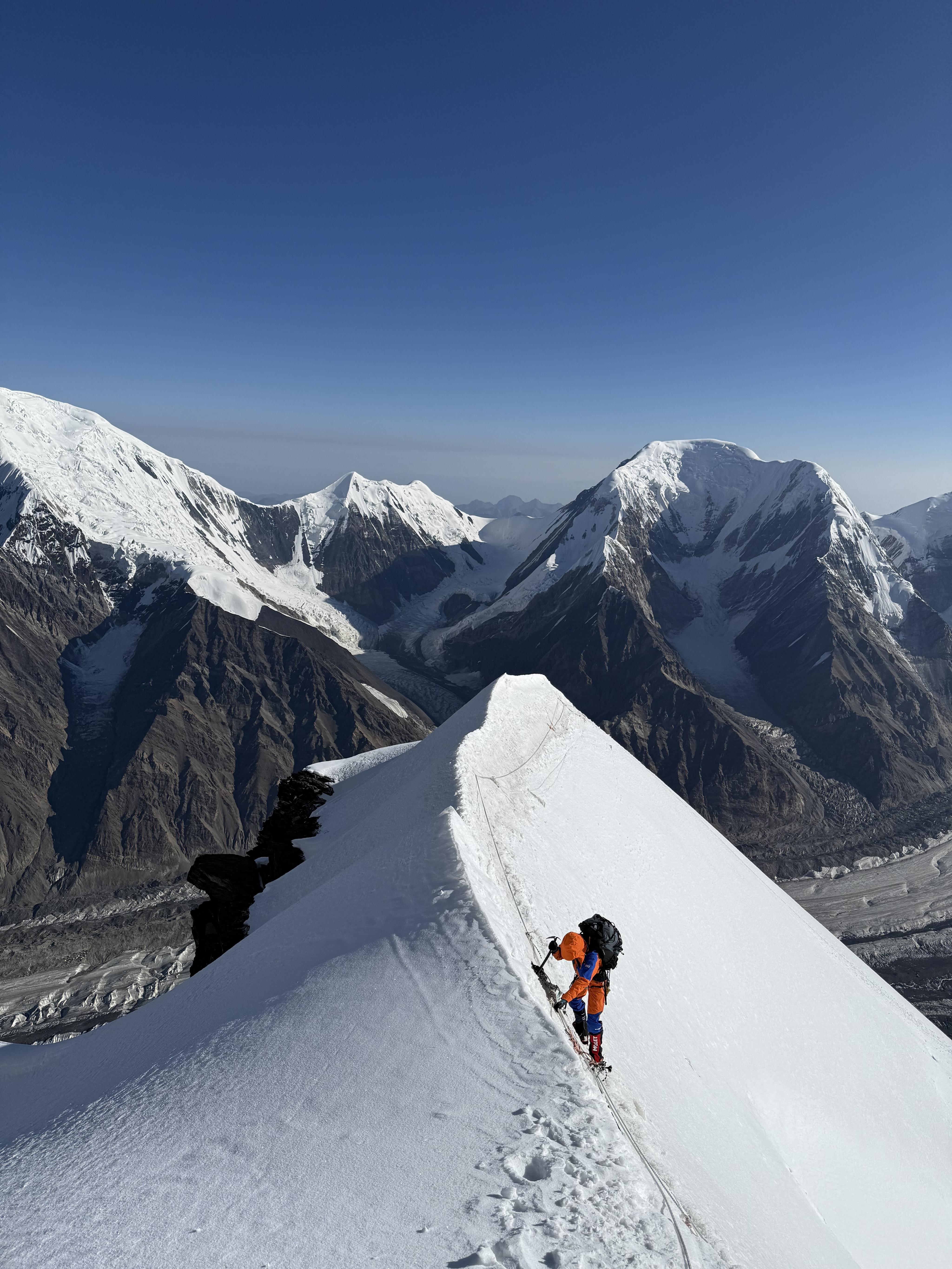
Camp 3 sits at around 5,900 meters, on a narrow platform between the Chapayev Shoulder and the summit of Khan Tengri. On one side, cornices break away above the ridge; on the other, the terrain drops steeply toward the glacier. There’s barely enough room for a handful of tents.
We spend two nights here.
During the first night, it snows without pause. Fresh snow presses against the tent, and we repeatedly knock the walls clear. By morning, a new layer blankets the camp. On the second night, the alarm goes off at 1 a.m. for our summit push.
The wind lashes across the ridge, with gusts reaching 75 km/h. Snow plumes sweep across the slope, reducing visibility.
Climbing is out of the question.
We wait.
Hour after hour.
The summit is only a few vertical meters above us—within reach.
And yet, this is where the real challenge begins.
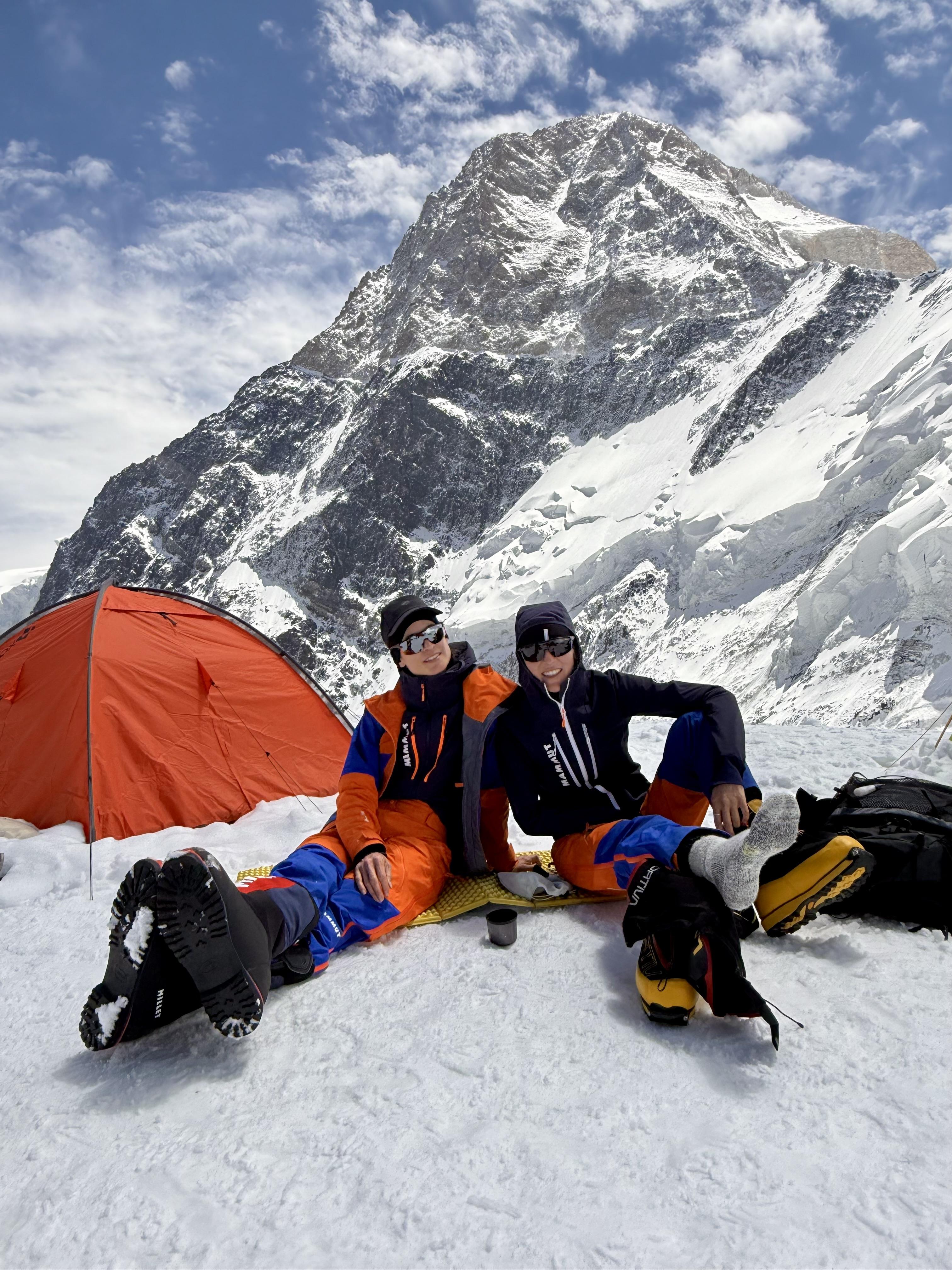

Gentiana, what happens mentally in a moment like this?
Gentiana: “The summit suddenly feels achievable and that’s exactly what makes it difficult. At the same time, you feel the altitude: the air is thin, your mind slows down. And still, this is when you have to make a clear decision.”
With every hour of waiting, the risk increases: fresh snow and wind change the route, and the longer a team remains at high camp, the greater the chance of getting stuck. Continuing feels easier. But responsibility in the mountains goes beyond moving upward.
Sandra, why is turning around so hard?
Sandra: “Continuing often feels easier — you just follow the track upward. Turning back costs more, because it means consciously letting go of something you’ve worked toward for a long time.”
In the end, multiple factors come together: weather, wind, visibility, and responsibility for each other as a team.
We decide to retreat and descend to base camp the same day.
The summit remains.
And maybe that’s one of the most important lessons in the mountains: success in alpinism isn’t defined only by the summit, but by the decisions made along the way.