



Eiger Extreme
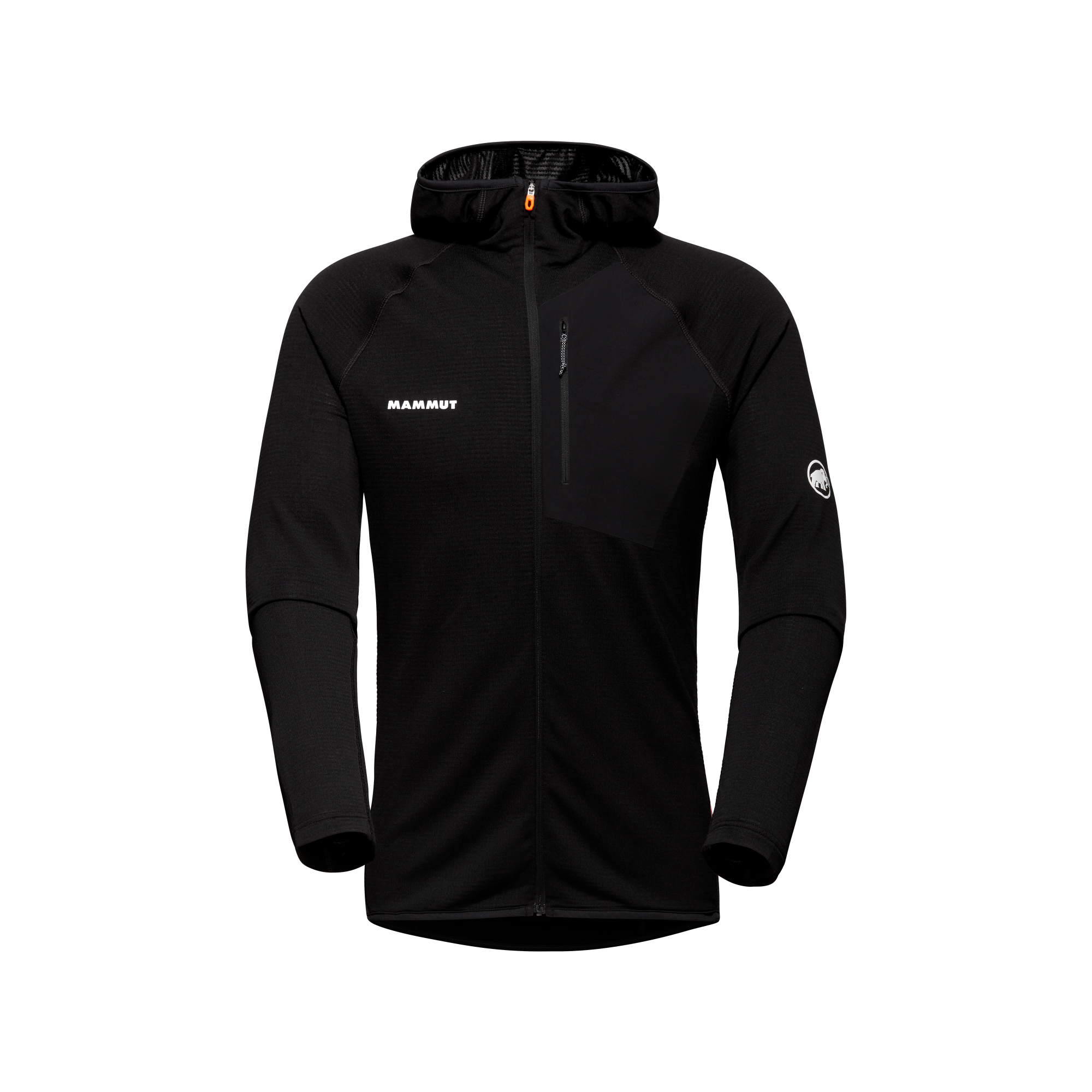
Eiger Nordwand Light HS Hooded Jacket Men
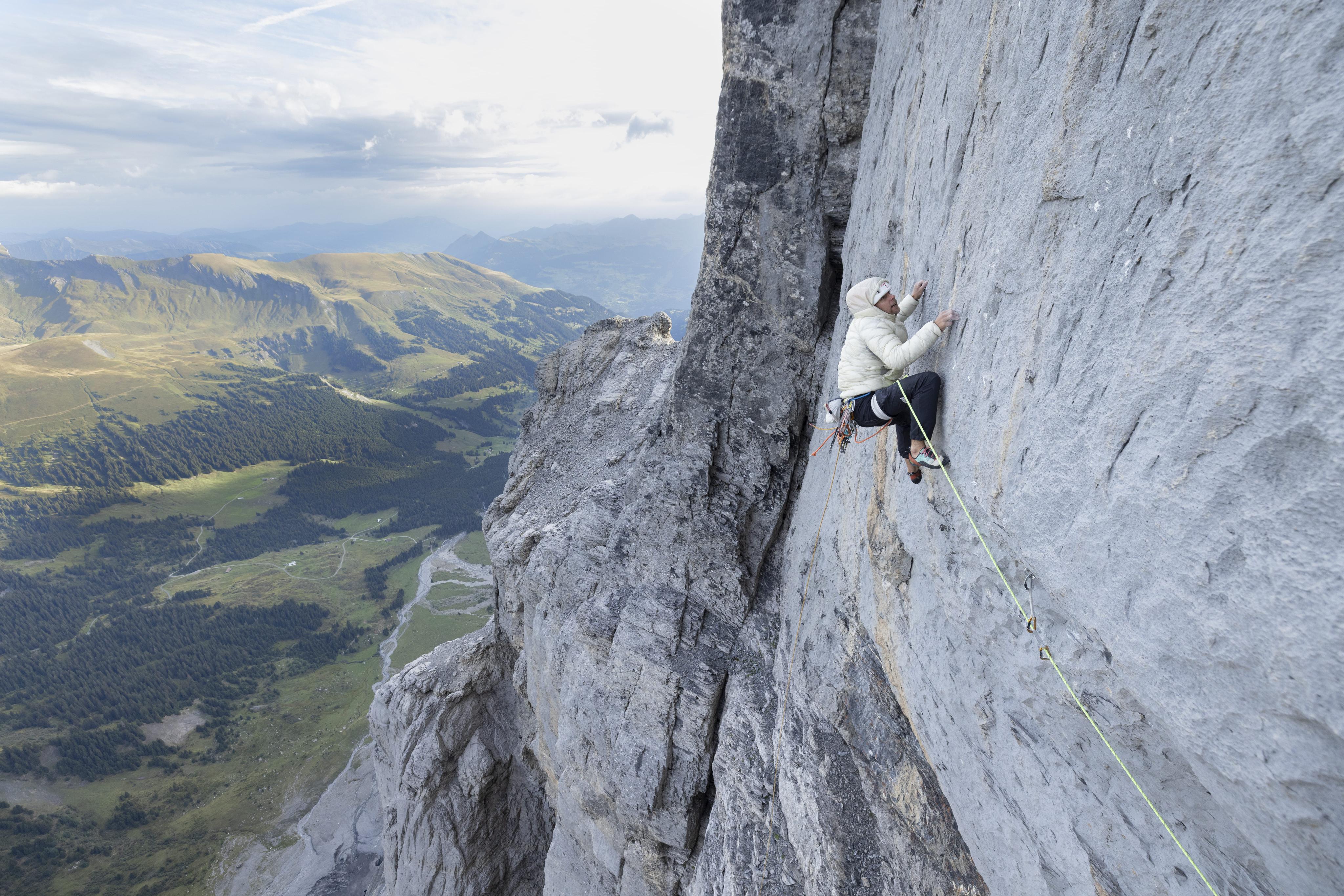
In the summer of 2024, my partner Anja and I began establishing a new route on the Epp Pillar in the north face of the Scheideggwetterhorn. This pillar, high above the Grosse Scheidegg and characterised by its exceptional high-alpine limestone, had been on my radar for a long time.
In 2009, Nicolas Zambetti and Deni Burdet, together with their partners, laid an important foundation for modern alpine sport climbing here. With “Into the Wild” – 450 metres long and graded up to 7b+ – they established a remarkable route for its time. It was a true pioneering achievement, finding a feasible way both to the wall and through it. Until then, the only route in this part of the mountain had been the rarely, if ever, repeated Northeast Ridge of the Scheideggwetterhorn, first climbed by Martin Epp and Jr. Talbot in 1963. Thanks to an article about “Into the Wild” in the SAC magazine Die Alpen – at the time still one of the few sources of up-to-date information about newly established alpine routes – I found myself at this very place only a year later, at just 18 years old. Together with Nicolas Hojac, I made the first repeat of this adventurous route. I managed to free-climb every pitch on my first attempt (Team OnSight/Flash). It was an incredible experience, and one that has probably shaped me to this day.
Beyond the climbing difficulty itself, what defines this place above all is its remoteness and challenging access. Back then, my father even had to pick us up in Grindelwald on Sunday evening: we had missed both the last bus and the last train – and both of us had to be back at school the next morning.
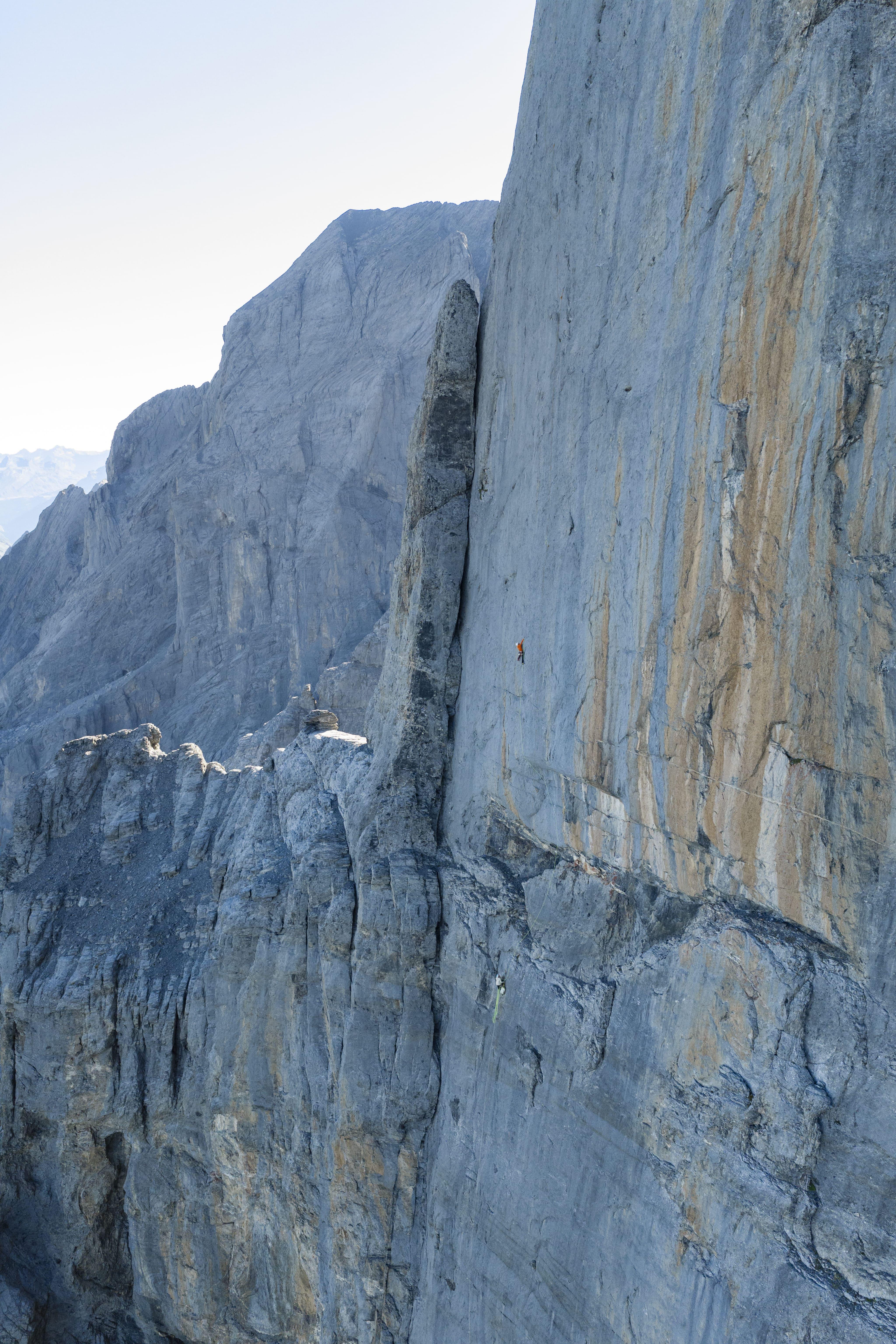
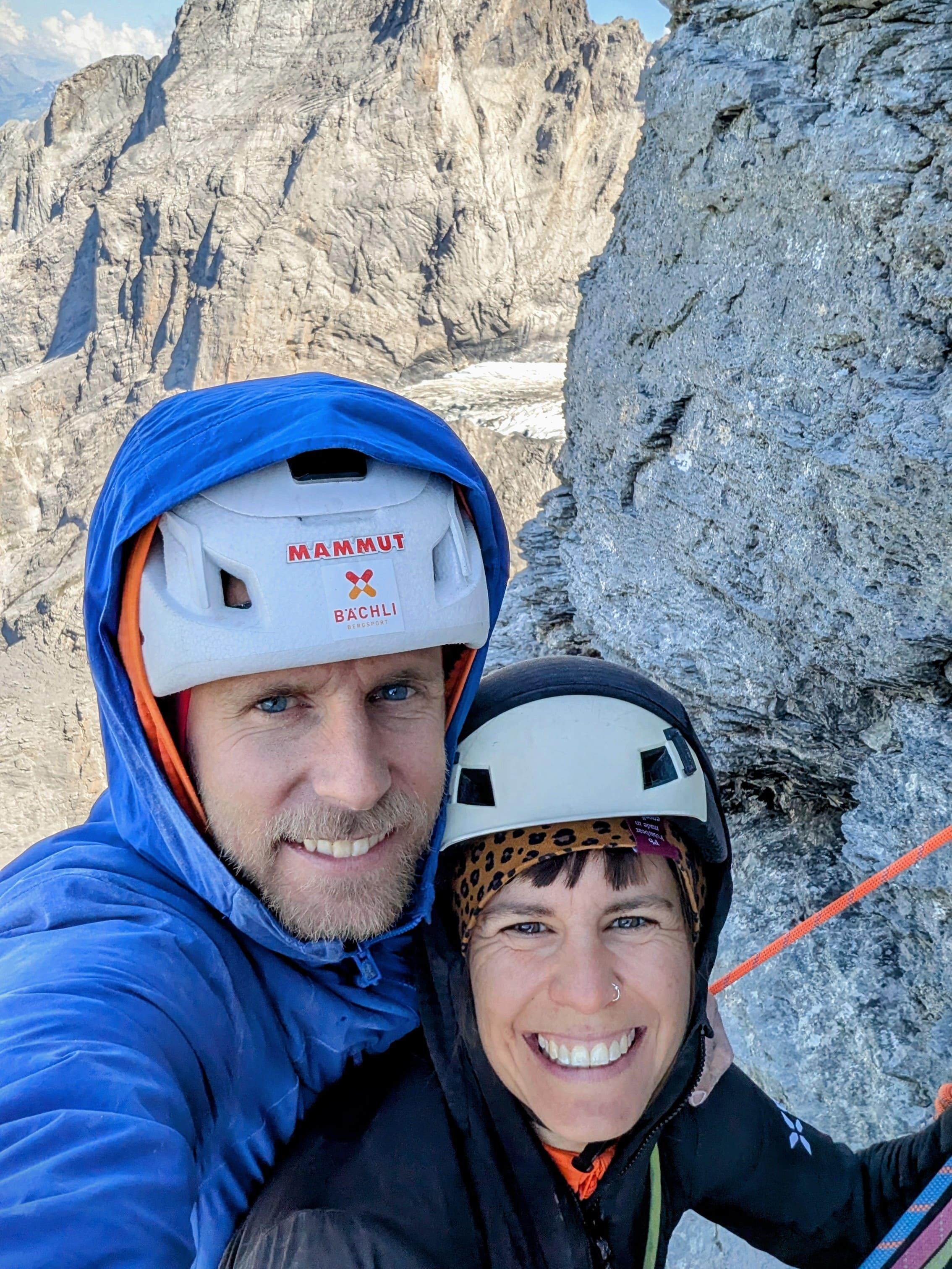
The years passed, and the experience slowly faded into a distant memory. Then, while searching for images for a presentation, I came across my old photographs again. Looking at one particular photo of the wall, a band of compact limestone further to the left suddenly caught my eye. A new project was born. And in Anja, my partner, I had found the perfect person to share it with. In the summer of 2024, we began carrying equipment up to the bivouac and slowly working our way towards the wall. The approach to the bivouac alone is a journey in itself, ingeniously weaving its way through the weaknesses of the terrain. In early summer, wet slabs between the bivouac and the wall made even the approach an adventure.
For much of the approach, we were still able to use equipment left in place by Zambetti and Burdet. Where necessary, we supplemented the protection with bolts and pitons. The approach should therefore now be reasonably well equipped for future repeaters, but it remains a serious undertaking requiring good route-finding skills and confidence climbing poorly protected alpine terrain. Approximately ZS+/4b. Once we had overcome this part, we could finally begin the actual climbing. Over three visits that first summer, we established the first five pitches. For Anja, it was also her first experience drilling bolts – and she started straight away from the ground up, hanging from a skyhook. After some initial difficulties and the almost inevitable moments of panic, she became surprisingly comfortable with it.
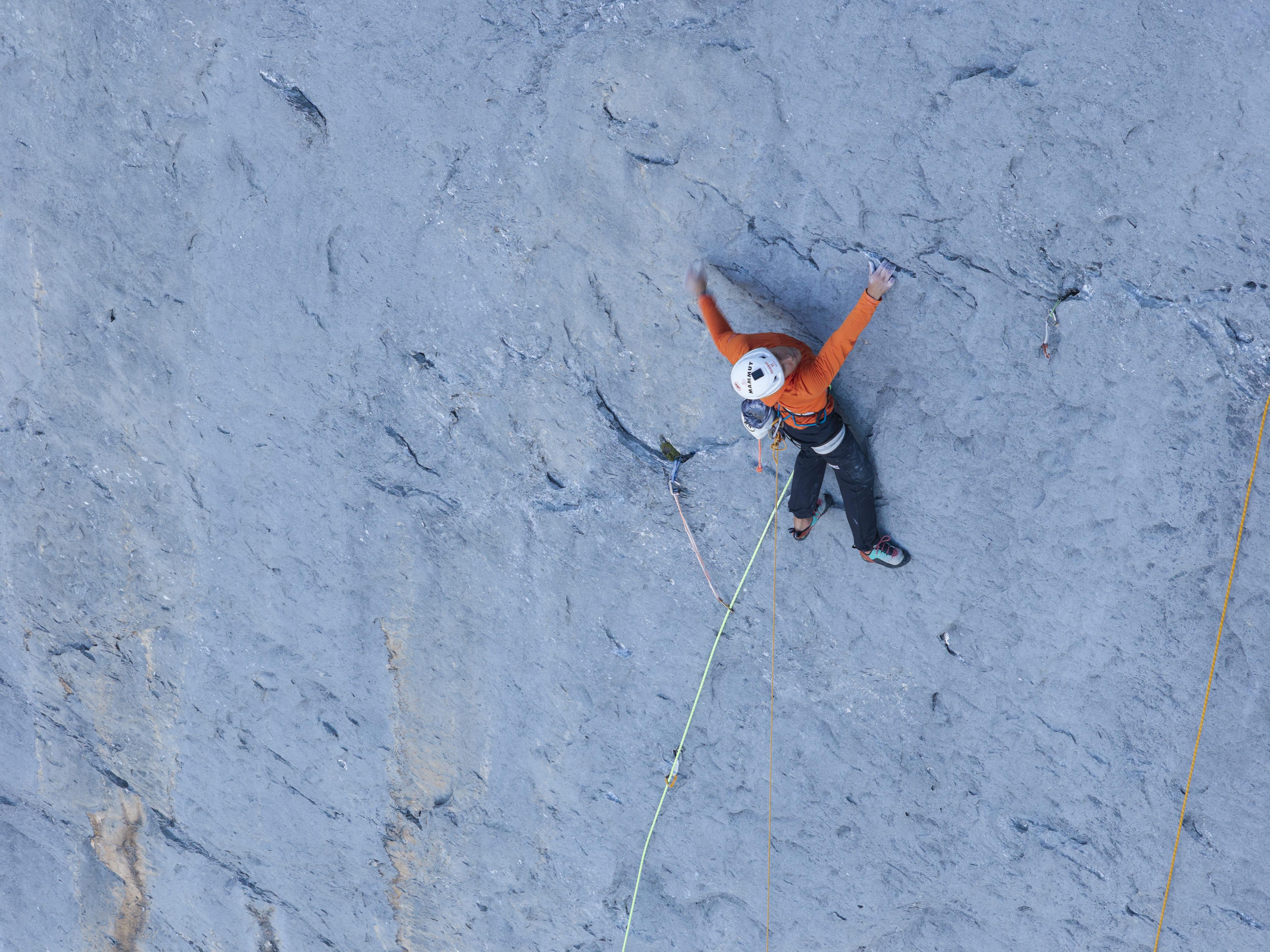
In 2025, our schedules and the weather unfortunately allowed for only a single visit. Nevertheless, we managed to establish the sixth pitch – the obvious crux – through the roof in the middle of the wall. I will not forget the feeling of pulling over the lip of the roof, finding myself on an almost blank and difficult-to-read slab, and somehow fighting my way upwards until, after about four metres, a saving hold finally appeared where I could place the next bolt. The pitch will most likely settle somewhere around 8a+.
Our motivation to finally complete the line in 2026 was therefore high. At the same time, Anja and I received the wonderful news that we were going to become parents. Naturally, the joy of this news overshadowed our motivation for the route. Still, we both knew that it should be possible to finish the project we had started together. We also knew that the following summer was unlikely to make projects like this any easier. Especially during the early stages of her pregnancy, Anja experienced significant fluctuations in energy. At the same time, the project became increasingly demanding as we gained height: a two-hour approach, 300 metres of jumaring, followed by the descent – all of it in terrain with very little margin for error. For this reason, Max, aka Muscle Mäx, joined me for a day on the wall. Together, we managed to establish the route up to pitch eight. This left us in the perfect position for Anja and me to finish the route together.
In August 2026, we were able to drill the final pitch together. Once again, it rewarded us with brilliant and demanding slab climbing. It was an incredible feeling to experience and complete something like this together as a couple. But we still had a long descent ahead of us. The real sense of relief only arrived during the obligatory scooter ride from the Grosse Scheidegg down to Grindelwald. We named the route “DüDaDo im Nirgendwo”. In this remote place, the distinctive signal of the Grindelwald Bus is often the only tangible connection to civilisation. And it really does accompany you throughout the entire day – from early in the morning until around 6 p.m., when the last bus makes its way through the valley.
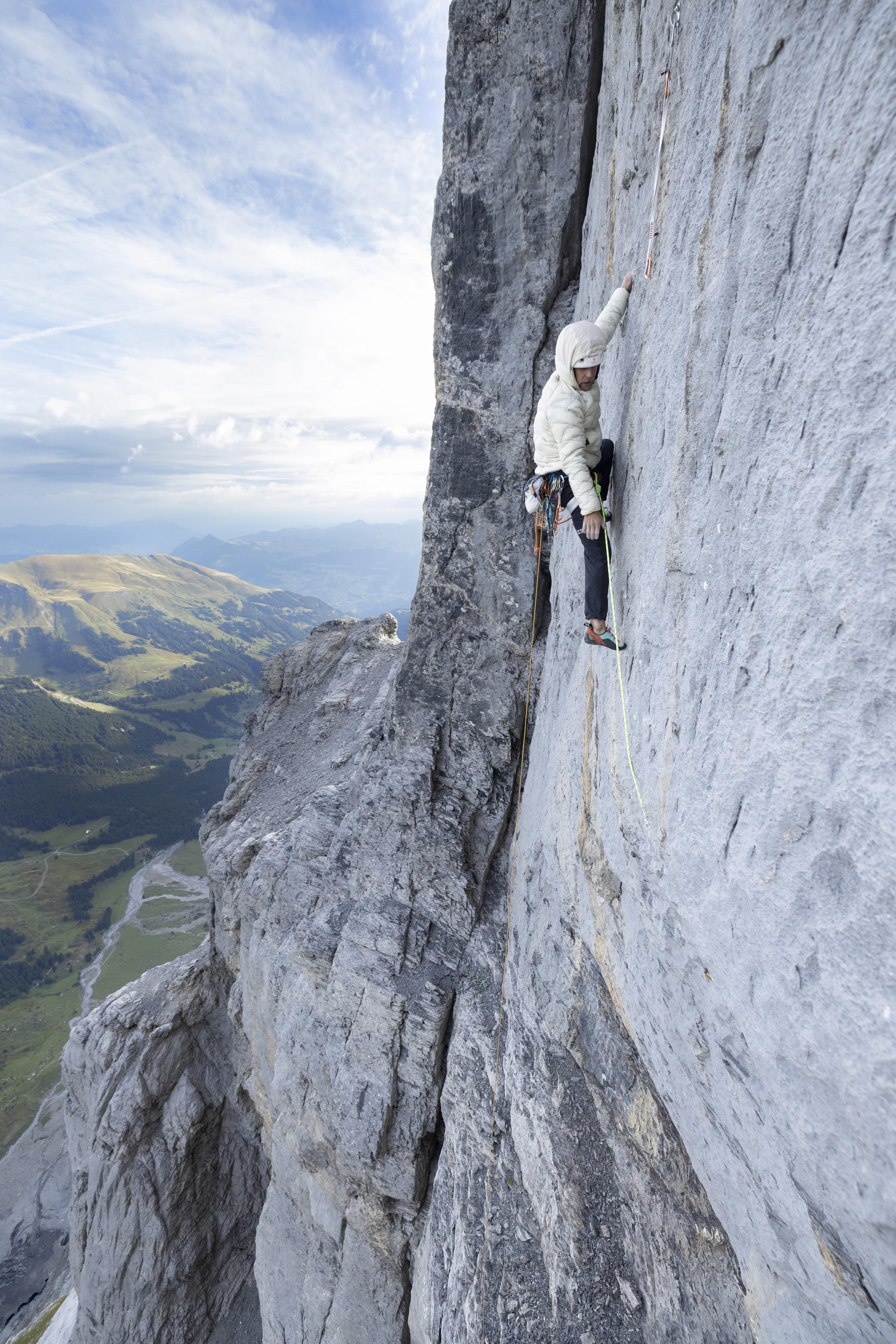
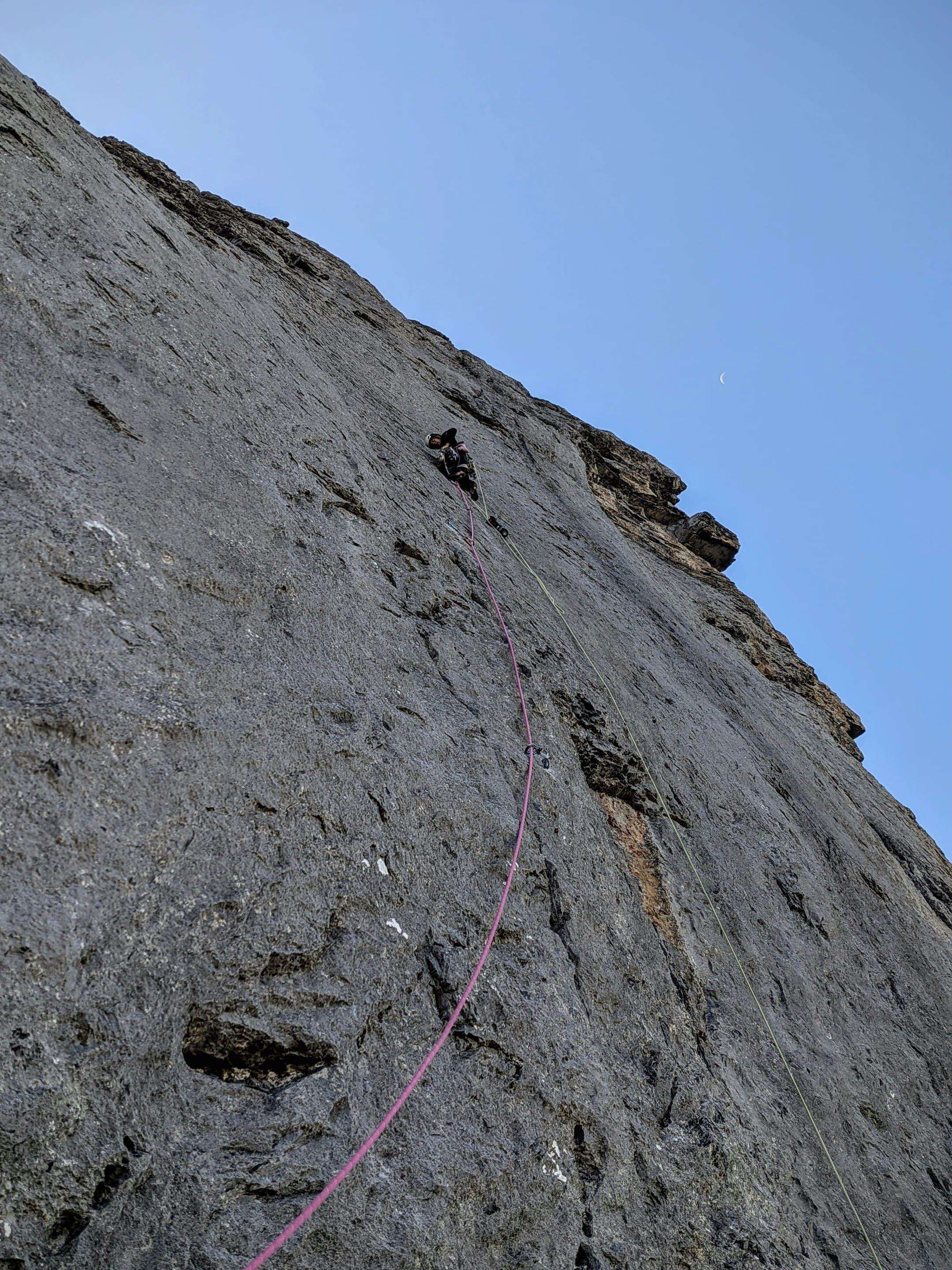
By this point, Anja’s pregnancy was too far advanced for us to attempt the free climb together. At the same time, I felt a growing urge to finally bring the project to completion after three years – also knowing that it would probably not become any easier in the coming years for us to undertake such demanding projects together. We therefore agreed that I would try to free-climb the route in September. At the same time, one thing was clear to both of us: we want to climb the route together as soon as possible.
At the end of August, I spent a first day on the route with Maurice and managed to free-climb every pitch up to the crux on my first attempt. I briefly worked out the individual moves on the crux pitch before we headed back down. A week later, I returned with Kaspar. This time, John Thornton joined us with his camera to document the free-climbing attempt. Unfortunately, the weather had other plans on the first day. Unexpected wind gusts of up to 70 km/h combined with the cold made climbing almost impossible, so we were only able to capture a few shots on the crux pitch. Our original plan had been to inspect the upper pitches that day and remove all the fixed ropes from the first ascent, allowing us to attempt a clean one-day redpoint ascent from the bottom the following day. That plan did not work out. We therefore left the fixed ropes in place, and the next day I climbed with Ben and free-climbed all the pitches from the crux upwards. After so much work, it felt wonderful to finally be able to climb all these pitches. Spread over the two days, I had now free-climbed every pitch of the route.
In hindsight, this strategy proved to be a good compromise. The final pitch, at 7c, turned out to be seriously demanding once again. Without having looked at it beforehand, it could easily have put an end to my attempt had I climbed the route directly from the bottom.
Even with this strategy, we still needed plenty of time after the climbing to rappel the entire route, remove all the fixed ropes and descend with all our equipment. After a heavily loaded scooter ride back to the car in the dark, we finally celebrated the free ascent with a well-deserved midnight snack at the “Golden Seagull Inn” in Interlaken – a fitting end to three years of work on this route.



With “DüDaDo im Nirgendwo”, we have established a demanding alpine multi-pitch route on superb high-alpine limestone, with difficulties up to 8a+. The grades given in the topo are suggestions and will need to be confirmed by future repeaters. Protection is sparse in places and can be compared to modern alpine multi-pitch routes in the Bernese Oberland such as “La Svizzera”, “Infinite Jest” or “Paciencia”.
Beyond pure climbing ability, the route demands experience in alpine terrain and a willingness to commit to a serious and remote undertaking.
But it is precisely this alpine setting, the atmosphere and the remoteness that make “DüDaDo im Nirgendwo” much more to us than simply a difficult climbing route. It is the result of three years of working together, many days spent on the wall, and a period in which our own lives have changed as well.