Hiking with or without poles
08/26
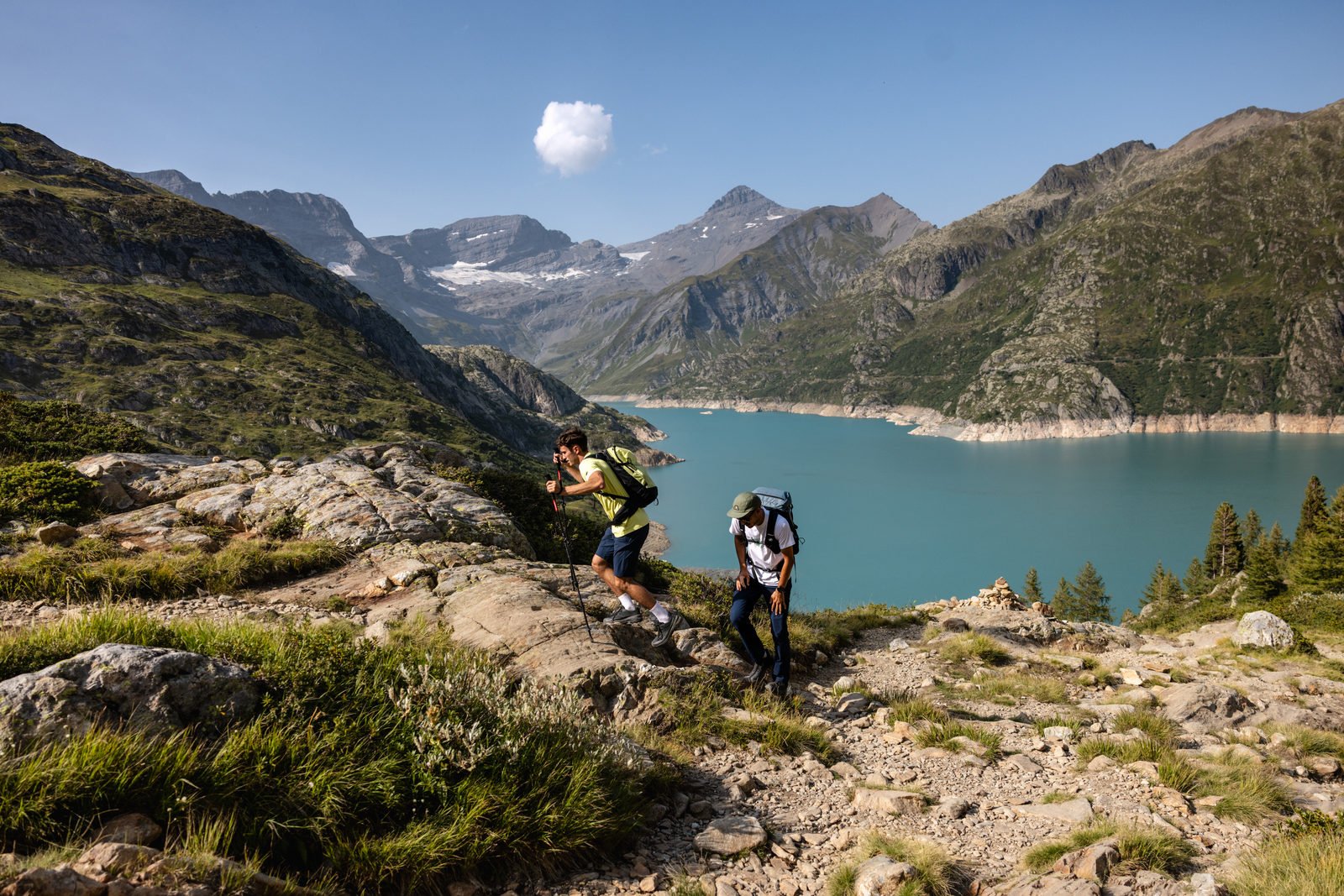
Some hikers absolutely swear by hiking poles and use them for every single tour; others consider them an impractical accessory that restricts their hands and adds unnecessary weight to their equipment. The truth lies probably somewhere in between – and entirely depends on the terrain, your gear, and your knees. Which is exactly what this guide is for: We’ll tell you when hiking poles come in handy, when they’re best left at home, and how to use them correctly.
What do hiking poles actually do?
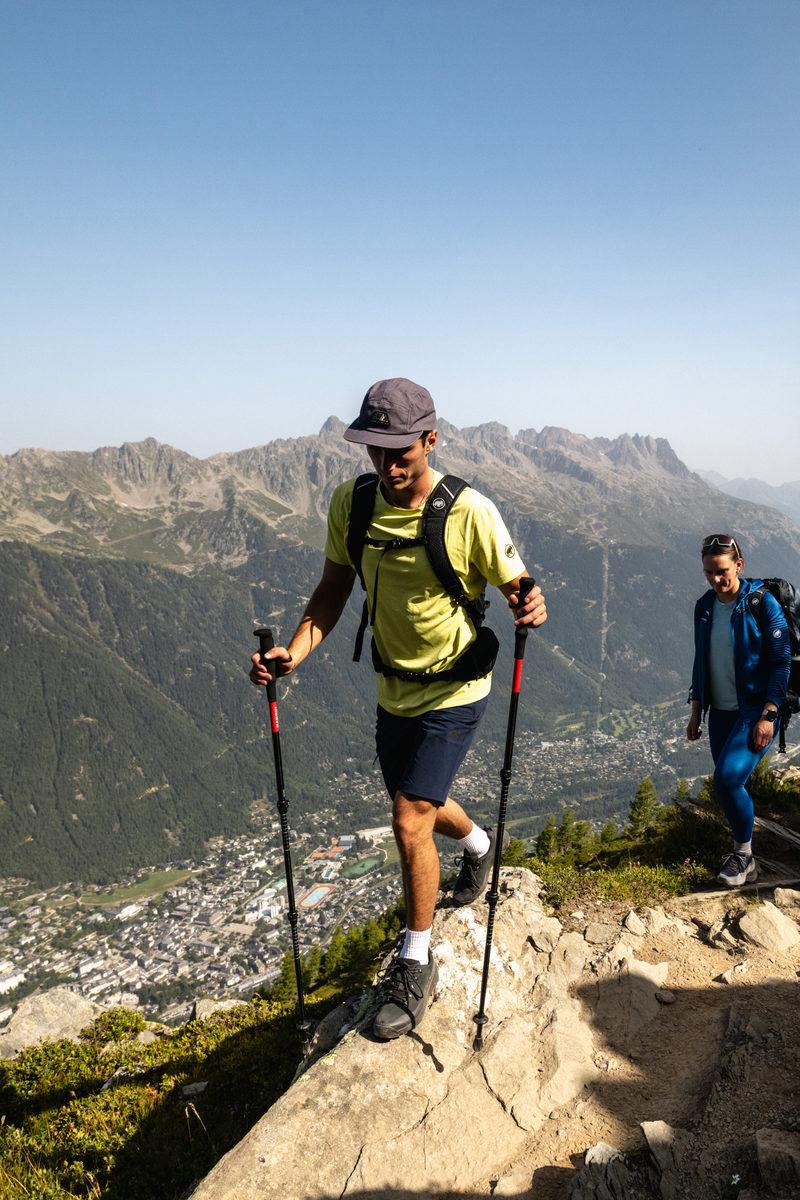
Trekking poles aren't just a tool for older or less experienced hikers — they're a versatile piece of gear to provide extra safety and comfort, as well as help boost endurance on demanding terrain. Here's an overview of the key benefits:
Joint relief: When you lean onto your poles as you walk, some of the load shifts from your legs to your arms and upper body. This takes pressure off your knees, hips, and ankles — especially on long descents or multi-day tours . Studies suggest that using hiking poles can reduce the strain on your knees by up to 25%.
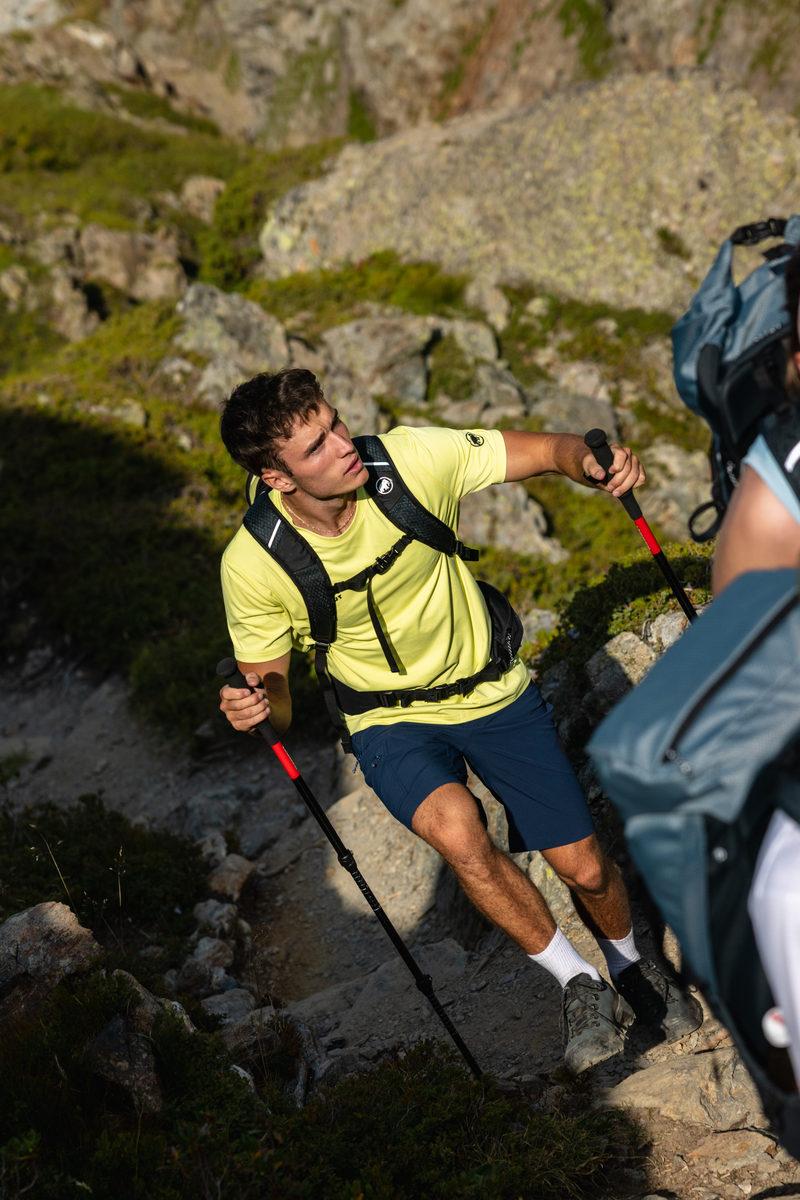
Greater stability: With two poles in hand, you have four points of contact instead of two. On loose scree, slippery root trails, or when crossing streams, this will give you noticeably more control — and with it, more confidence.
Better endurance: By bringing your arm muscles into play, the effort is distributed more evenly across your body, which helps delay fatigue.
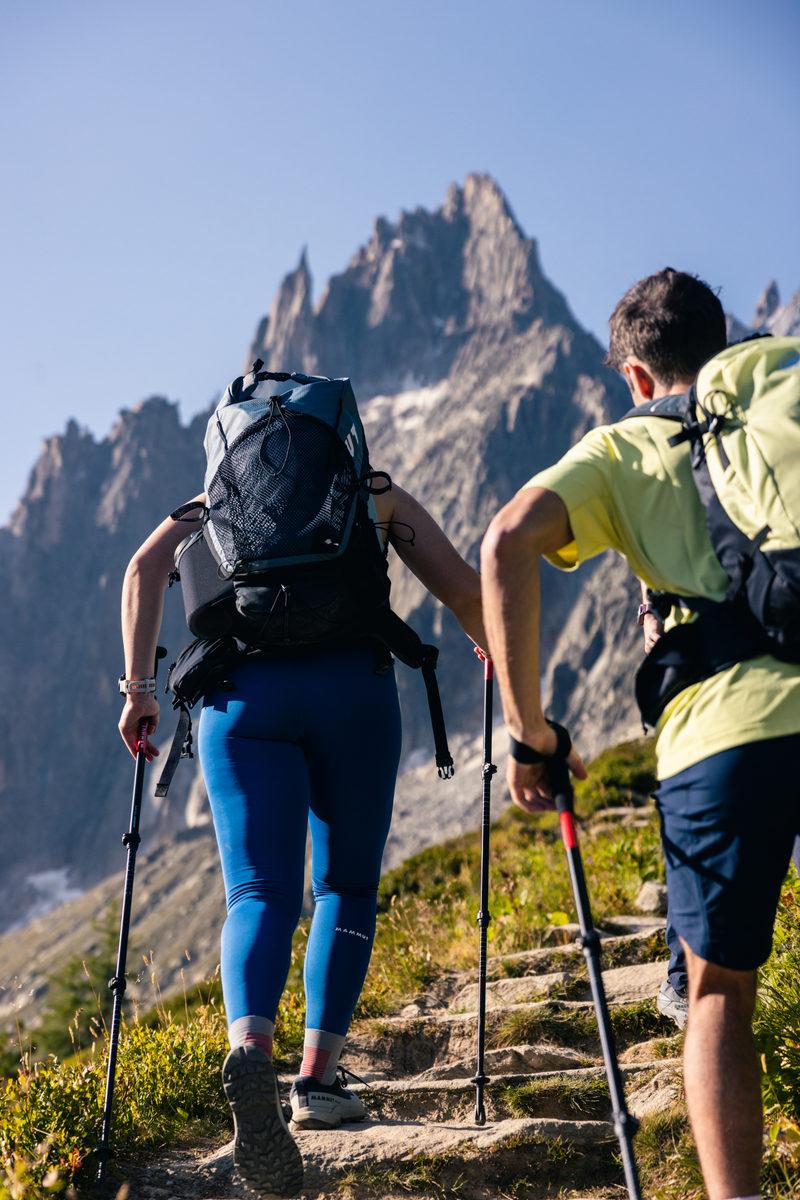
More efficient movement on the ascent: With the right technique, you can push yourself forward with your poles on uphill sections, improving both your pace and your movement flow.
Versatility: Hiking poles can also be used to test ground conditions or push aside branches and vegetation blocking your path.
Important: Use your hiking poles sparingly and only if warranted by the situation: If you rely on them constantly, there’s a good chance you’ll slowly use your sense of balance and surefootedness over time. So make sure you use your poles strategically, and ditch them altogether when they’re not essential for the stretch ahead.
When are hiking poles especially useful?
As a general rule, the more technically demanding the tour, the more it pays off to use hiking poles — especially when you're carrying a lot of gear. A heavy pack shifts your centre of gravity, and poles help you maintain balance while spreading the extra load across more parts of your body.
Tip: Choosing the right backpack makes all the difference when it comes to balance: Mammut models with the “Spine” designation – such as the Ducan Spine line – are designed to distribute weight particularly evenly under heavy loads, thanks to their Active Spine Technology.
On multi-day tours and while trekking, poles protect your joints across multiple stages. On rough or wet terrain — loose gravel, snow, wet roots, or stream crossings — they give you noticeably more stability and control. Especially people with knee problems or joint issues benefit greatly from using hiking poles.


When poles aren't necessary
As useful as hiking poles are on certain tours, there are plenty of situations where you can happily leave them behind:
Easy day hikes on well-maintained trails: On flat or moderately hilly paths with little elevation change and when wearing a light pack, poles offer barely any noticeable benefit.
Via ferratas and technical terrain: In places where you need both hands free to hold on to crags and edges or climb up and down, poles actually just get in the way. So either strap the hiking poles to your pack — or don’t bring them along in the first place.
Personal preference: Some hikers value the free, swinging movement of their arms and hands. If you like to stop and take photos spontaneously, scramble over rocks, or can simply find your rhythm better without hiking poles, there's no need to use them “just because”. Plus, hiking without poles actively trains your natural balance and coordination, which can be a great way to stop yourself from becoming too reliant on them.
The bottom line: Trekking poles aren't a must, but they can be a valuable tool — especially on more demanding tours or if you want to protect your joints in the long run.
Using hiking poles correctly
If you decide to use trekking poles, your technique and setup matter. If used incorrectly, they offer little benefit and can even lead to poor posture. Here's what to look out for:
The right length
As a rule of thumb: when you hold the grip and the pole tip touches the ground, your elbow should form a right angle (90 degrees). That's your baseline length for flat terrain.
However, depending on the terrain, you should adjust the length of your hiking poles:
Uphill: Shorten your poles slightly so you can push yourself forward more efficiently.
Downhill: Lengthen them slightly for better support and to take the pressure off your knees.
Traversing a slope: Set the uphill pole shorter and the downhill pole longer. This keeps you balanced throughout, even on steep sidehills.
Tip: Before making major adjustments, you can try to simply shift your hand to the lower or upper edge of the grip. Often, you’ll find that you don’t actually need to readjust the pole length at all.
The right technique
When using two poles, follow this pattern: move your left pole and right foot forward at the same time, then your right pole and left foot. This corresponds to the natural alternating stride and ensures a smooth, harmonious flow of movement. Make sure to actively push the poles into the ground — simply dragging them along won’t really do anything. You should also put your hands inside the strap from below and grip the handle from above.
On steep terrain in particular, adopting the three-point technique will go a long way: meaning at least three points of contact (two feet and one pole, or one foot and two poles) are on the ground at all times. This method maximizes stability and is particularly helpful on loose or slippery surfaces, as well as on steep slopes.
Which type of pole is right for me?
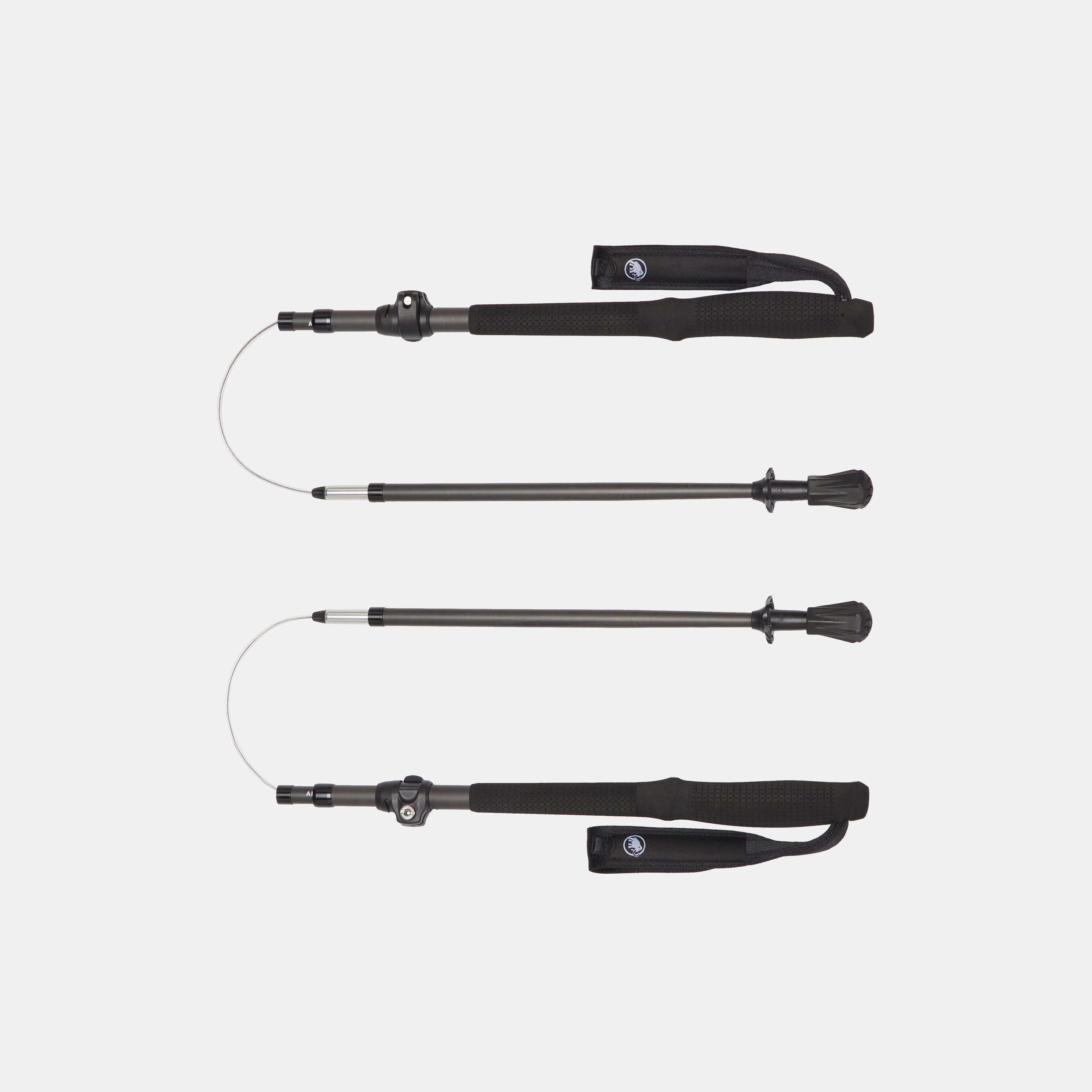
Poles come in many different styles: from lightweight folding poles for trail running to sturdy telescopic poles for challenging alpine tours . When buying poles, you should consider the following criteria:
Material: Aluminum poles are sturdy, affordable, and well-suited for everyday use on the trail. Carbon poles are lighter but more sensitive to side impacts and are better suited for easier terrain or running.
Telescopic poles can be adjusted in length, which is especially practical on varying terrain. Folding poles are more compact and lighter, but less flexible in terms of length adjustment.
Grip: Cork grips adapt to the shape of your hand over time and absorb moisture well. Foam is soft, quick-drying, and well-suited for intense activities. Rubber grips are more durable and transfer less cold to your hands, but can also cause chafing when using them over an extended period of time.longer use.
Shock absorbers (Antishock): Some models feature a spring-cushioned mechanism that absorbs the shock when a pole touches the ground. This can be particularly comfortable for hikers with joint problems, but isn’t a must for everyone.
Hiking with or without hiking poles: it's worth trying both
Whether you feel more comfortable hiking with or without poles is ultimately a personal decision and mostly depends on your destination, the terrain, and how your body feels. Once you know how to use them properly, you’ll usually find you don’t want to go without them on more challenging hikes.
It’s not just the gear that matters, it’s about having the right mindset and the proper equipment when you’re out and about. For your next hike, check out the Mammut Stories & Guides for more helpful articles: for example, which hiking boots are right for you , how to pack your backpack properly , or how much weight your hiking backpack can carry .
FAQs about hiking poles
Question: As a beginner, do I need hiking poles?
Answer: For easy to moderate hikes, poles aren’t absolutely necessary. However, if you’re planning more challenging hikes or have knee problems, you’ll benefit from using trekking poles early on.
Question: Should I use one or two poles?
Answer: Two poles provide significantly more stability than just a single one and ensure weight is evenly distributed. A single pole can be helpful on flat terrain, but two are always recommended on steep or uneven terrain.
Question: Can I bring hiking poles on a plane?
Answer: Hiking poles are generally only allowed in checked baggage, not in carry-on luggage. It’s best to check with the airline before your next trip.
Question: How do I properly care for my hiking poles?
Answer: After using them in mud or snow, you should rinse the poles with clean water and let them dry completely before folding or sliding them together. Check the locking mechanisms regularly and replace worn-out pole tips as soon as possible.